
How to Convert Names into Binary Code Easily
🔢 Learn how to convert names into binary code with easy methods and tools. Understand binary encoding, its uses, challenges, and tips for accurate translation.
Edited By
James Thornton
Binary code generators form the backbone of many digital technologies that traders, investors, students, analysts, and brokers encounter today. At their core, these generators produce sequences of binary digits – 0s and 1s – which represent data and instructions in a computer's language.
Understanding binary code generators helps decode how digital systems process information efficiently. Typically, these generators operate by transforming input signals, clock pulses, or random physical phenomena into binary outputs. For example, a pseudo-random binary generator might use a mathematical formula to create a sequence of bits, while a hardware-based generator could rely on electronic noise.
In Indian financial markets, algorithmic trading platforms often depend on secure random number generators to encrypt transaction data. Similarly, cryptographic systems used by banks and e-wallet services like Paytm or PhonePe require reliable binary generators to safeguard users’ information.
There are several types of binary code generators:
Pseudo-Random Number Generators (PRNGs): Algorithms generating sequences that appear random but are deterministic. Useful in simulations and cryptography.
True Random Number Generators (TRNGs): Hardware devices leveraging physical processes, such as thermal noise, to create genuine randomness.
Linear Feedback Shift Registers (LFSRs): Used in digital circuits for generating bit sequences efficiently.
Each type finds its place depending on the application’s demand for security, speed, and complexity. For instance, TRNGs are preferred in generating cryptographic keys essential for secure online banking transactions in India.
Solid comprehension of binary code generators empowers professionals to appreciate how data integrity and security are maintained in complex systems ranging from stock exchanges to mobile payment platforms.
By grasping how these generators function and where they apply, readers can better evaluate the technology underlying trading algorithms, data encryption, and hardware design. This understanding is key to navigating the tech-driven marketplace confidently.
A binary code generator is a device or software that produces sequences of binary digits — that is, zeros and ones. These sequences serve as the foundation of digital communication, computing, and encryption. For traders and analysts, understanding binary code generators helps in grasping how systems handle data, encode information, or even secure transactions. Essentially, these generators create patterns that algorithms or electronic circuits use to operate reliably.
At its core, a binary code generator creates a stream of bits — the smallest units of data in computing. Each bit can be either 0 or 1, and a binary code is a sequence of these bits that represent data, instructions, or signals. Such generators might be deterministic, following strict algorithms to produce repeating sequences, or non-deterministic, generating random or pseudo-random sequences crucial for encryption and security.
For instance, in the world of digital trading platforms, random bit sequences help generate unique session keys that protect user transactions. Without such binary code generation, secure communication is simply not possible. Traders often overlook these technical components though these underpin the security and reliability of their electronic platforms.
The concept of binary code generation dates back to early computing days, when engineers needed ways to represent information digitally. As electronic computers evolved in the mid-twentieth century, the need for reliable binary sequences grew.
Initially, mechanical and electrical switches created binary patterns, but these were slow and prone to errors. The development of semiconductor technology led to efficient hardware generators using flip-flops and shift registers.
In India, the adoption of computer technology spread rapidly from the 1980s, with institutions like the Indian Statistical Institute and IITs contributing to advancements in digital electronics and coding theory. Today, binary code generators are integral to information technology, supporting applications from secure banking to telecom.
Understanding the origin and function of binary code generators provides context to how modern digital infrastructure secures and processes an ever-growing amount of data.
To sum up, a binary code generator is not just an abstract tool; it’s a practical cornerstone enabling diverse systems — from simple embedded devices to complex financial networks — to operate smoothly and securely. For those involved in trading, analysis, or software development, knowing how these generators function enriches the grasp on the technical backbone supporting their work.
Understanding how binary code generators operate is key to appreciating their role in diverse applications, from cryptography to digital communications. These generators produce sequences of binary digits (bits) that appear random or follow a specific pattern depending on their design. The way these sequences are generated directly impacts the reliability, security, and performance of the systems depending on them.
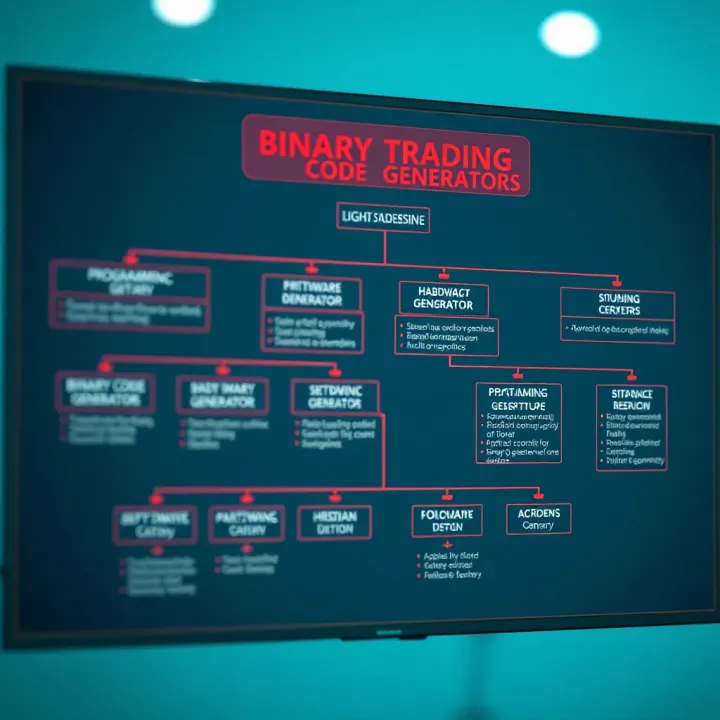
At the core, binary code generators rely on the principles of randomness and deterministic sequence creation. Randomness means producing bit sequences that are unpredictable and have no discernible pattern. Conversely, deterministic generation uses an initial seed or input to produce a predictable, repeatable sequence. For example, a pseudo-random binary sequence generator might use a mathematical formula or shift register to churn out a series of zeros and ones that look random but can be recreated if the seed is known.
The quality of randomness often depends on entropy sources, which might be physical phenomena like thermal noise or software algorithms. This distinction is critical especially in cryptographic applications where predictability can make systems vulnerable. Understanding these principles helps users choose the right type of generator suited to their needs—whether they prioritise unpredictability or reproducibility.
Software-based binary code generators typically involve algorithms running on computers. These include pseudo-random number generators (PRNGs) that use mathematical formulas or hash functions to create binary sequences. Since they depend on an initial seed, the output is deterministic but appears random for practical purposes. An example is the Mersenne Twister algorithm, which is widely used in simulation and gaming software due to its speed and statistical quality.
From a practical viewpoint, these generators are popular because they are easy to implement and modify, requiring no additional physical components. Indian tech startups, for instance, often use software-based generators for testing software robustness by simulating random inputs effectively. However, their determinism can be a weakness in strong security scenarios, where unpredictable randomness is vital.
Hardware binary generators work differently, relying on physical processes to create randomness. These include noise diodes, semiconductor junctions, and quantum effects, which produce truly random binary sequences. Circuits like Linear Feedback Shift Registers (LFSRs) are extensively used in embedded systems to generate pseudo-random sequences with minimal hardware overhead.
In practical applications, hardware generators are essential where strong cryptographic keys or secure tokens are required, such as in government data centres or banking systems. The unpredictability of physical noise provides a higher security level than purely algorithmic solutions. In digital communication, hardware-based generators help scrambling signals to reduce interference and improve data integrity.
The choice between software and hardware generators often comes down to a trade-off between convenience and security. While software solutions suit general programming needs, hardware generators provide cryptographically secure outputs vital for sensitive applications.
Understanding these working principles equips traders, analysts, and tech professionals to better select the appropriate binary code generator for their specific use cases.
Understanding the different types of binary code generators is essential for selecting the right tool, especially in areas like software testing, cryptography, and digital design. Each type has unique features and applications, so knowing their differences helps in making informed decisions.
Pseudo-random binary generators create sequences that only appear random, but are actually produced by deterministic algorithms. These are widely used in software simulations and testing where repeatability is valuable. For example, when testing an algorithm on Flipkart's recommendation engine, a pseudo-random sequence can ensure consistent results across multiple runs. Popular algorithms like Linear Feedback Shift Registers (LFSRs) are common in embedded systems for generating these sequences without requiring extra hardware.
True random generators produce sequences based entirely on physical phenomena like thermal noise or radioactive decay, offering genuine unpredictability. This type plays a critical role in secure transactions and cryptographic key generation, ensuring that keys can’t be predicted or reproduced. In India, for instance, online payment gateways like PhonePe rely on true random numbers to protect user data during UPI transactions. Producing true randomness often requires specialised hardware, which can limit the implementation to security-sensitive environments.
Deterministic generators produce random-looking sequences based on an initial seed value, but unlike simple pseudo-random generators, cryptographically secure variants ensure unpredictability even if part of the sequence or seed becomes known. Banks and financial institutions use cryptographically secure generators to protect sensitive processes, such as generating OTPs (One-Time Passwords) for NetBanking services. These generators are designed so that no adversary can feasibly predict future outputs, making them indispensable in securing online transactions and data encryption.
Selecting the appropriate binary code generator depends on the use-case — pseudo-random for predictable simulations, true random for hardware-based security, and cryptographically secure for robust data protection.
By recognising these types and their roles, traders, analysts, and developers can choose tools that best fit their technical and security needs, enhancing both system reliability and trustworthiness.
Binary code generators serve crucial roles across various fields, particularly in computing, security, and communications. Their ability to produce controlled sequences of binary digits makes them indispensable tools for developers, engineers, and security experts alike. Understanding their applications will give you a clearer picture of why these generators matter and how they impact technology around us.
In programming, binary code generators help test software performance and robustness by producing predictable or random binary data streams. For example, when developing an app to handle file encryption, programmers might use pseudo-random binary sequences to simulate diverse input. This helps identify bugs or performance bottlenecks before actual deployment. Testing network protocols also often relies on binary generators to mimic data packets under different conditions. In India, where telecom networks vary vastly between rural and urban locations, generating diverse test data ensures network resilience across such environments.
Security heavily depends on reliable binary code generation, especially where unpredictable sequences are needed. Cryptographic systems use true random or cryptographically secure binary generators to create encryption keys that are difficult to guess or reproduce. For instance, Indian banks using UPI (Unified Payments Interface) rely on these generators in their backend to protect transaction data. A weak or predictable binary pattern could lead to security breaches, exposing sensitive user details. Moreover, these generators aid in secure password generation, digital signatures, and authentication protocols, crucial for protecting e-wallets and online financial services.
Digital circuits require binary code generators for timing and operational control. For example, clock signal generators in microprocessors produce specific binary sequences that synchronise component activities. Additionally, in wireless communication devices like mobile phones common across India, binary generators create spreading codes that help in channel allocation and error correction. This ensures clearer calls and reliable data transfer even in crowded networks. Hardware-based binary generators also find use in embedded systems, such as automotive electronics, which depend on precise timing to function safely.
Binary code generators underpin the reliability and security of many digital systems, making them foundational in the technology we depend on every day.
In short, whether it's for testing new software, securing financial transactions, or managing digital communication, binary code generators play a vital role that can't be overlooked.
Selecting the right binary code generator is essential for achieving reliable results in both software and hardware projects. The choice impacts efficiency, security, and overall functionality, whether you are developing cryptographic systems, testing software, or designing digital circuits. Understanding the key factors involved helps avoid compatibility issues and ensures the generated codes meet specific requirements.
Performance and reliability come at the top when choosing a binary code generator. For instance, a pseudo-random binary generator might be adequate for software testing, but cryptographic applications demand generators with strong unpredictability, such as cryptographically secure pseudorandom number generators (CSPRNGs). It is also important to consider resource constraints like processing power and memory, especially for mobile or embedded systems.
Security features carry great weight in sensitive applications. If you are working in banking or digital payments—which are prevalent in India via UPI or mobile wallets—using generators with proven resistance to attacks is non-negotiable. Compatibility with existing systems, ease of integration, and user-friendliness also play roles. For hardware enthusiasts, power consumption and circuit complexity might guide your selection.
Several open-source and commercial libraries provide reliable binary code generation suited to different needs. Libraries like OpenSSL and libsodium offer cryptographically secure random number generators widely adopted in Indian fintech and cybersecurity sectors. For programming and testing, Python’s "random" module or Java’s SecureRandom class allow easy generation of binary sequences with configurable parameters. These libraries save significant development time and help maintain security standards.
Developers often prefer tools that support seamless integration with existing codebases and allow tuning for speed or randomness quality. In India’s growing software industry, these libraries underpin applications in data encryption, simulations, and system testing, proving invaluable.
For those interested in hardware, basic circuits employing Linear Feedback Shift Registers (LFSRs) provide a straightforward method to generate binary codes. LFSRs require fewer components and are often used in digital communication modules found in consumer electronics and telecom devices common in India.
More advanced designs might use ring oscillators or noise-based true random number generators (TRNGs), but those typically require deeper electronics knowledge. Starting with simple LFSR circuits can teach enthusiasts practical aspects of binary code generation, such as tuning parameters and understanding sequence cycles. Building and experimenting with these circuits bridges theoretical knowledge and hands-on skills, which benefit engineering students and hobbyists alike.
Choosing the right binary code generator depends on the application’s needs, balancing performance, security, and practical constraints. Both software libraries and basic circuits offer accessible starting points depending on your project’s focus and resources.
🔢 Learn how to convert names into binary code with easy methods and tools. Understand binary encoding, its uses, challenges, and tips for accurate translation.

🔢 Explore how numbers work in binary code! Learn binary basics, decimal conversions, key operations, and why binary matters in today’s tech world. 💻
🔢 Learn octal to binary conversion with clear steps, useful tools, and real-world applications in computing and electronics for quick, accurate results!
🔍 Explore the key differences between linear and binary search algorithms, their efficiency, and practical applications to choose the right method every time.
Based on 14 reviews