
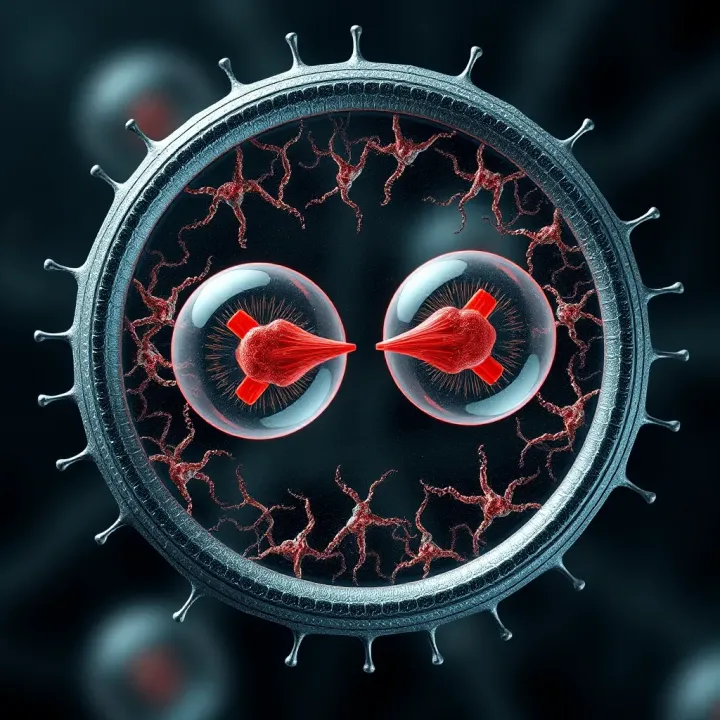
Understanding Binary Fission: Basics and Importance
🔬 Explore binary fission, the simple yet vital reproduction method in unicellular organisms. Understand its process, biological role, and relevance in medicine and biotech.
Edited By
Emma Lawson
Binary fission is a straightforward method of asexual reproduction seen mainly in single-celled organisms like bacteria and certain protozoa. Through this process, an organism divides into two parts, each becoming an independent and genetically identical daughter cell. This means the offspring inherit all genetic information from the parent without mixing DNA from another organism.
This method contrasts sharply with sexual reproduction, which requires two parents and results in genetic variation among offspring. With binary fission, reproduction is efficient and rapid, enabling a quick population increase, which is vital for organisms living in environments where survival depends on swift adaptation or exploitation of resources.
The process starts with the replication of the organism’s DNA. Then, the cell elongates, and the replicated DNA strands move to opposite ends. Finally, the cell membrane pinches inward, dividing the cytoplasm and forming two separate cells. Each daughter cell gets an exact copy of the DNA, making them clones of the parent.
Binary fission powers the population growth of many microorganisms, influencing everything from soil health to disease spread.
Some examples of organisms reproducing by binary fission include Escherichia coli (a common gut bacterium) and Amoeba (a freshwater protozoan). These organisms benefit from the simplicity of the process, as it requires less energy and no mate-seeking behaviour, which can be costly or risky.
Alongside its speed and simplicity, binary fission has limitations. It reduces genetic diversity since offspring are identical to their parent, which can be a disadvantage in changing environments. Still, many bacteria overcome this through mechanisms like mutation or horizontal gene transfer, enhancing their adaptability.
Understanding binary fission sheds light on microbial growth patterns, which affects fields ranging from medicine to agriculture. For investors or analysts looking at biotech sectors or microbial applications, knowing this reproductive strategy helps in predicting growth trends or responses to environmental changes.
In summary, binary fission is a vital, fast, and energy-efficient process that allows many single-celled organisms to multiply. While it limits diversity, it remains a powerful survival tool, especially when quick reproduction matters most.
Binary fission is a straightforward form of asexual reproduction where a single organism splits into two equal parts, each becoming a new individual. This process primarily occurs in unicellular organisms like bacteria, where one cell divides into two genetically identical daughter cells without the involvement of gametes or genetic material from another organism. It is the quickest way for these organisms to increase their numbers.
Unlike binary fission, sexual reproduction involves the fusion of genetic material from two parent organisms, resulting in offspring with a combination of traits. This mixing of genes introduces diversity, which can be advantageous in changing environments but typically requires more time and energy compared to the swift division in binary fission.
Binary fission offers several survival benefits. Since the process is rapid, it allows organisms—especially bacteria and some protists—to multiply quickly when conditions are favourable. For example, E. coli bacteria can double their population in as little as 20 minutes under ideal conditions. This speed helps these organisms colonise environments and outcompete others.
The simplicity of binary fission makes it an energy-efficient reproduction strategy. The organism simply replicates its DNA and divides, requiring less complex mechanisms than sexual reproduction. This efficiency proves useful when environmental conditions are stable, as it constantly produces offspring with identical traits suited to the current habitat. That said, this uniformity can be risky if sudden changes occur, but the ease of the process helps maintain population numbers steadily.
Binary fission’s straightforward mechanism is why many single-celled organisms rely on it to sustain fast growth rates, despite its drawback of limited genetic variation.
In short, binary fission strikes a balance between speed and efficiency, ensuring survival for species that thrive in predictable environments. Traders and investors following biotech or pharmaceutical sectors often monitor bacterial reproduction rates to predict outcomes like antibiotic resistance or fermentation yields, emphasising the practical relevance of understanding this biological role.
Understanding the step-by-step process of binary fission is essential because it reveals how single-celled organisms efficiently reproduce and sustain their populations. This method ensures rapid multiplication without the complexity of sexual reproduction, making it vital for microbial survival in diverse environments.
Replication of genetic material is the first crucial step. Before the cell can split, it needs to duplicate its DNA, the blueprint for all cellular functions. This process starts at a specific location on the DNA molecule and proceeds along its length, producing two identical copies. For instance, in Escherichia coli, a common gut bacterium, DNA replication can complete in about 40 minutes. This ensures that each daughter cell receives the full genetic information needed to function properly.
This replication is practical because it prevents the loss of genetic data and maintains the organism's characteristics. Any errors in replication could lead to mutations, which might affect survival. Hence, the cell employs proofreading enzymes to correct mistakes during copying.
The next step is the growth and elongation of the cell. Once the DNA has been replicated, the bacterial cell grows longer to prepare for division. This elongation provides space for the two copies of DNA to move apart. For example, in Bacillus subtilis, the cell length doubles as it prepares to split.
Cell growth is important because it ensures that after division, both daughter cells have enough cytoplasm and cellular machinery to survive independently. Without sufficient growth, the new cells might be too small or lack essential components, reducing their viability.
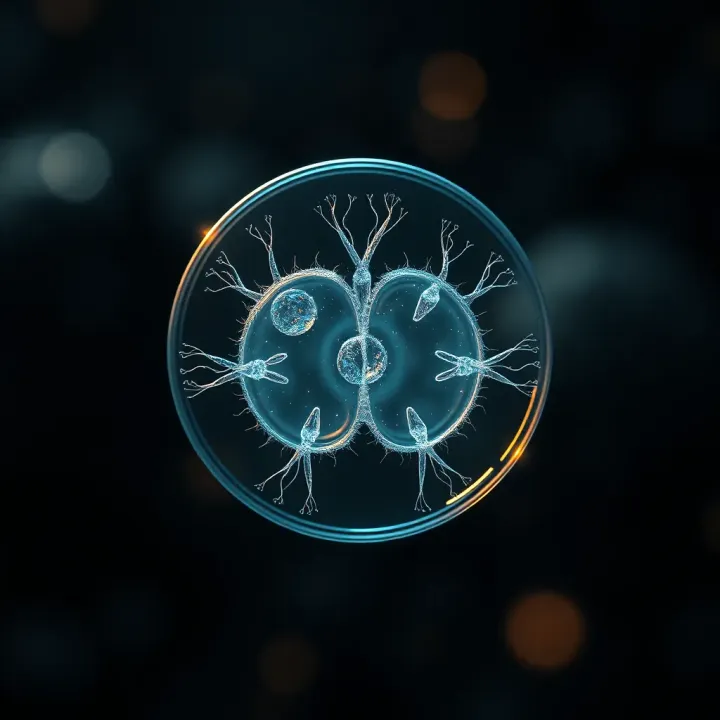
Segregation of DNA follows cell elongation. The two DNA copies move to opposite ends (poles) of the cell, guided by the cell’s cytoskeleton-like proteins. This precise arrangement prevents mixing and ensures that each new cell inherits a full set of genetic instructions.
Proper segregation is biologically significant. It guarantees genetic consistency between generations, which matters especially in fast-reproducing bacteria that rely on stable traits to adapt to their environments.
Finally, cytokinesis and cell separation take place. A new dividing wall, called a septum, forms in the middle of the elongated cell. This wall gradually grows inward, dividing the cytoplasm and membrane into two separate parts. In E. coli, proteins assemble at the centre to constrict the cell efficiently, completing the split in minutes.
The practical benefit of cytokinesis is the creation of two independent daughter cells, each capable of living and multiplying further. This process is energy-efficient and fast, enabling bacteria to respond quickly to favourable conditions, such as when nutrients are abundant.
In summary, the step-by-step mechanism of binary fission equips single-celled organisms with a reliable means to reproduce quickly and maintain genetic stability, a key factor in their survival and adaptation.
Binary fission plays a vital role in a variety of organisms, particularly those that thrive in environments where quick replication is advantageous. Understanding the specific groups that use this form of reproduction helps clarify how binary fission supports survival and population maintenance across different ecosystems.
Bacteria are perhaps the most well-known group reproducing through binary fission. This method enables them to multiply rapidly in favourable conditions, such as nutrient-rich soil or inside a host organism. The ability of bacteria to reproduce quickly can lead to swift population growth, which is a key factor in both their environmental adaptability and pathogenicity. For instance, Escherichia coli, commonly found in the human gut, uses binary fission to maintain its population and support digestive functions.
In industrial and medical contexts, this rapid reproduction can be a double-edged sword. While helpful in processes like waste decomposition or fermentation, it also explains how infections can develop quickly if antibiotic treatment does not control harmful bacterial growth properly.
Archaea resemble bacteria but are genetically and biochemically distinct. These organisms, often found in extreme environments such as hot springs or salt lakes, rely on binary fission too. Their capacity for this form of reproduction allows them to withstand and colonise harsh conditions where other organisms might struggle to survive.
From a practical angle, studying archaeal binary fission gives insights into resilience strategies at the cellular level. This information is of interest in biotechnology fields, for example, when developing enzymes that work in extreme temperatures or salinity.
Certain unicellular protists, such as the Amoeba, also reproduce through binary fission. These single-celled eukaryotes diverge from bacteria and archaea by having a defined nucleus, but their asexual reproduction retains simplicity and efficiency. Amoebae duplicate their nucleus and cytoplasm before splitting into two identical daughter cells.
This process ensures rapid colonisation in freshwater and moist environments. In research and education, Amoeba binary fission serves as a model to demonstrate basic cell division principles applicable across many life forms.
Some algae species, especially unicellular types like Chlorella, reproduce by binary fission. This helps them multiply effectively in aquatic environments where sunlight and nutrients are available, supporting their role in oxygen production and as a primary food source in the aquatic food chain.
For industries like biofuel production, understanding binary fission in algae is crucial. Rapid growth through asexual reproduction means algae cultures can be scaled up efficiently under controlled conditions, aiding in renewable energy research.
Binary fission remains a fundamental reproduction method that supports the ecological success and practical importance of various microorganisms — from bacteria and archaea to protists and algae.
Understanding how binary fission compares with other forms of asexual reproduction clarifies its unique role in organism survival and growth. This comparison helps highlight why certain organisms prefer binary fission while others rely on different methods. It also sheds light on adaptability and efficiency under varying environmental pressures.
Binary fission involves a parent cell splitting into two roughly equal daughter cells, each inheriting a complete copy of the DNA. The process is straightforward: the cell duplicates its genetic material, elongates, and then divides. Budding, however, is an uneven process where a smaller new organism forms as an outgrowth or bud from the parent. This bud gradually grows before detaching. Budding usually results in one larger parent and a smaller offspring, while binary fission produces two cells of similar size.
Both processes allow rapid population growth, but binary fission’s symmetry often results in quicker replication across entire populations. Budding can be advantageous when the parent organism remains active and functional during reproduction, like in yeast.
Binary fission is typical among bacteria such as Escherichia coli and archaea, which thrive in various environments including human intestines and hot springs. In contrast, budding occurs in organisms like yeast (Saccharomyces cerevisiae) and some hydra species. Yeast cells reproduce by budding to colonise environments with fluctuating resources, as the parent remains anchored and functional while producing offspring.
Thus, binary fission suits simple, single-celled life forms needing rapid population increases, while budding accommodates organisms requiring a stable, ongoing presence in their habitat.
Spore formation is another asexual reproduction method where an organism produces spores—specialised reproductive units that can survive harsh conditions. Unlike binary fission, spores often remain dormant until conditions improve. The process involves creating multiple spores from a single parent, enhancing survival chances through dispersal and resistance.
Binary fission, on the other hand, is a direct split producing two active, genetically identical cells without a dormant phase. It focuses mainly on quick reproduction rather than survival in extreme conditions.
Spore formation appears in fungi such as Rhizopus and some algae, helping them colonise new areas during unfavourable periods. These spores can travel far and remain viable, giving species flexibility in fluctuating environments.
Binary fission dominates in bacteria and some protists where rapid doubling of population is vital but the environment remains relatively stable. Spore formation supports survival and long-term species persistence when conditions might otherwise prove fatal.
Comparing binary fission, budding, and spore formation reveals how organisms balance speed, survival, and adaptability in reproduction. Recognising these differences helps in understanding species ecology and evolution.
By examining these contrasts, traders and analysts can better grasp the biological foundations that influence microbial behaviours impacting sectors like agriculture, pharmaceuticals, and biotechnology.
Binary fission offers a straightforward and effective way for many single-celled organisms to multiply quickly. This method's strengths and weaknesses shape how these organisms survive and adapt in their environments. Understanding both sides helps to see why binary fission remains common yet sometimes limiting biologically.
Speed and energy efficiency play a key role in binary fission's popularity. Unlike sexual reproduction, which often requires finding a mate and complex cellular processes, binary fission only involves duplication of genetic material followed by cell splitting. This allows bacteria, for instance, to double their population within 20 minutes under ideal conditions. Such rapid multiplication helps colonies expand swiftly, especially in nutrient-rich environments like a freshly sterilised petri dish or decaying food. Due to its simplicity, organisms use less energy, which supports survival when resources fluctuate.
Consistency in offspring traits means binary fission produces genetically identical daughter cells. For organisms like Escherichia coli or Paramecium, this uniformity ensures that beneficial traits persist across generations without dilution. In stable environments, this trait conserves adaptations that have proven effective, avoiding the uncertainties that come with genetic mixing. This consistency helps scientists predict behaviour and growth patterns in microbial populations, valuable for industries like pharmaceuticals and fermentation.
One significant challenge is the risk of environmental changes. Because offspring are clones, populations lack the genetic variety needed to cope effectively with sudden shifts like temperature swings, new toxins, or antibiotics. Take antibiotic resistance—if a bacterial strain lacks resistant mutations, an entire colony may perish. This vulnerability is why despite their fast growth, bacteria sometimes struggle in unpredictable conditions, relying instead on mutation or horizontal gene transfer to gain variability.
The potential for accumulated mutations also poses problems. Without sexual reproduction to mix and shuffle genes, harmful mutations can build up over generations in clones, a process known as Muller's ratchet. While some mutations might be neutral or even advantageous, many reduce cellular efficiency or survival. This can gradually weaken populations unless mechanisms like gene repair or exchange intervene. For organisms like Amoeba, relying solely on binary fission for reproduction means they risk accumulating defects over time.
The balance between fast reproduction and genetic stability is a tightrope in binary fission, explaining why it thrives in some niches but struggles in others.
In sum, binary fission offers a quick and energy-saving reproduction route suitable for stable setups. However, the lack of genetic diversity means these organisms face challenges adapting to sudden environmental stresses or avoiding damaging mutations. This trade-off remains central to understanding the biological success and limitations of binary fission as an asexual reproduction method.
🔬 Explore binary fission, the simple yet vital reproduction method in unicellular organisms. Understand its process, biological role, and relevance in medicine and biotech.

📘 Learn how to multiply binary numbers step-by-step with clear examples and tips. Understand key differences from decimal multiplication and avoid common errors.

🔢 Learn how to convert decimal numbers to binary with simple steps and techniques. Perfect for students and tech enthusiasts exploring digital systems! 💻

Learn how the letter 'a' is converted into binary code using ASCII encoding in computing systems. Understand digital text processing with clear, simple examples 📊💻
Based on 9 reviews