

Charges for Intraday Trading in India
📈 Discover all costs in intraday trading in India: brokerage fees, transaction charges, taxes & hidden expenses. Master your profits with clear breakdowns & tips.
Edited By
Daniel Foster
Intraday trading means buying and selling stocks within a single trading day. Because trades happen so fast, traders often face various costs that chip away at their profits. Knowing what these charges are and how they work is key to managing your expenses and improving your returns.

Brokerage Fees: This is the fee your broker charges for executing your trades. Brokerage can be:
Flat fees per trade (e.g., $5 per trade regardless of size).
Percentage-based (e.g., 0.1% of the trade value).
Transaction Taxes: Some markets impose taxes on each trade:
For example, the U.S. has no direct securities transaction tax, but you might pay capital gains taxes on profits.
Regulatory Fees: These are small charges imposed by regulatory bodies to support market operations. Examples include SEC fees in the U.S., which are a fraction of a percent.
Exchange Fees: Paid to the stock exchange itself, often included indirectly in commissions but sometimes separate.
Because intraday traders make multiple buys and sells throughout the day, these fees pile up fast. For instance, trading with a 0.1% brokerage on a $10,000 trade costs $10 each time. Over 10 trades, that's $100, which can mean the difference between profit and loss.
Even small fees add up quickly in intraday trading. Watch out for hidden charges that might not be obvious upfront.
Choose the Right Broker: Some brokers offer zero-commission trading but have wider spreads or other fees. Read the fine print.
Trade in Larger Sizes When Possible: Bigger trades reduce relative fees.
Limit Trade Frequency: More trades mean more charges; focus on high-confidence setups.
Monitor Tax Implications: Keep track of profits to understand tax responsibilities.
Understanding these charges helps you see the real cost of trading and avoid unexpected expenses. Always factor fees into your trade planning, so your strategy stays profitable after costs.
When you jump into intraday trading, understanding the fees that come with every trade is essential. These charges, although sometimes seeming small, can really eat into your profits, especially if you trade frequently. Knowing where your money goes helps you plan better and keep more of your earnings.
Brokerages usually charge in one of two ways: a flat fee per trade or a percentage of the trade value. Flat fees are straightforward—you pay a fixed amount regardless of how much you trade. For example, a discount broker might charge $5 per trade, whether you’re buying $100 or $10,000 worth of stock. On the other hand, percentage-based brokerage takes a cut based on the total trade value—say 0.1%. So, a $5,000 trade costs you $5 in brokerage, but a $10,000 trade will cost $10.
Choosing the right model depends on your trade size and frequency. Flat fees benefit high-volume traders who want predictable costs, while percentage fees might suit smaller or less frequent trades better.
Discount brokers like Robinhood or Webull typically offer lower brokerage fees or flat rates but don’t provide much beyond trade execution. Full-service brokers, such as Charles Schwab or Fidelity, charge higher fees because they pack in research, advice, and portfolio management.
For intraday traders looking to maximize profits, discount brokers are often the go-to since lower fees leave more room for gains. Yet, full-service brokers might appeal if you want expert help or access to more advanced tools.
Brokerage isn’t just another cost—it directly affects your bottom line. Let’s say you make a quick $50 gain on a trade but pay $15 in fees; that’s a 30% hit right off the top. Over dozens of trades a week, these costs add up fast. Keeping fees low means smaller moves can still be profitable, making your overall strategy more sustainable.
This government tax applies each time you buy or sell securities. In intraday trading, STT usually hits only the sell side of the trade and is often around 0.025% of the transaction value. Although it looks tiny, it adds up when trading in large quantities or frequently.
Intraday trading is taxed differently from delivery trades (where you hold your stocks beyond one day). Delivery trades might attract capital gains tax based on how long you hold, while intraday trades mainly face STT. This distinction is important because it affects how much you owe and influences your trade strategy.
Calculating these taxes is usually a percentage of your turnover—the combined total of buy and sell values. For example, if you trade $100,000 worth of stocks intraday and the STT is 0.025% on the sell side, you’d pay $25 just in STT. Plus, other taxes like GST on brokerage and exchange fees can chip in, so make sure to factor these when tallying your costs.

Every trade passes through an exchange (like NASDAQ or NYSE), which charges a small fee. These exchange transaction charges typically are a fraction of a percent, but they’re unavoidable. For instance, a $20,000 trade might incur a fee of $1 or two depending on the exchange.
Taxes don’t stop with your brokerage or exchange fees. GST applies to services like brokerage commissions, adding roughly 18% on top of these charges. So, a $10 brokerage fee becomes $11.80 after GST, further raising your cost per trade.
The Securities and Exchange Board of India (SEBI) levies a turnover fee on your total trading amount. It’s a small percentage, generally in the ballpark of 0.0001%, but it’s yet another hidden cost. For example, on a $50,000 trade, SEBI charges may tally up to $5.
Understanding these fees helps you keep tabs on your actual trading costs. When you add everything up—from brokerage to taxes and exchange levies—it’s clear that fees can seriously eat into your profits unless you’re mindful. Always include these charges in your planning to find your real breakeven points.
Knowing the costs behind intraday trading isn’t about scaring you off; it’s about giving you the tools to trade smarter and stay profitable in the long run.
Beyond the obvious fees like brokerage and transaction taxes, there are several additional costs that can chip away at your intraday trading profits. Ignoring these can cause a nasty surprise when your bottom line shrinks unexpectedly. Let's look at these lesser-known charges so you can factor them in and keep your trading more predictable and efficient.
What Stamp Duty Covers
Stamp duty is a government-mandated tax paid on the legal recognition of financial documents, including share transactions. In intraday trading, this levy applies to the transaction value and is collected at the point of purchase or sale to legally validate the contract. Its role is mostly administrative but has direct cost implications for traders.
State-wise Variations
Stamp duty rates vary from state to state, which means traders in different locations pay different amounts. For example, New York might charge a higher stamp duty rate on stock trades than California. This geographic difference means traders should be aware of their state’s rates to accurately calculate transaction costs before entering trades.
Effect on Trade Returns
Since stamp duty applies to every transaction, it directly dents the profit from each trade. For day traders who make multiple trades daily, like flipping 10-15 times in a session, stamp duty compounds quickly. Even a small percentage adds up, so factoring this into your breakeven price helps avoid overestimating potential gains.
Ignoring stamp duty might seem tempting but it’s a silent profit killer in intraday trading due to its recurring nature and compounding effect.
Demat Account Charges
Your demat account, which holds your shares electronically, comes with maintenance fees charged monthly or annually by your broker or depository. While small (often $10 to $20 monthly), these fees add up over time and impact overall returns, especially if you trade frequently but keep few holdings.
Surveillance and Risk Management Fees
Exchanges sometimes charge surveillance fees that aim to monitor unusual trading activity and manage market risks. Though these are different from your brokerage, they’re usually passed to traders in the form of small transaction-based fees. These additional levies fluctuate monthly depending on your trade volume.
Penalties for Violations or Late Payments
Failing to comply with trading rules—like missing margin payments or violating settlement deadlines—can trigger penalties from brokers or regulatory bodies. These fines can range from modest fees to significant charges, quickly eating into trading capital. Staying disciplined with compliance isn’t just good practice; it saves you money.
Understanding these additional costs helps you map out a realistic view of trading expenses. Fully accounting for them ensures your intraday trading strategies reflect actual spending, not just the headline brokerage or tax rates that are easier to spot but only part of the story.
Cutting down on intraday trading costs isn't just about saving a few bucks—it's about protecting your hard-earned profits and sharpening your competitive edge. Since intraday trades happen within one day, fees chip away quickly. Managing these expenses allows traders to stretch their capital further and keep more of their gains.
When picking a brokerage plan, the structure of fees matters a lot. Some brokers charge a flat fee per trade—say $5 regardless of trade size—while others take a percentage of the trade value, often 0.1% or more. For instance, if you're trading $1,000 worth of shares, a flat $5 fee beats 0.1% ($1), but on a $10,000 trade, the percentage model saves money. Deciding which fits best hinges on your typical trade sizes and frequency.
Brokers might advertise low fees but hide costs in the details. Watch out for per-contract fees, monthly minimums, or platform charges that sneak in. For example, some discount brokers offer $0 commissions but charge for data feeds or inactivity, which can pile up. Reading contracts carefully helps avoid surprises and ensures your chosen plan truly fits your trading style.
Your trading frequency directly affects total expenses. High-volume traders often qualify for discounts or tiered pricing, meaning the more you trade, the less you pay per trade. Some brokers offer unlimited trades for a monthly fee, which makes sense if you’re executing dozens daily. Conversely, occasional traders might pay more per trade but less overall. Aligning your plan with your volume keeps costs in check.
Bigger trades can lower the relative impact of fees. For example, paying a $5 fee on a $500 trade equals a 1% cost, but on $5,000, it's just 0.1%. So, batching trades when possible reduces the percentage cost. Also, frequent tiny trades rack up fees quickly. Balancing trade size and count prevents fees from eating your profits.
Slippage—the difference between expected and actual trade prices—can add hidden costs. Using limit orders sets the maximum price you’ll pay or minimum you'll accept, avoiding surprises. For example, if a stock is $50 but moves quickly, a market order might fill at $51, costing an extra dollar per share. Limit orders give you control and help keep your costs predictable.
Resisting the urge to jump on every market move saves fees and reduces losses. One impulsive trade with slim margins might cost more in fees than you stand to gain. Developing a clear strategy and sticking to it filters out noise and lowers unnecessary charges. Remember, sometimes doing less means profiting more.
Managing intraday trading expenses boils down to smart choices: the right brokerage, thoughtful trade sizing, and disciplined execution. Paying close attention to these factors can quietly boost your bottom line over time.
Grasping how fees influence intraday trading isn't just a nice-to-have; it’s key to keeping profits intact. Every cost involved, from brokerage to taxes, can nibble at gains faster than you think, especially when trades pile up over the day. If you don’t factor these expenses in early, your strategy could quickly shift from green to red.
The breakeven price in intraday trading means the point where your selling price covers your purchase cost plus all charges. Simply put, it’s:
Here, total charges include brokerage, taxes, fees, and any additional costs allocated per share. If you buy 1,000 shares at $50, and your total charges come to $0.05 per share, your breakeven price becomes $50.05. Sell above this, and you start profiting; sell below, and you’re losing money.
Imagine you buy 500 shares at $40, paying a brokerage fee of $10 flat, plus transaction tax of 0.1% on the trade value, and exchange fees totaling $5. Total charges come to about $20: $10 + (0.001 * $20,000) + $5 = $20. So, per share, your charges add up to $20 / 500 = 4 cents. Your breakeven price is effectively $40.04.
At a glance, a few cents might seem trivial. But, multiply by hundreds of trades monthly, and this eats a big slice of profit margins. Traders ignoring this simple math often underestimate how close they are to losing money.
Once you know your breakeven points, tweak your trading tactics accordingly. For instance, if charges push your breakeven price higher, aiming for small gains won’t cut it. You’d need to target bigger price moves or reduce trade frequency to save on fees.
You might also choose stocks with tighter spreads or lower volatility to limit slippage and commissions. Another approach is using limit orders more often to control entry and exit prices, avoiding costly market orders that can push your costs up.
Before placing any trade, set profit goals that cover all costs. If you want a net $100 gain but fees are $20, your gross target is actually $120. Ignoring this leads to over-optimistic expectations and could push you into trades that don’t justify their risk.
It’s useful to include fees as a fixed or percentage component when calculating your risk/reward ratio. For day traders, even a 0.1% fee per trade can ruin a tightly scoped trade’s profitability.
Some trades look attractive at first glance but lose luster post-fees. For example, a stock expected to move 0.3% might seem profitable, but if your costs total 0.2%, your margin shrinks to 0.1%—barely worth the time and risk.
Hence, careful cost analysis helps avoid trades where commissions and taxes swallow the potential reward. Prioritizing trades with higher expected moves or lower fees can make your trading more sustainable.
Intraday trading racks up fees much faster than longer-term investing due to trade frequency. While fees might feel modest per trade, they accumulate rapidly with dozens of trades per day.
On the other hand, long-term investors pay fees fewer times but often on larger amounts, which can also add up. So, intraday traders must be sharper in spotting and managing costs to keep the business viable.
Understanding all these costs and embedding them in your strategy is the only way to make intraday trading more than a break-even exercise. Fees are invisible profit killers unless you bring them into the light early.
📈 Discover all costs in intraday trading in India: brokerage fees, transaction charges, taxes & hidden expenses. Master your profits with clear breakdowns & tips.

Explore how brokerage charges affect intraday trading profits in India ⚖️. Learn various fee models, broker comparisons, and smart tips to cut costs 💡.
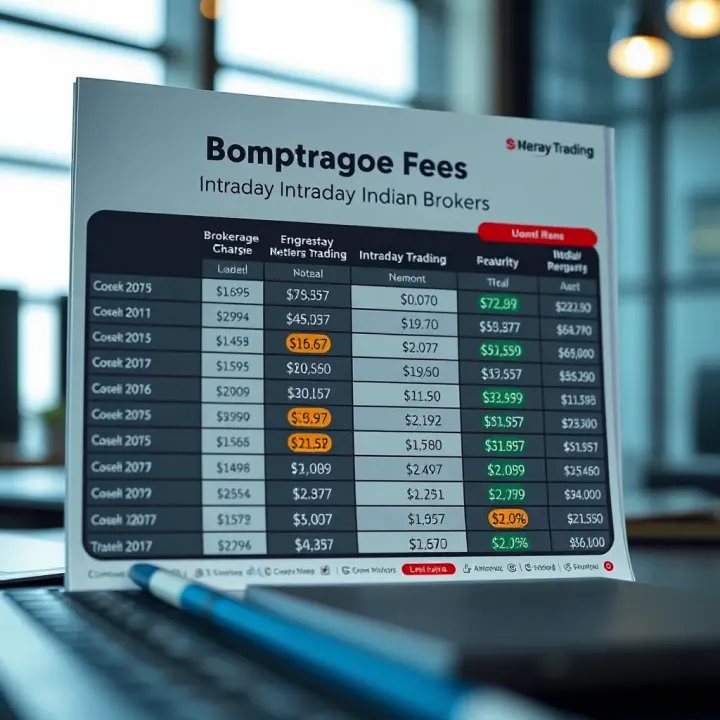
🔍 Discover how to find the lowest brokerage charges for intraday trading in India. Compare brokers, learn cost factors & get tips to save on fees and boost returns!
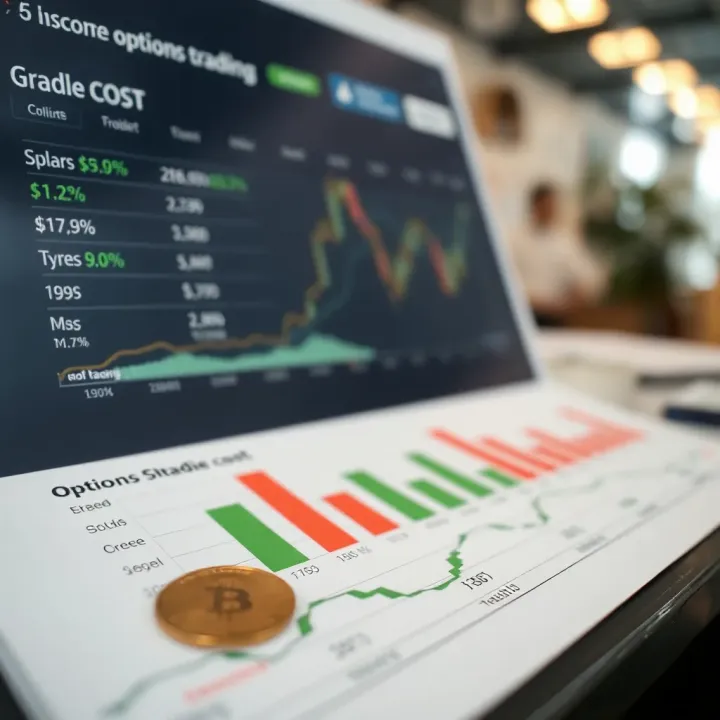
Explore detailed costs involved in options trading in India 📈 from brokerage to exchange and regulatory charges, helping you plan your investments smartly.
Based on 10 reviews