

Time Complexity of Binary Search Explained
🔍 Understand the time complexity of binary search in sorted arrays—it’s efficient, with best, average, and worst cases explained through examples and code insights.
Edited By
James Whitaker
Binary search is a go-to method for traders, analysts, and students when dealing with large, sorted datasets. Its efficiency lies in halving the search space with each step, helping swiftly pinpoint a target value. But what exactly is the best case time complexity of binary search, and why does it matter?
The best case occurs when the element you are searching for is located precisely in the middle of the array on the very first check. In such a scenario, binary search finds the target immediately, performing just one comparison. This means the time complexity is O(1), representing constant time regardless of the size of the dataset.

The quickest possible search in binary search happens when the target is the median element of the sorted array, cutting down search time drastically.
Understanding this best case is useful because it highlights how binary search can perform optimally under ideal conditions. However, in practical trading or investment scenarios where data points may not be so conveniently placed, the average and worst case complexities become more relevant. Still, recognising the best case helps you appreciate why binary search is favoured over simpler methods like linear search, especially on sorted data.
Some key points to note:
Best case time complexity: O(1) (single-step find).
Occurs when the element is at the middle index at the first search attempt.
Contrast with average/worst cases, which typically run in O(log n) time for an array of size n.
For example, consider a stock price list sorted in ascending order. If you're searching for the price exactly in the centre, binary search will grab it quickly. But if your target price is skewed towards the edges, the search takes more steps, aligning with average or worst case complexity.
This understanding helps traders and analysts optimise their search strategies and choose the right algorithm for large-scale data processing, especially in real-time analysis where speed matters.
In the next sections, we will break down the differences between best, average, and worst case complexities of binary search, and what that means for you practically.
Binary search is a powerful technique for quickly finding an item in a sorted dataset. This method is highly relevant for traders, investors, analysts, and students who often work with sorted lists, be it stock prices, financial data, or exam results. Knowing how binary search works helps in understanding its speed and efficiency, especially compared to linear search.
At its core, binary search repeatedly halves the search space instead of scanning through every element. Imagine you’re looking for a particular stock price in a list of 1,000 sorted prices. Instead of checking one by one, you start from the middle—at the 500th price. If your target price is lower than this middle element, you disregard the entire upper half and focus only on the lower 500 elements. On the other hand, if the target is higher, you ignore the lower half. This division keeps going until the target is found or the section to search becomes empty.
This approach drastically cuts down the number of comparisons, making binary search much faster in practice. The halving principle means the search space shrinks quickly, which is why binary search is often preferred in trading algorithms and financial analysis tools that need timely insights.
Each step revolves around comparing the target with the middle element of the current search segment. This simple step determines the next direction of the search. For instance, if you are an investor checking a particular bond price in a sorted list, your software compares your price with the mid element. If they match, the search ends right there—this represents the best-case scenario.
If there’s no immediate match, the comparison informs whether to look left (lower values) or right (higher values). This efficient decision-making process helps save time and computing resources, especially vital when analysing large datasets quickly.
Binary search only works if the data is sorted beforehand. Whether you’re scanning through historical stock prices, bond yields, or exam ranks, the list must be arranged in ascending or descending order. Without this, the logic of eliminating half the search space based on comparison breaks down.
Consider a scenario in which the prices are scattered randomly; you cannot confidently ignore half the data because the target might be anywhere. This precondition ensures binary search delivers on its promise of speedy retrieval.
The efficiency of binary search heavily depends on this sorted order. If the data is sorted, the logarithmic time complexity (O(log n)) means even a large list of, say, 10,00,000 entries, can be searched in about 20 comparisons. But if order is missing or corrupted, the search degrades to a linear scan, costing far more time.
For practical uses like trading platforms or academic software handling huge data, maintaining sorted data structures is crucial. Doing so not only enables fast search but also supports real-time queries and quick decisions.
Remember, binary search isn’t magic; it’s only as good as your data’s order. Keep your datasets sorted to make the most of this efficient search technique.
Understanding the best case time complexity helps grasp the quickest scenario binary search can offer. This is important because it highlights the conditions under which the algorithm performs at its absolute peak speed, saving time and computing resources in practical applications like stock data retrieval or database queries.
Binary search assumes a sorted dataset and repeatedly halves the search space until it finds the target. But sometimes, the target appears right at the middle on the first try. This leads to the best possible outcome, showing developers and traders how efficient binary search can be when conditions are favourable.

The best case happens when the target element is located exactly at the middle index of the current search interval during the very first comparison. For example, imagine searching for the value 50 in a sorted array [10, 20, 30, 40, 50, 60, 70]. Binary search checks the middle element, which is 50 here, and finds the target immediately without making any further comparisons.
This scenario is practically relevant because it represents an ideal hit. In trading algorithms or financial databases, if the data is organised well or the expected value is central, the search completes almost instantly. This reduces running time drastically, improving user experience or speeding up automated decisions.
The time cost in this optimal case is minimal. Since binary search starts by looking at the middle element, if this first check succeeds, no additional steps are needed. This means the algorithm does only one comparison, making the time spent constant regardless of how large the array is.
This best case shows the huge value of efficient data organisation and the advantages of binary search over linear search, which would need to scan elements one by one even in the best case.
The best case time complexity for binary search is expressed as O(1), meaning constant time. No matter if the array has a thousand or a million elements, finding the target in the middle takes just one step. This notation signals that the search time doesn't grow with input size in this specific case.
To contrast, the average and worst cases follow O(log n) complexity. This logarithmic behaviour means the number of comparisons grows slowly as the data size increases, halving the search space each step. For instance, searching in a sorted list of one lakh elements would take at most around 17 checks in the worst case.
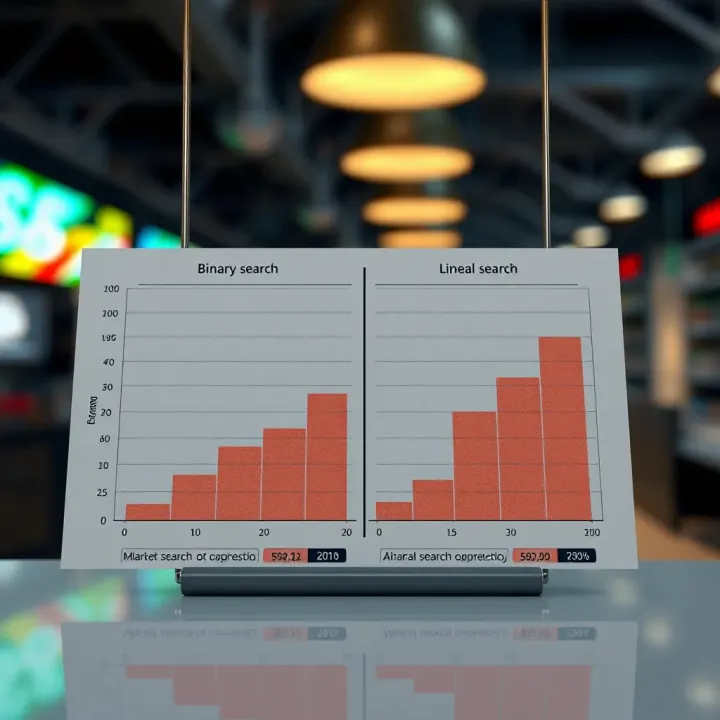
The best case (O(1)) highlights the fastest path, the average case shows typical performance, and the worst case sets an upper bound. Together, these help users decide if binary search suits their needs, particularly where quick lookups are critical.
In simple terms, best case time complexity sets a performance benchmark binary search can achieve, reminding developers of the potential speed when data conditions are favorable.
By knowing these differences well, traders and analysts can better appreciate the efficiency trade-offs when working with large sorted datasets, making smarter decisions about algorithm choice and optimisation.
Understanding the differences between the best, average, and worst case time complexities in binary search helps clarify how the algorithm behaves in various scenarios. While the best case shows the fastest possible search, average and worst cases reveal typical and challenging situations respectively. Traders, investors, and analysts who work with large datasets can benefit by knowing these distinctions, as it influences expectations on search speed and algorithm choice.
On average, binary search displays logarithmic time complexity, denoted as O(log n). This means the number of comparisons required grows slowly with the data size. For instance, searching a sorted array of 1,00,000 elements typically involves about 17 comparisons, as log₂(1,00,000) is close to 16.6. This logarithmic growth is why binary search remains efficient even for large datasets common in stock market analysis or real-time financial queries.
In most real-world cases, the target element lies somewhere in the array but not at the midpoint initially. The algorithm repeatedly halves the search space, gradually zeroing in on the target. For stock data or client records sorted by ID, queries usually take a few steps, not just one, making average case complexity more relevant than the best case. Knowing this helps set realistic performance expectations.
The worst case arises when the target is either not in the list or positioned at one of the extremes. For example, if an investor searches for a share price not present in the dataset, binary search will exhaust all possible splits before concluding absence. Similarly, if the target is the first or last element, the algorithm undergoes maximum comparisons while halving the array repeatedly.
Despite being the worst case, the time complexity remains O(log n). The difference lies in the number of iterations, but the process still shrinks the search space exponentially, rather than linearly. This ensures search speed remains manageable, even in demanding situations like high-frequency trading systems where time is crucial.
The best case offers near-instant results, such as when the target coincides with the middle element of the array's current segment. This happens rarely but allows immediate exit. Average and worst cases demand more steps but still perform efficiently due to logarithmic scaling. This distinction matters for performance tuning and understanding response times, especially in algorithm-driven trading platforms.
Datasets in finance or trading rarely exhibit best case conditions consistently. Market data fluctuates, and targets usually appear unpredictably. Therefore, while best case offers an ideal benchmark, professionals must primarily plan for average or worse scenarios. Optimising code to handle these typical cases effectively ensures consistent, reliable performance, making binary search a preferred choice for sorted data retrieval tasks.
Understanding what shapes the best case time complexity of binary search helps traders and analysts gauge when this algorithm will give its fastest results. Several elements play a role, from how the data is arranged to the specific way the algorithm is implemented. Let’s break down these factors one by one.
The best case for binary search happens when the target is exactly at the middle of the array. Since binary search splits the search space in halves, it immediately checks the middle element first. If this matches the target, the search ends right there, costing just one comparison—effectively constant time or O(1).
In practice, though, this scenario is quite specific. For example, in a sorted list of stock prices or company valuations, if you are searching for a value that happens to be near the median, the search completes very quickly. This can be handy when datasets are static and well-understood, allowing optimisation based on expected target distribution.
The ordering of data must be sorted for binary search to work, but where the target lies within that order influences the best case chance. If the target appears randomly, the likelihood of it being in the middle on the first check is low. For instance, searching for a rare stock ticker symbol in an alphabetically ordered list is unlikely to hit the middle directly.
That said, data ordering can sometimes reflect real-world patterns. If you expect high trading volumes or prices clustered around a central value, the best case may happen more often. When data is skewed or clustered unevenly, best case performance becomes less predictable.
Some implementations of binary search include micro-optimisations to detect an immediate match without extra steps. For example, rather than performing multiple checks per iteration, the algorithm compares the target to the middle element directly and returns early if matched.
This optimisation is practical for trading software or financial apps where speed matters for user queries. By cutting down unnecessary comparisons, these optimisations help ensure that if the best case arises, it executes efficiently to save precious milliseconds.
Building on the optimisation concept, early exit strategies end the search as soon as the target is found instead of continuing unnecessary iterations. This approach avoids redundant checks and works hand-in-hand with a well-sorted dataset.
In real-world scenarios like searching large datasets of stock prices during market hours, early exit helps maintain responsive applications. Beyond binary search, applying this logic in other algorithms ensures resources are used prudently.
The position of the target and careful implementation details directly affect how quickly binary search reaches best case performance, making it more than just theory for professionals dealing with large, sorted datasets.
In summary, knowing these factors lets you better understand and predict when binary search will deliver lightning-fast results, especially useful in time-sensitive trading and financial analysis contexts.
Knowing the best case time complexity of binary search helps developers grasp how quickly the algorithm can perform under optimal conditions. This insight is valuable when designing software that must respond swiftly to certain queries, especially when the target element often lies near the middle of the dataset. For example, finance analysts working with sorted stock price arrays might find that certain price points appear frequently right in the centre, making best case optimisations attractive.
In scenarios where many searches target the middle element or frequently appearing values, best case complexity becomes significant. Suppose a trading platform often needs to confirm critical price levels stored centrally in sorted arrays; here, binary search could fetch results in constant time, improving user experience. On top of that, applications with predictable access patterns gain from algorithms tuned for rapid hits.
That said, a search algorithm’s average and worst case performance can't be ignored. Even if best case is O(1), most queries typically don’t hit the middle value immediately. For developers working with large or unpredictable data—like market data with arbitrary price points—it’s essential to weigh the average logarithmic time. Algorithms that optimise solely for best case might underperform under typical or rare worst case scenarios where the target is at the edges or absent.
Developers can tune binary search implementations to exit early when they find the target. Simple techniques include checking the middle element before other operations or incorporating protective conditions that break out of loops immediately. Such strategies reduce unnecessary steps, speeding up the search in best case situations.
Removing redundant calculations within the search loop helps too. For instance, repeatedly recalculating midpoints or comparing the same elements more than needed adds up, especially when running millions of searches during high-frequency trading or analytics. Keeping variables precomputed and conditions straightforward ensures smoother execution, which matters when performance delays cut into trading decisions or time-sensitive analyses.
Developers should remember: While refining best case speed is beneficial, reliable and balanced performance across all cases is key to robust applications, especially in volatile financial environments.
By understanding and applying these principles, developers targeting the Indian stock market or similar data-intensive fields can craft search functions that respond fast without compromising overall stability and reliability.
🔍 Understand the time complexity of binary search in sorted arrays—it’s efficient, with best, average, and worst cases explained through examples and code insights.

🔍 Explore linear vs binary search time complexity in depth—compare performance, efficiency, and how sorting affects search speed to pick the best method for your data.

Explore optimal binary search trees 🌳 and their time complexity ⏱️. Learn methods, algorithms, and how OBSTs improve search efficiency in data structures.
🔍 Learn binary search in C with clear code examples, tips to avoid errors, and compare with other methods. Improve your array search skills efficiently! 💻
Based on 12 reviews