
Understanding Money in Forex Trading
💱 Learn money management in Forex trading—how markets work, calculating profits & losses, plus smart risk strategies for Indian traders. 📈💡
Edited By
Chloe Mitchell
Forex trading involves buying and selling currencies to profit from their fluctuating prices. Unlike stocks, forex markets operate 24 hours a day across global financial centres, making it attractive for traders who want flexibility. However, making consistent money here needs more than luck—it demands knowledge, strategy, and discipline.
The forex market's size is staggering, with daily turnover exceeding $6 trillion. This liquidity ensures traders can enter and exit positions quickly, but it also means prices can swing widely within minutes. For instance, the INR to USD exchange might jump or dip due to domestic RBI policy news or global events like oil price shocks.
To navigate this volatile space, you need clarity on key concepts:
Currency pairs: Forex deals in pairs, like EUR/USD or USD/JPY, where you buy one currency and sell the other.
Pip: The smallest price move a currency pair can make, often 0.0001 for most pairs, representing your gain or loss unit.
Leverage: Borrowed capital that amplifies your buying power but raises risk exponentially.
A sample practical approach could be analysing the Indian rupee’s trend against the US dollar. Say, if RBI hints at rate hikes, the rupee may strengthen, presenting a selling opportunity for USD/INR.
Successful forex trading is less about chasing quick wins and more about managing risk, reading markets carefully, and sticking to a tested plan.
Knowing the basics sets foundation, but understanding market movements and controlling emotions proves critical. This article breaks down useful strategies, risk management methods, and how to avoid common mistakes to help you trade forex profitably.
Forex trading, at its core, means buying one currency while simultaneously selling another, aiming to profit from changes in exchange rates. This market operates globally and is the largest financial market, handling over $6 trillion daily. Grasping its basics helps traders make informed decisions rather than guessing, which is vital for consistently earning profits.
Forex (foreign exchange) trading involves exchanging currencies to capitalise on movements in currency values. Unlike stock markets with set hours, forex runs 24 hours nearly, making it attractive for traders who want flexibility. For instance, you could trade the Indian rupee against the US dollar while the Mumbai market is closed, using international time zones.
Most forex trading revolves around major currency pairs like EUR/USD, USD/JPY, GBP/USD, and USD/INR. Major pairs account for most market volume and tend to have tighter spreads, meaning lower trading costs. Take USD/INR, where significant movements can occur based on RBI policies or US economic data. Knowing these pairs helps traders focus on currencies with better liquidity and predictable behaviour.
Central banks, such as RBI or the US Federal Reserve, influence currency prices via interest rates and monetary policy. If RBI unexpectedly cuts rates, the rupee might weaken as borrowing becomes cheaper, impacting exporters and importers. Global economic events—like inflation data, trade deficits, and geopolitical tensions—move markets by affecting investor sentiment about currency stability and growth prospects.
Currency prices shift daily due to supply and demand changes. For example, if many investors want USD to buy Indian assets, demand for USD rises, pushing its price up versus INR. Similarly, trade imbalances or capital flows affect currency valuations. Understanding this supply-demand ebb and flow helps traders anticipate price moves rather than reacting late.
Reports like GDP growth, inflation rates, employment numbers, and trade data provide snapshots of a country’s economic health. Stronger-than-expected Indian GDP growth might strengthen the rupee as it signals a robust economy attracting foreign funds. Traders keep close watch on these indicators to time their trades ahead of expected currency movements.
Tensions, elections, or trade disputes can cause spikes or dips in currencies unexpectedly. For example, an unexpected diplomatic conflict can lead to risk aversion, making investors switch to "safe-haven" currencies like the US dollar or Japanese yen. Staying aware of such news helps traders avoid sudden losses and spot opportunities during volatile times.
Understanding these forex basics equips you with the foundation necessary to read the market pulse confidently and craft trading strategies suited for real-world situations. Without this knowledge, you risk going in blind or being misled by market noise.
In summary, a strong grasp of what forex trading involves, recognising key currency pairs, and appreciating how economic and geopolitical factors influence currency prices is essential to trade profitably and avoid common pitfalls.
Getting ready to trade forex involves more than just knowing the market; it requires picking the right tools and setting up proper accounts. This preparation plays a big role in how smoothly your trades go and how well you manage risk and profits.
Regulatory environment and broker credibility
The regulatory backdrop ensures that brokers follow fair practices and keep your funds secure. For Indian traders, opting for brokers regulated by recognised authorities like the Securities and Exchange Board of India (SEBI) or global regulators like the Financial Conduct Authority (FCA) is wise. A credible broker provides transparency and reduces risks of scams or unfair trading conditions.
Trading platforms and features
Your broker’s trading platform can make or break your trading experience. Look for platforms offering real-time quotes, smooth execution, and useful tools like charting, indicators, and alerts. MetaTrader 4 (MT4) and MetaTrader 5 (MT5) are popular options with both beginners and experienced traders. Some brokers also offer proprietary apps with added features suited for mobile trading in the Indian market.
Spreads, commissions and fees
Costs eat into your profits, so compare spreads (difference between buy and sell price) and commission charges carefully. Brokers may have fixed or variable spreads; for example, during volatile news sessions, spreads can widen noticeably. Choose brokers with low fees but beware of hidden costs like withdrawal charges or inactivity fees. For instance, a spread of 0.5 pips on USD/INR is competitive within India’s forex brokers.
Demat and trading accounts for forex
Unlike equity markets where Demat accounts hold shares, forex trading uses specialised trading accounts. Indian brokers usually offer accounts directly linked to the forex segment with the necessary permissions. You must ensure your trading account supports forex products and complies with RBI regulations about currency exposure.
Leverage and margin explained
Leverage allows you to control a larger position with a smaller capital outlay. For instance, with 1:50 leverage, ₹10,000 lets you trade ₹5,00,000 worth of currency. While this amplifies gains, losses also increase proportionally. Margin is the minimum amount required to keep your position active. Managing leverage wisely is crucial to avoid heavy losses, especially during unexpected market moves.
Demo accounts for practice
Starting with a demo account is like learning to drive in an empty parking lot before hitting busy roads. These accounts let you trade virtual money in real market conditions, helping you understand order executions, testing strategies, and getting familiar with the platform without risking actual money. Most Indian forex brokers offer demo accounts for unlimited practice.
Proper preparation with the right broker, account setup, and practice can boost your chances of consistent profits while safeguarding your capital in forex trading.
Understanding how to analyse forex markets is essential for anyone looking to make consistent profits. The two primary ways to evaluate these markets are fundamental analysis and technical analysis. Both offer different lenses through which you can anticipate currency movements and refine your trading decisions.
Studying economic reports involves examining official data such as GDP growth, inflation rates, employment figures, and trade balances. For example, if India’s GDP growth shows a strong uptick, the rupee might strengthen as it indicates economic health. Traders closely watch these reports because they directly affect currency demand. Ignoring them is like driving blind.
Monitoring central bank policies is another critical part of fundamental analysis. Central banks like the Reserve Bank of India (RBI) control interest rates and manage money supply, which can influence exchange rates. If the RBI raises interest rates, it often attracts foreign investment, boosting the rupee's value. Keeping an eye on central bank announcements helps traders anticipate market moves and adjust their positions accordingly.
Following currency-related news keeps you updated on geopolitical events, trade negotiations, or international conflicts that can shake forex markets. For instance, unexpected political unrest in a country can weaken its currency due to uncertainty. Staying informed helps traders avoid sudden losses and spot opportunities early.
Reading charts and patterns is about interpreting historical price movements to predict future trends. Common patterns like head and shoulders, double bottoms, or triangles provide clues about possible price reversals or continuations. Visualising price action allows traders to plan entry and exit points systematically without relying solely on gut feeling.
Using indicators like RSI (Relative Strength Index) and moving averages helps quantify market conditions. RSI indicates whether a currency is overbought or oversold, while moving averages smooth out price data to reveal the trend direction. For example, a crossover of a short-term moving average above a long-term one might signal a buying opportunity.
Applying candlestick analysis gives detailed information about price action during each trading session. Candlestick patterns such as doji, hammer, or engulfing suggest shifts in buyer and seller sentiment. Indian traders often combine candlestick analysis with other indicators to confirm signals before making trades.
Combining fundamental and technical analysis equips you with a balanced view, reducing guesswork and enhancing your chances to trade profitably in the volatile forex market.
Having a clear trading strategy is essential to succeed in the forex market. Without one, traders often rely on guesswork, which can wipe out capital quickly. Developing a strategy helps identify entry and exit points, manage risk, and maintain discipline. For example, a trader might decide to focus on trading just the EUR/USD pair during London and New York sessions to take advantage of higher liquidity.
Short-term approaches involve buying and selling currencies within the same trading day or even minutes. These methods suit traders who prefer fast action and want to capitalise on small price movements. Scalping, a subset of day trading, targets tiny profits per trade but executes many trades during peak hours.
Timing trades and quick exits are crucial here. Since positions are held briefly, delays in decision-making can erase profits or increase losses. For instance, if a trader spots a short-term resistance at 1.18 in USD/INR, acting swiftly to exit can protect gains. Tools like one-minute charts and alerts help with precision.
Managing emotions during trades is a constant challenge in short-term trading. Rapid price swings can trigger fear or greed, leading to rash decisions. Maintaining discipline by sticking to stop-loss limits and predefined targets keeps losses minimal and avoids chasing the market impulsively.
Holding trades for days or weeks suits traders who prefer less frantic pace. They aim to capture medium-term trends by holding positions longer than day traders. For example, a swing trader might hold GBP/USD for a week, waiting for a reversal after economic data release.
Using trends and momentum is key to these strategies. Traders look for clear directional movement in currency pairs before entering. Technical indicators like moving averages or the MACD help identify trend strength and potential reversals. This approach generally avoids noise from small price fluctuations.
Balancing risk and reward in swing and position trading involves careful assessment of potential gains relative to possible losses. If a trader spots a trend promising 150 pips but with a stop-loss risking 50 pips, the risk-reward ratio is 3:1, considered favourable. Position sizing and setting stop-loss orders keep risk under control.
Developing and sticking to a strategy is what separates consistent traders from casual gamblers in forex markets.
A methodical approach enables smarter decision-making and better capital protection, ultimately increasing the chance of steady profits.
Managing risk is the backbone of sustainable forex trading. Without proper risk controls, even the best trading strategies can burn through your capital quickly. Protecting your capital means safeguarding your fund from significant losses so you can stay in the game longer and use your experience to improve profits. For instance, a trader who risks 2% of capital per trade ensures that a string of losing trades won't wreck their entire account.
Setting sensible limits means placing stop-loss and take-profit orders at levels that reflect realistic market behaviour. Setting a stop-loss too tight may lead to frequent exits from normal price fluctuations, eroding gains. Conversely, a too-wide stop-loss can expose you to bigger losses. For example, if trading the USD/INR pair, you might set a stop-loss 0.5% below the entry price if the pair’s usual volatility is around 0.3%, balancing safety and flexibility.
Avoiding large drawdowns is critical because significant losses drain capital and confidence. Stop-loss orders cap the maximum loss per trade, preventing an emotional spiral or margin calls. For example, if you have ₹1 lakh in your trading account, risking ₹2,000 (2%) per trade with a stop-loss order limits potential damage and keeps you in the market for future opportunities.
Securing profits ensures that gains don't slip away during market reversals. Using take-profit orders automatically closes your position once a target price is reached. This removes temptation to hold on hoping for more and helps lock in profits regularly. For instance, a trader might set take-profit 1% above the entry price when risk tolerance allows a 0.5% stop-loss, maintaining a risk-reward ratio of 1:2.
Position sizing and risk per trade involves calculating how much of your capital to allocate to each trade based on your risk tolerance. This means adjusting trade volume so a stop-loss loss matches your set risk level, say 1-2% of total capital. For example, if you have ₹5 lakh and want to risk ₹5,000 per trade, you adjust the lot size accordingly, rather than risking a fixed trade size blindly.
Diversification across currencies spreads risk by trading different currency pairs rather than focusing on only one. Since currency pairs react differently to economic events, losses in one may be offset by profits in another. A trader might combine USD/INR, EUR/USD, and GBP/INR positions. This approach reduces the risk of a single event wiping out gains.
Avoiding over-leverage is vital since high leverage magnifies both gains and losses. While leverage allows trading larger positions with smaller capital, using it carelessly can wipe out your margin quickly. For example, an Indian retail trader using leverage of 1:50 should be cautious not to risk more than 1-2% of their capital per trade. Avoid chasing profits with high leverage, as this often leads to margin calls and big losses.
Controlling risk is less glamorous than making profits but far more important for long-term success. Small, consistent wins protected by good risk management add up to steady growth.
These techniques help keep your forex trading journey steady and less prone to sudden setbacks that drain your account. Managing risk effectively allows you to trade with confidence and limits unnecessary stress.
Mistakes in forex trading can quickly drain your capital and morale. Recognising common pitfalls helps you build a strong foundation for lasting profits. This section focuses on practical ways to avoid emotional trading and the importance of continual learning. Both save you from costly errors and keep you adaptable in volatile markets.
Sticking to the plan is the backbone of disciplined trading. Many traders jump into or exit trades impulsively, swayed by sudden market moves. Having a clear plan with entry, exit, and stop-loss levels prevents hasty decisions. For example, if your analysis shows a sell position on USD/INR at 83.50 with a stop-loss at 84.50, deviations driven by market noise should be ignored. This reduces losses and builds consistency over time.
Controlling your greed and fear is just as crucial. Overconfidence after a winning trade might tempt you to increase position sizes recklessly. Likewise, fear after a loss can cause premature exits or avoidance of new opportunities. Imagine chasing a quick profit by ignoring your risk limits, only to lose more than expected. Practising patience and emotional control helps you stick to your risk management rules and avoid these traps.
Regularly reviewing past trades helps you learn from mistakes and successes alike. Keeping track of why you entered or exited trades, market conditions, and outcomes uncovers patterns in your behaviour or strategy. For instance, you may find you tend to hold losing trades too long or miss profit targets consistently. Adjusting your approach in response improves future results.
Keeping updated on market changes is vital. Forex markets respond swiftly to economic reports, RBI policy decisions, geopolitical events, and global investor sentiment. Missing key updates could put you at a disadvantage. Following reliable financial news, official reports, and expert analyses keeps you informed and ready to adjust your strategy when needed.
Maintaining a trading journal ties all this learning together. It serves as a personal reference, organising your observations, emotions, and lessons from each trade. Besides numeric data, noting your mindset helps identify emotional triggers. Over time, a journal becomes a powerful tool to boost confidence and discipline.
Consistency comes not just from strategies but from disciplined execution and continuous improvement. Avoid rushing into trades or reacting emotionally; review your performance and stay aware of market shifts.
Practical tips for building your journal include:
Record trade details: currency pair, entry/exit prices, timeframe
Note market conditions influencing decisions
Capture emotions and thoughts during trades
Regularly analyse your journal to detect patterns
These steps help you refine your trading and increase your chances of sustained profits in the forex market.
💱 Learn money management in Forex trading—how markets work, calculating profits & losses, plus smart risk strategies for Indian traders. 📈💡
💹 Learn how to make money forex trading in India with practical tips on market analysis, broker selection, risk management, and controlling emotions for success.
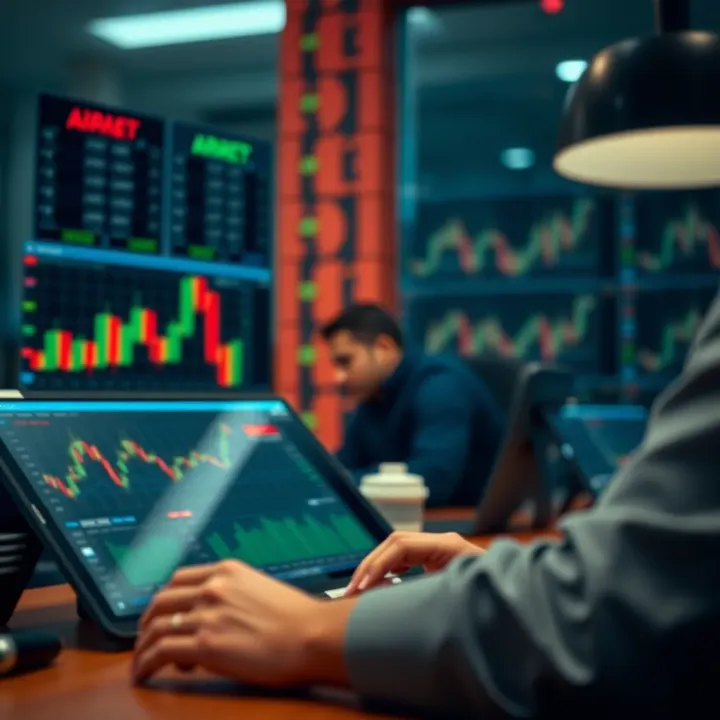
Explore forex trading in India 🇮🇳 with insights on selecting top brokers, managing risks, using tools, and understanding market rules for confident investing.

Find the best forex trading brokers in India 🇮🇳. Compare top platforms, check regulatory safeguards & key features. Make smart trading decisions confidently!
Based on 5 reviews