
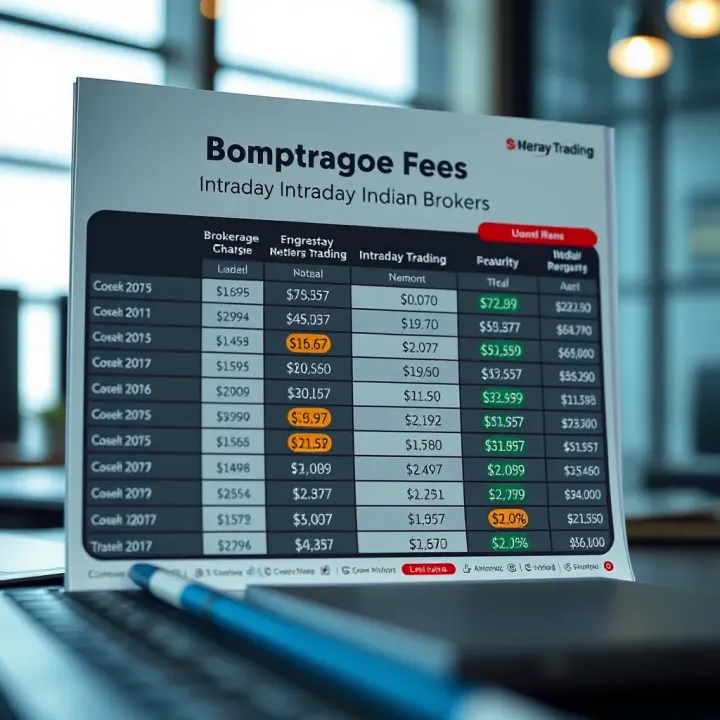
Lowest Brokerage Charges for Intraday Trading in India
🔍 Discover how to find the lowest brokerage charges for intraday trading in India. Compare brokers, learn cost factors & get tips to save on fees and boost returns!
Edited By
Amelia Foster
Intraday trading involves buying and selling stocks within the same trading day, aiming to profit from short-term price movements. In this fast-paced environment, brokerage charges play a significant role in shaping a trader’s profitability. Understanding these fees is essential because even small costs can add up quickly when trades happen multiple times a day.
Brokers charge fees for executing trades on your behalf, but the way they calculate these charges varies. Some brokers adopt a flat fee per trade, while others use a percentage of the transaction value. For example, a flat-rate broker might charge ₹20 per trade regardless of size, whereas a percentage-based broker might charge 0.01% of the trade value. This difference impacts cost efficiency depending on your trade volume and size.

Traders who ignore brokerage costs risk eroding their profits significantly, especially in intraday trading where margins are tight.
Several factors influence brokerage charges:
Trade Frequency: Higher volume traders may benefit from discount slabs or subscription models.
Trade Size: Larger transactions can make percentage fees expensive, making flat charges more attractive.
Brokerage Model: Full-service brokers often charge higher fees but provide research and advisory services, whereas discount brokers offer lower fees focusing mainly on order execution.
For instance, discount brokers like Zerodha or Upstox typically offer flat fees around ₹20 per trade, which works well for traders executing frequent small trades. On the other hand, traditional brokers like ICICI Direct or HDFC Securities may charge more but include value-added services.
To manage brokerage costs effectively:
Compare fee structures among brokers considering your trading pattern.
Opt for brokers offering transparent and predictable charges.
Use tools or apps that track cumulative brokerage and alert you when costs rise.
Understanding brokerage charges is vital for intraday traders, especially since such charges directly impact the profits or losses realised at the end of the trading day. Brokerage acts as the commission fee paid to the broker for executing buy and sell orders on your behalf. Unlike long-term investing, intraday trading involves multiple trades within the day, making every paise of brokerage cost add up quickly.
Brokerage charges function as the service fee brokers charge for facilitating trades on stock exchanges like the NSE or BSE. Think of it as a transaction fee — every time you buy or sell shares, the broker deducts a small percentage or fixed amount as brokerage. For intraday trading, where positions open and close within one trading session, these charges can significantly reduce net gains if not factored in carefully.
Take an example of a trader who buys shares worth ₹1 lakh and sells them the same day with an expected profit of ₹2,000. If the brokerage charges are 0.05% per trade, the total brokerage paid would be ₹100 (₹50 each for buying and selling), which shrinks the profit to ₹1,900. If the brokerage is higher or structured as a fixed fee, actual profits dip even more.
Intraday brokerage costs typically differ from delivery-based trading due to the frequency and volume of trades. Brokers often levy lower brokerage rates on intraday trades to attract active traders. Since intraday trades do not carry overnight risk, some brokers charge a minimal percentage or even a flat fee per trade.
On the other hand, delivery or positional trades may have higher brokerage percentages reflecting the different risk profiles and longer holding durations. For intraday, the emphasis is on keeping costs low because many traders execute tens or hundreds of trades in a day. Hence, the structure is tailored to ensure that brokerage does not choke profitability in fast-paced trading.
There are mainly two common brokerage fee structures for intraday trading:
Percentage-Based Brokerage: Here, brokers charge a fixed percentage of the trade value, say 0.01% to 0.05% per transaction. This scales with trade size, so larger trades pay proportionally more.
Fixed Brokerage Per Trade: Many discount brokers offer a flat fee per trade, such as ₹20 or ₹30 regardless of trade size. This benefits traders dealing in bulk or higher ticket sizes.
Sometimes brokers provide bundled plans with a monthly fee for unlimited intraday trades, which can work well for very active traders. It's crucial to note that besides brokerage, other charges like Securities Transaction Tax (STT), Goods and Services Tax (GST), and stamp duty also apply, influencing overall cost.

Every trader should match their trading style and volume with the brokerage plan to ensure costs don’t outweigh gains. Starting with a clear idea about charges helps avoid unexpected surprises that eat into profits.
Keeping brokerage charges transparent and affordable is an important factor for intraday traders looking to improve their bottom line efficiently.
Understanding the common brokerage models used by Indian brokers is essential for intraday traders. Brokers in India primarily adopt three fee structures: percentage-based brokerage charges, fixed brokerage plans, and zero brokerage or discount brokerage models. Knowing these helps traders choose the most cost-effective option aligned with their trading habits.
Percentage-based brokerage means the fee is calculated as a fraction of the total trade value. For instance, if a broker charges 0.05% per trade, and you buy shares worth ₹1,00,000, the brokerage would be ₹50. This model is common among traditional full-service brokers since it scales with trading volume, encouraging traders to transact larger sums. However, frequent small trades can rack up costs quickly. For example, HDFC Securities and ICICI Direct typically apply such percentage-based charges, which can add up for intraday traders executing multiple trades in a day.
Fixed brokerage plans charge a set fee per trade regardless of the trade size. This can be beneficial for intraday traders who deal with large volumes, as the cost remains stable, unlike the percentage model where fees increase with trade value. Zerodha’s flat fee of ₹20 per trade is a popular example. Fixed brokerage provides predictability, making it easier for traders to calculate their expenses upfront and manage profitability effectively.
Discount brokers have disrupted the market by offering zero or minimal brokerage on intraday trades. They rely on volume and additional services for revenue. Take Upstox and Angel One — they either waive off brokerage for intraday trades or charge a nominal fee. This model suits active traders looking to keep costs low. That said, zero brokerage does not mean zero cost; other charges like Securities Transaction Tax (STT), GST, and stamp duty still apply.
Choosing the right brokerage model depends on your trading frequency, average trade size, and service expectations. Comparing these models can save you thousands over time.
Traders should also consider service quality, platform reliability, and research support when selecting a broker, not just the brokerage charges. A cheaper brokerage fee might mean fewer support services or slower trade executions, which could impact profitability.
By understanding these models clearly, intraday traders in India can make informed choices that balance cost with convenience and service quality.
Several key factors shape the brokerage charges traders face in intraday trading. Understanding these elements helps traders manage costs better and protect their profit margins. Let's explore the main influences.
The number and size of trades you make directly impact your brokerage fees. Brokers often charge per trade or based on turnover. For example, if you make 20 trades of ₹50,000 each in a day, your costs differ vastly from someone making just two trades of ₹5 lakh each. High-frequency traders benefit from brokers offering lower per-trade charges or bulk discounts. But if you trade less often, paying a fixed fee might be more economical. For instance, discount brokerages like Zerodha or Upstox usually charge a flat ₹20 per order, making it suitable for frequent intraday traders.
Choosing between a full-service and discount broker changes your cost structure. Full-service brokers like ICICI Direct or HDFC Securities offer research, advisory, and portfolio management but charge higher brokerage—often a percentage of turnover. Discount brokers focus on low transaction fees with minimal extras. So, if you prefer hands-on support, higher charges come with the package. But if you trade independently, discount brokers can save you significant sums on brokerage.
Brokerage isn’t the only charge eating into your profits. You must consider other costs like Securities Transaction Tax (STT), Goods and Services Tax (GST) on brokerage, exchange transaction fees, stamp duty, and SEBI turnover charges. These add up and vary depending on the state you trade from and the broker’s policies. For example, GST is 18% on brokerage, so a ₹20 charge turns into ₹23.60 after tax. Stamp duty differs by state—for Mumbai, it’s lower than in Maharashtra’s other regions. Always factor these in when calculating your net intraday trading cost.
Keep in mind: the smallest charges can accumulate quickly in day trading. Even a ₹5 difference per trade matters over hundreds of transactions.
By considering trade frequency, broker type, and all associated costs, you can make informed choices that keep your intraday trading affordable and efficient.
Choosing a broker with the right brokerage charges can make or break intraday trading profits. Comparing fees across popular Indian trading platforms helps traders pinpoint where they can maximise gains without compromising on service quality. Since brokerage is one of the biggest costs in intraday trading, especially with frequent trades, understanding the fee structures in popular platforms saves money and optimises trading strategy.
Full-service brokers like ICICI Direct, HDFC Securities, and Kotak Securities often charge brokerage as a percentage of the transaction value. Typically, this fee ranges from 0.25% to 0.50% per trade, though some may offer slab-based discounts at higher volumes. For example, if you trade ₹1 lakh intraday, the brokerage could be around ₹250 to ₹500 per transaction. But these brokers also bundle benefits such as detailed research reports, personalised advisory, and a wide range of investment options beyond equities. This can be useful for traders who value support but may increase fixed costs that chip into overall profits.
Discount brokers like Zerodha, Upstox, and Angel One have disrupted the scene by offering flat-rate or zero brokerage on intraday equity trades. Zerodha, for instance, charges ₹20 or 0.03% (whichever is lower) per executed order. This fixed cost model suits high-frequency traders because total brokerage expense stays predictable and low regardless of trade size. Additionally, these platforms are tech-savvy, offering intuitive apps and fast execution but usually lack extensive advisory services. For traders focused strictly on reducing costs, such brokers present a clear advantage.
The choice isn't simply about lower fees — it's about balancing cost savings with the kind of support you need. Full-service brokers justify higher charges through superior customer assistance and advisory, which can help new traders or those juggling multiple financial products. Meanwhile, discount brokers appeal to cost-conscious traders who prioritise speed and low charges.
For intraday trading, where margins are slim, even small differences in brokerage add up quickly. So, weigh whether the additional services from full-service brokers bring enough value to offset higher fees.
Look beyond nominal brokerage charges to factor in reliability, platform features, order execution speed, and other hidden costs like GST, Securities Transaction Tax (STT), and transaction charges. A platform charging slightly more per trade but providing faster order execution and less slippage might save you money in the long run.
In short, comparing brokerage charges across popular Indian platforms demands a thoughtful approach—consider your trading style, volume, and added services to select a broker that fits your needs and keeps your trading profitable.
Reducing brokerage charges is an effective way to enhance profitability in intraday trading. Since intraday trading involves frequent buying and selling within the same day, brokerage costs can accumulate quickly. By adopting specific strategies, traders can keep these charges under control without compromising on trade quality or speed.
Selecting a broker that matches your trading style matters a lot in controlling costs. For instance, if you are a high-frequency trader executing multiple trades daily, a discount broker with a flat fee per trade, like Zerodha or Upstox, can save significant brokerage compared to full-service brokers charging percentage fees. Conversely, if you prefer moderate trading with additional research and advisory support, a full-service broker like ICICI Direct or HDFC Securities may justify their higher charges through value-added services. Evaluate fee structures carefully and balance them against your trading habits and service needs to pick the best fit.
Every trade you make attracts brokerage and other levies, so efficiency reduces unnecessary spend. Avoiding excessive churning of your portfolio and planning trades with a clear entry and exit strategy helps cut down on transaction frequency. Additionally, monitor your order size; smaller lots increase per-trade cost in fixed brokerage models. For example, placing two trades of ₹10,000 each might cost more than a single trade of ₹20,000 in a fixed brokerage regime. Using limit orders instead of market orders can also help prevent slippage, reducing indirect costs.
Smart trade planning not only increases profitability but also trims cost leaks that eat into your gains.
Several brokers and platforms provide technology-driven tools to reduce brokerage expenses. Mobile apps like Zerodha’s Kite or Angel Broking’s Angel One offer real-time tracking and trade execution options at minimal costs. Many discount brokers run periodic offers waiving account opening or maintenance fees. It's beneficial to stay updated on such promotions. Furthermore, brokers sometimes provide zero brokerage till a specific monthly turnover or a fixed number of trades. Leveraging such promos can lower costs without affecting trading performance. Tools like algorithmic trading via AMCs or APIs could automate efficiency but need a careful cost-benefit analysis.
By aligning your broker choice to your style, improving trade discipline, and leveraging tech perks, you can smartly manage and reduce brokerage charges. This balanced approach not only safeguards your profit margins but also enhances your confidence in intraday trading decisions.
🔍 Discover how to find the lowest brokerage charges for intraday trading in India. Compare brokers, learn cost factors & get tips to save on fees and boost returns!

Explore top zero brokerage intraday trading apps in India 📱 Know their costs, features, risks, and essential tips to trade smartly and save on charges!
Discover how trading apps in India charge brokerage 📈 Compare the lowest fees, learn how costs affect returns, and pick apps that fit your investing style.
📈 Discover how to pick the best shares for intraday trading in India with smart strategies, market insights, risk tips, and popular stock choices to boost your trades.
Based on 13 reviews