

Effective Candlestick Patterns for Trading Success
📈 Explore 35 key candlestick patterns to read market trends, grasp trader sentiment, and refine your trading strategy with practical tips and a handy PDF guide.
Edited By
Benjamin Clarke
Intraday trading focuses on buying and selling stocks or other securities within the same trading day. The goal is to close all positions before the market shuts to avoid overnight risks. Indian markets, particularly the National Stock Exchange (NSE) and Bombay Stock Exchange (BSE), are known for their volatility, which means traders need effective strategies to capitalise on price movements.
Success in intraday trading depends on quick decision-making combined with a disciplined approach. Traders often rely on technical analysis, volume patterns, and market news, but without clear plans, even experienced traders can face losses. For instance, a trader buying shares of Reliance Industries early morning may aim to book profits by noon based on short-term indicators, rather than holding on hoping for a big gain.
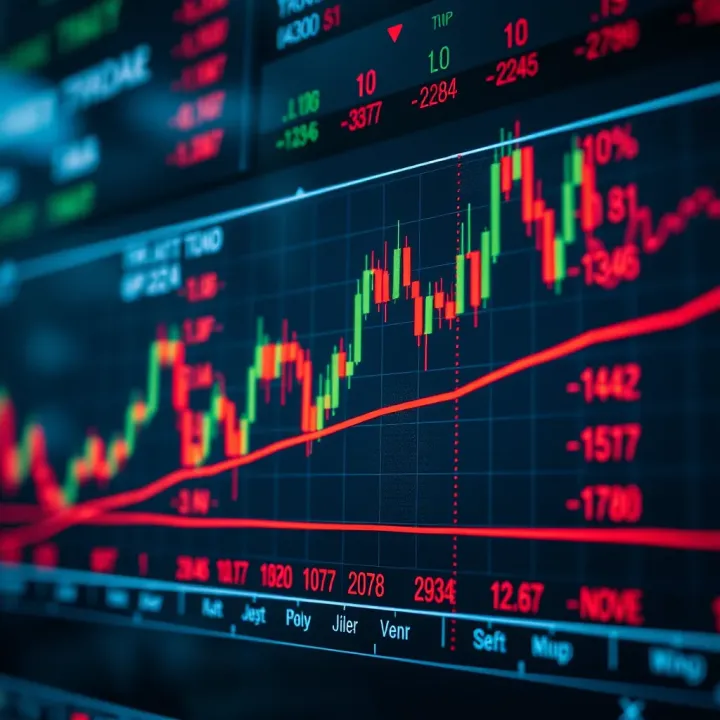
Intraday trading isn’t about luck; it’s about having a tested plan, disciplined risk management, and the ability to read the market pulse quickly.
Here are some core techniques often used for intraday profits:
Set a stop-loss: Limit losses by deciding upfront the maximum loss you can tolerate per trade.
Use technical indicators: Tools like moving averages, RSI (Relative Strength Index), and volume analysis help spot entry and exit points.
Trade liquid stocks: Focus on high-volume shares such as those from the Nifty 50 list to ensure smooth transactions and tight bid-ask spreads.
Besides tools and indicators, intraday trading requires psychological control. Keeping emotions like fear and greed in check prevents hasty decisions and helps stick to the trading plan. Many traders who fail often admit they deviated from their strategies under pressure.
Understanding market timings helps as well. The first hour after the market opens (9:15 am to 10:15 am IST) typically sees the highest volatility. Savvy traders often watch these movements closely to catch early trends.
In the coming sections, we will explore practical strategies that consider Indian market patterns, risk control methods, and behavioural tips to sharpen your trading edge.
Grasping the fundamentals of intraday trading is essential for anyone aiming to trade successfully within the same day. It helps you understand how to make swift decisions, manage risks, and optimise profits during market hours. Without this foundation, you might end up reacting blindly to market movements or holding on to positions beyond the day's close, which defeats the purpose of intraday trading.
Defining intraday trading and its scope: Intraday trading involves buying and selling stocks or other financial instruments within a single trading day. The key is to close all positions by the market’s end, avoiding overnight exposure to reduce risk. In practical terms, if you buy shares of Tata Steel in the morning and sell them before the market closes, that's intraday trading. This style suits traders looking for quick gains rather than waiting for long-term growth.
Difference from long-term investing: Unlike long-term investing, where the focus is on a company’s fundamentals and holding assets for months or years, intraday trading is all about short-term price movement and market sentiment. Long-term investors might not react to daily volatility, but intraday traders thrive on it. For example, while a long-term investor buys Reliance Industries for future dividends and growth, an intraday trader watches day-to-day price swings to enter and exit positions swiftly.
Key instruments traded during the day: Intraday traders usually trade in liquid instruments such as stocks, futures, options, and currencies. Large-cap stocks like Infosys or HDFC Bank are popular because high volume ensures quick buy and sell executions. Besides equities, traders also focus on derivatives, which multiply exposure without needing high capital, letting them benefit from smaller price moves.
Trading hours in Indian stock exchanges: The National Stock Exchange (NSE) and Bombay Stock Exchange (BSE) operate from 9:15 am to 3:30 pm IST on all trading days. Understanding these hours is vital because price action varies throughout the day. The opening bells often bring highs in volatility driven by overnight news, while the last hour can witness sudden price swings as traders close their positions.
Impact of volatility on intraday decisions: Volatility is a double-edged sword—it creates opportunities to profit but also raises risk. High volatility stocks like Adani Enterprises or Zee Entertainment can offer quick profits if timed right, but they can also move against you suddenly. Effective intraday traders monitor volatility using tools like Bollinger Bands or Average True Range (ATR) to determine entry and exit points based on how volatile the market is.
Timing the market for maximum gain: Intraday trading is not just about picking stocks—it’s about timing trades well within market hours. Early morning and late afternoon sessions usually see more volume and price movements. For example, many traders set alerts to buy at dips during the first 30 minutes or sell at minor upswings in the closing hour. Trading mid-day when volumes dip often leads to less predictable moves and may not suit quick trade styles.
To stay ahead, intraday traders must keep a sharp watch on market timings and volatility levels. This helps build practical plans instead of hopping in and out on guesswork.
Understanding these basics helps you enter the market confidently and manage the fast pace of intraday trading. It’s the first step before applying strategies or technical tools effectively.
Successful intraday trading depends heavily on well-tested strategies that help traders react swiftly to market movements. These strategies are vital for managing risks and capturing quick price changes within a trading day. Simply put, without a solid approach, you’re more likely to get caught up in market noise rather than profit from it.
Identifying trending stocks is the first crucial step in momentum trading. Traders look for stocks that show strong directional movement, either rising or falling sharply, often fuelled by news, earnings reports, or sector activity. For instance, a pharmaceutical company releasing promising trial results might see its shares surge; spotting this momentum early can set the stage for profit.

Using technical indicators for momentum helps confirm trends and signal entry points. Indicators like the Relative Strength Index (RSI) or Moving Average Convergence Divergence (MACD) show whether a stock is overbought or oversold, which aids traders in deciding when to jump in or exit. These tools filter out random fluctuations, ensuring the momentum is genuine.
Entry and exit rules for momentum trades keep losses minimal and gains realistic. Traders often enter when the stock crosses above a moving average or hits a certain RSI threshold, setting stop losses just below key support levels. Exiting at a predefined profit point or when indicators show weakening momentum avoids giving back profits during sudden reversals.
Basics of scalping strategy involve making multiple small trades throughout the day to take advantage of tiny price movements. This strategy suits traders who prefer rapid, repetitive actions over waiting for big trends. For example, buying shares of a liquid stock like Reliance Industries when price dips by a few paise and selling within minutes to lock in quick gains.
Choosing stocks suited for scalping is crucial; liquidity and volatility must be balanced. Scalpers prefer stocks with high daily volume to enter or exit positions swiftly, but volatile enough to provide the small price swings needed for profit. Stocks from sectors like banking or IT, with predictable patterns during specific market hours, often fit this profile.
Risk and reward considerations in scalping differ from other strategies because profit targets are small and tight stops are essential. A scalper might aim for ₹1-2 per share with a stop loss just below to prevent big losses. The key lies in high trade frequency and discipline — even a few losing trades shouldn’t wipe out several winners.
Spotting breakout levels means identifying price points where stock breaks above resistance or below support, signalling potential strong moves. For example, if a stock like Tata Motors consistently hits ₹400 and then pushes above it with volume, it might indicate a breakout.
Volume confirmation techniques verify breakouts by checking if accompanied by higher-than-average trade volume. Without volume support, breakouts can be misleading. A sudden jump in price on low volume often leads to false signals, so traders watch volume spikes carefully for confirmation.
Managing false breakouts requires caution, as not all breakouts lead to sustained moves. Traders can wait for a retest of the breakout level or use trailing stop losses to protect capital. This approach helps avoid being trapped in situations where price quickly retreats below support or above resistance after a breakout.
In intraday trading, strategy is your compass amid fast price changes. Momentum, scalping, and breakout methods each have unique advantages, but applying them with discipline and market understanding is what leads to consistent gains.
Effective risk management and strict discipline form the backbone of successful intraday trading. Without a clear plan to limit losses and manage capital, even the most promising trades can quickly turn sour. Indian markets, known for their volatility, demand that traders don’t just chase profits but also protect themselves against sudden swings. Proper risk controls help ensure that one bad trade won't wipe out your entire capital.
Stop losses are non-negotiable tools for intraday traders. They act as automatic exit points to prevent losses from spiralling out of control. Consider this: if you enter a trade hoping to make ₹5,000 but without a stop loss to cap the loss at ₹1,000, a sudden market downturn could cost you far more. A stop loss ensures you cut your losses early instead of hoping to recover, which often leads to even bigger risks.
Calculating an effective stop loss requires both technical insight and adherence to your risk appetite. Traders often use the Average True Range (ATR) or previous support and resistance levels to set stop losses. For example, if a stock’s support level is ₹950, setting a stop loss just below at ₹945 means you exit before the price falls significantly. Alternatively, ATR-based stop losses adjust for volatility, widening in choppy markets and tightening in calm phases.
Setting achievable profit targets ensures you book gains rather than chasing elusive highs. Targets should relate to the stock’s recent price movements and market conditions. If a momentum stock typically moves 2% in a day, targeting a 3% gain might be overambitious. A rule of thumb is maintaining a reward-to-risk ratio of at least 2:1 — meaning if your stop loss is ₹100, your profit target should be ₹200 or more. This discipline keeps your trades sensible and sustainable.
Don’t put all your eggs in one basket when intraday trading. Allocating capital across several trades spreads risk and capitalises on diverse opportunities. If your total capital is ₹5 lakh, you might choose to divide it into five chunks of ₹1 lakh each. This way, if one trade fails, it doesn’t drastically dent your overall portfolio. It also allows you to keep some funds free for unexpected chances.
Your risk tolerance defines how much capital you expose per trade. Conservative traders might limit losses to 0.5% of their total capital per trade, while aggressive ones might accept up to 2%. For instance, with ₹5 lakh, risking 1% means your stop loss should not allow losses beyond ₹5,000. Adjusting trade size accordingly ensures you stay within your comfort zone and avoid emotional trading under pressure.
Keeping some capital liquid during the trading session is crucial to seize fresh opportunities emerging due to market news or technical breakouts. A fully committed portfolio leaves you no room to manoeuvre. For example, holding back 10-20% of your capital allows you to enter trades mid-session when volatility spikes. Liquidity also helps exit losing trades swiftly without facing margin pressure.
Discipline in risk management isn't just a safety net—it shapes your entire trading approach. Managing stop losses, sizing trades wisely, and preserving liquidity can mean the difference between steady gains and heavy losses in intraday trading.
Technical tools form the backbone of intraday trading strategies. Using them effectively helps traders spot opportunities, measure market momentum, and manage risks throughout the trading day. In the fast-moving Indian markets, relying on chart patterns and technical indicators enables traders to react promptly and base decisions on data rather than guesswork.
Moving averages and crossover signals help smooth out price fluctuations to reveal the underlying trend. Traders often use short-term moving averages, like 5-day or 15-day exponential moving averages (EMA), alongside longer periods such as 50-day EMA. When a short-term moving average crosses above a longer one, it signals a possible upward momentum, suggesting a buy. Conversely, a bearish crossover signals a possible sell. For example, if Reliance Industries’ 5-day EMA crosses above its 50-day EMA during market hours, it may indicate strong buying interest, prompting intraday traders to enter long positions.
Relative Strength Index (RSI) for momentum gauges how overbought or oversold a stock is based on recent price movements. RSI values range between 0 and 100; readings above 70 often suggest an overbought condition, implying a possible pullback, while values below 30 hint at oversold levels, indicating a potential bounce. For intraday traders, RSI can signal when to exit or enter trades, especially when price action aligns with RSI extremes. For instance, if Tata Motors’ RSI hits 80 mid-session, an intraday trader might book profits anticipating a correction.
Bollinger Bands measure volatility by plotting bands above and below a moving average, usually at two standard deviations. When prices approach the upper band, it signals heightened volatility and possible overextension; the lower band signals the opposite. Intraday traders watch for price bouncing off these bands or breaking through to catch momentum shifts. If Infosys stock price moves sharply outside the upper band on heavy volume, a trader may take a quick profit or place a stop to protect gains.
Triangles, flags, and pennants are continuation patterns indicating pauses before a trend continues. A symmetrical triangle shows price consolidating with narrowing highs and lows, often preceding a breakout in the prevailing trend’s direction. Flags and pennants appear after strong moves, showing brief consolidation. For example, HDFC Bank stock forming a pennant on the 5-minute chart suggests a potential continuation of its uptrend once volume picks up, signalling a good entry point.
Head and shoulders pattern is a reliable reversal formation. The "head" peak sits higher than two "shoulders" on either side. An intraday break below the "neckline" signals the start of a downtrend. Traders watching ITC stock might spot this pattern forming mid-session, prompting them to short once the neckline breaks, minimising losses from a weakening trend.
Double tops and bottoms indicate exhaustion of buying or selling pressure. A double top shows two peaks at nearly the same level, suggesting resistance, while a double bottom shows two lows, signalling support. Intraday traders monitor these patterns for a quick reversal signal. For instance, if Maruti Suzuki’s price hits a double top on a 15-minute chart, traders could consider booking profits or shorting, expecting the price to move down.
Using these technical tools and chart patterns gives you a framework to read the market’s pulse better and make informed, timely decisions in intraday trading. Familiarity with these increases confidence and sharpens entry and exit timing in the hectic trading environment.
Intraday trading is as much about managing your mind as it is about analysing charts and numbers. The pace of the market demands quick decisions, but emotional control and discipline separate successful traders from the rest. Handling fear and greed effectively, avoiding impulsive moves, and staying focused under pressure can make a significant difference in outcomes.
Dealing with fear and greed involves recognising their impact on your choices. Fear often creeps in when a trade moves against you, tempting you to exit prematurely or hesitate on good opportunities. Greed, on the other hand, may push you to hold on too long, chasing profits beyond your plan. Take the example of a trader who sees a stock rising sharply and gets caught in greed, ignoring exit signals, only to lose gains quickly. Learning to acknowledge these feelings without acting on them helps maintain steady decision-making.
Avoiding impulsive decisions means sticking to your strategy rather than chasing every sudden market move. Impulse trading often leads to poor timing and higher transaction costs. For instance, reacting to noisy market chatter by entering a trade without analysis has caused many freshers unnecessary losses. Developing patience and trusting your analysis can prevent such rushed mistakes.
Maintaining focus under pressure is critical during volatile market phases when prices swing rapidly. Distractions or panic can cloud judgement, leading to errors like poor entry or exit timing. Traders often find it helpful to work in a quiet, organised space and take short breaks to clear their mind during sessions. Staying calmly attentive improves your ability to process information and execute trades effectively.
Setting daily goals and limits provides a roadmap for your trading day. Defining targets for profits and maximum acceptable losses keeps emotions in check and prevents overtrading. For example, deciding to book profits once ₹5,000 is earned or cutting losses at ₹2,000 prevents unnecessary risks and preserves capital.
Keeping a trade journal is a practical tool to track your decisions, actions, and emotions during trades. Recording entries like stock chosen, reasons for entry/exit, and lessons learned makes you more self-aware. Over time, this helps identify recurring mistakes or areas requiring improvement.
Reviewing and learning from trades sharpens your skills by converting experience into insight. Regularly analysing past trades helps you understand what worked and what didn’t, refining strategies accordingly. Even successful trades deserve review to reinforce good habits, while losses highlight caution points. This continuous learning cycle is vital for growth as an intraday trader.
Psychological resilience combined with clear discipline not only protects your capital but also enhances trading consistency. Building this mindset gradually, supported by a solid plan, is essential for long-term intraday success.
Maintaining emotional stability and following a thoughtful plan stand you in good stead amidst the fast and often unpredictable market swings of Indian exchanges. These psychological tactics work alongside technical strategies, making sure your actions reflect reason rather than reaction.
📈 Explore 35 key candlestick patterns to read market trends, grasp trader sentiment, and refine your trading strategy with practical tips and a handy PDF guide.
📈 Learn intraday trading in India with practical tips, key strategies, effective tools, and smart risk management to trade confidently within a day. 📉
📈 Intraday trading basics explained for Indian investors: strategies, risks, tools, and tips to trade confidently within the same day.💡

Discover the key chart patterns in intraday trading 📈 suited for Indian markets. Learn to spot clear entry-exit signals and make faster, smarter decisions today!
Based on 5 reviews