

Understanding Market Chart Patterns for Trading
📈 Learn to spot key market chart patterns that reveal stock price trends and boost your trading strategy for smarter, well-informed decisions in the Indian market.
Edited By
Chloe Mitchell
Intraday trading demands swift decisions backed by solid evidence from market data. Chart patterns serve as valuable tools in this regard. They highlight price movements that repeat often enough to help traders predict short-term trends. In Indian markets, where volatility and trading volumes can vary widely during the day, recognising effective chart patterns makes a tangible difference.
Unlike long-term investing, intraday trading thrives on quick entry and exit points. Traders look for patterns with clear signals rather than ambiguous formations. This reduces guesswork and helps protect capital in fast-moving sessions.

Common chart patterns include:
Triangles (ascending, descending, symmetrical) which signal potential breakout points.
Flags and Pennants indicating brief pauses before a trend continues.
Double tops and bottoms that often suggest reversals.
Mastering these formations requires understanding how they develop and break out under real trading conditions. For example, a rising triangle pattern forming on Nifty 50 intraday charts may suggest a breakout beyond resistance levels, prompting a buy entry with tight stop-loss placement.
Knowing when a pattern is valid is as important as spotting it. Volume confirmation and price action around key levels provide this validation.
Practical application involves combining pattern recognition with indicators like moving averages or relative strength index (RSI). This mix enhances the reliability of signals and reduces false alarms.
Since Indian markets are influenced by global cues and domestic news alike, traders should also be alert to event-driven volatility, which can affect the usual behaviour of patterns.
By focusing on patterns with reliable entry and exit points, intraday traders can tailor strategies that suit the uniquely dynamic Indian equity environment. This leads to smarter decisions and better risk management within a single trading day.
Chart patterns play a significant role in intraday trading by helping traders identify potential price movements during the trading day. They provide visual cues constructed from historical price data, pointing to where the market might head next. This is especially important for intraday traders who need quick and reliable signals to make swift decisions.
Definition and importance of chart patterns: Chart patterns are specific formations created by price movements on a stock chart. Intraday traders rely on these shapes—like flags, triangles, or head and shoulders—to forecast short-term trends. For example, a ‘flag’ pattern often signals a brief consolidation before a strong continuation of the previous trend, offering a clear trade setup.
How patterns reflect market psychology: These patterns mirror the collective behaviour of buyers and sellers, capturing shifts in market sentiment. A double top pattern, for instance, shows a struggle to break resistance levels, indicating sellers are gaining control. Understanding these helps traders gauge when fear or greed dominates, giving practical insight into price action.
Limitations and risks in intraday context: While chart patterns offer valuable guidance, they are not foolproof. Market noise and sudden news events can cause false breakouts or misleading signals. For intraday traders who work with limited time, relying solely on patterns without confirmation may lead to losses. Hence, matching patterns with volume or momentum indicators is essential to reduce risk.
Support and resistance levels: These are price points where stocks tend to pause or reverse. Support acts like a floor, and resistance like a ceiling. Identifying these levels helps intraday traders decide entry and exit points based on whether a pattern emerges near these zones. For example, a triangle forming near a support level might suggest a bounce back upwards.
Volume and price action relevance: Volume complements price movements by confirming the strength of a pattern. A breakout accompanied by high volume is more trustworthy than one on weak volume. Observing price action—like candlestick patterns—alongside volume enhances accuracy in spotting genuine moves, crucial for fast intraday decisions.
Time frames suitable for intraday analysis: Intraday traders often use shorter time frames like 5-minute, 15-minute, or 30-minute charts to capture swift market changes. Recognising patterns within these frames demands quick judgment since patterns can form and vanish rapidly. Watching multiple time frames simultaneously can aid in filtering noise and choosing high-confidence trades.

For intraday trading, chart patterns are not just shapes on the screen—they reflect how the market is thinking and help you act quickly but wisely.
Understanding these fundamentals provides a solid base for intraday traders aiming to decode market behaviour effectively and improve their trade outcomes using chart patterns.
Popular chart patterns serve as visual cues for traders during the fast pace of intraday trading. These patterns help identify potential continuation or reversal movements, giving traders clearer entry and exit points. In Indian markets, where volatility can spike due to economic or corporate news, recognising these patterns can save time and reduce guesswork.
Flags and Pennants represent brief pauses in a strong trend, usually following a sharp price move (known as the flagpole). Traders spot these patterns to anticipate the trend’s resumption. For example, during a rally in Reliance Industries stock, a small consolidation forming a flag indicates bulls are catching breath before pushing prices higher again. The short duration and compact shape make flags and pennants useful for intraday traders seeking quick moves.
Rectangles form when price bounces between parallel support and resistance levels, signalling indecision before deciding on the next direction. Within an intraday frame, these can last from a few minutes to hours, providing a range where traders can buy near support and sell close to resistance. For instance, Infosys shares may trade sideways in a narrow band before breaking out decisively, which signals a fresh opportunity.
Triangles occur as converging trendlines squeeze the price action, foreshadowing a breakout. Ascending, descending, and symmetrical triangles are common types; symmetrical ones suggest equal chance of moving up or down. In intraday trading, the breakout from the triangle’s apex is key for timing entry. For example, a triangle forming in the Nifty Bank index chart might precede a sharp rally or drop, offering traders a signal to act promptly.
The Head and Shoulders pattern indicates a trend reversal from bullish to bearish. It features three peaks, with the middle peak (head) taller than the others (shoulders). On intraday charts, spotting this pattern early in stocks like Tata Steel can help traders sell before a sharp fall. The upside-down variant signals a reversal to bullish trend.
Double Tops and Bottoms show two failed attempts to break above resistance or below support, signalling reversal chances. For intraday players, a double top in the Nifty 50 implies a likely near-term dip, while a double bottom hints at a bounce. These patterns are relatively easy to spot and act on with a defined stop-loss just beyond the pattern boundary.
The Cup and Handle pattern resembles a rounded bottom followed by a smaller consolidation (the handle), suggesting a continuation after correction. Although more common on daily charts, intra-day cup and handle formations in high-volume stocks like HDFC Bank can guide breakout trades. The handle’s tight range allows traders to place precise stop-loss orders and targets.
Recognising these patterns effectively requires combining them with indicators like volume for confirmation, as many false signals occur. Intraday traders must act quickly, balancing pattern reliability against market noise.
By mastering these popular patterns, intraday traders in Indian stock exchanges can enhance trade precision and manage risk better, navigating hectic market swings with more confidence.
Chart patterns serve as a roadmap for traders, helping to predict potential price movements based on historical market behaviour. However, the reliability of these patterns in live markets hinges on accurate identification and confirmation through supporting indicators. For intraday traders working in the fast-paced Indian stock exchanges like the NSE and BSE, spotting reliable patterns amid price fluctuations is vital. Relying solely on visual patterns can mislead, so combining them with volume and momentum indicators sharpens trading decisions and reduces risk.
Volume spikes as confirmation play a key role in validating chart patterns. When a breakout or breakdown happens—say, from a rectangle or triangle pattern—a corresponding increase in trade volume strengthens the signal. For example, if a stock like Tata Steel breaks above a resistance level with volume surging beyond its average intraday levels, it backs the bullish move. Low volume breakouts often fail, leading to false signals and potential losses.
The Relative Strength Index (RSI) and Moving Average Convergence Divergence (MACD) further add weight to pattern signals. An intraday RSI reading below 30 suggests oversold conditions, pointing to a possible reversal, while a reading above 70 can signal overbought weakness. MACD crossovers—where the MACD line crosses above or below the signal line—help time entries or exits within identified patterns. For instance, during a head and shoulders pattern forming on Reliance Industries' chart, an MACD bearish crossover near the right shoulder can confirm impending price decline.
Avoiding false breakouts requires keen observation beyond pattern shapes alone. False breakouts often lure traders into quick losses when prices retrace immediately after breaching support or resistance. To guard against this, monitor volume, wait for a candle close beyond the breakout level, and check momentum indicators. For instance, a breakout on Infosys's intraday chart without volume spike or RSI confirming momentum should be treated cautiously. Waiting for confirmation reduces premature entries.
Stop-loss placement strategies play a fundamental role in intraday trading discipline. Place stop-loss orders slightly beyond the pattern’s opposite side boundary or recent swing low/high to limit losses. For example, if entering long on a pennant breakout in Hindustan Unilever, set a stop-loss just below the pennant’s lower trendline. It prevents a minor pullback from triggering a full exit.
Target price estimation using pattern measurements helps in planning trades effectively. Measure the height of the pattern’s base—like the flagpole height in a flag pattern—and project it from the breakout point to estimate the target. If Maruti Suzuki's flag pattern has a 100-point height, forecast the target price roughly 100 points above the breakout level. This practical approach informs exit points logically.
Adjusting trade management for intraday volatility is essential given the market’s quick swings. Use trailing stops to protect profits as the price moves favourably, especially during volatile session phases like market open or just before close. For instance, if L&T shows strong advance after a triangle breakout, tightening stops gradually helps preserve gains. Flexibility with exit strategy reflects the dynamic nature of Indian equity markets.
While chart patterns provide valuable signals, confirming them in live markets with volume and momentum, along with disciplined trade management, enhances intraday trading success.
By focusing on these practical steps, traders can avoid common pitfalls of pattern trading and adapt efficiently to the fast-paced Indian intraday landscape.
Chart patterns alone do not guarantee success in intraday trading. Combining them with other technical tools and robust risk management strengthens trades and adapts strategies to real Indian market conditions. Practical tips help traders use patterns effectively within the fast-moving market environment.
Integrating moving averages and trendlines brings clarity to pattern signals. Moving averages smooth out price fluctuations, helping identify the overall trend. For example, in an uptrend confirmed by a rising 20-day moving average, a bullish triangle pattern signals a likely breakout continuation. Trendlines drawn along support and resistance add precision to entries and exits. When price nears a trendline supporting a chart pattern, traders can time their trades better rather than entering blindly.
The role of candlestick patterns is crucial as they reveal immediate market psychology, complementing chart patterns. A key reversal candlestick like a hammer or shooting star at the breakout point of a pattern provides a stronger confirmation. For instance, spotting a bullish engulfing candle near a double bottom pattern suggests buyers stepping in, improving confidence in the trade.
Using multiple time-frame analysis improves signal reliability. Intraday traders often check broader time-frames like 15-minute or hourly charts alongside 5-minute charts. A breakout on a 5-minute chart reinforced by pattern structure on a 15-minute chart reduces false signals. This layered approach helps avoid impulsive trades and stay aligned with the overall market momentum.
Position sizing for intraday trades controls potential losses while allowing meaningful gains. Since intraday moves can be volatile, risking 1–2% of trading capital per trade limits damage. For example, if a stop-loss is ₹50 below the entry, the number of shares bought is adjusted so the total risk fits within this limit. This discipline saves capital for multiple opportunities.
Avoiding overtrading based on patterns is as critical as spotting them. It’s tempting to jump on every identified pattern, but indiscriminate trading increases transaction costs and emotional stress. Quality over quantity pays off; focusing on clearly confirmed patterns and keeping daily trade numbers manageable helps maintain sharp decision-making.
Practical limits on losses and gains protect traders from greed or fear-driven mistakes. Setting predefined stop-loss and target levels based on the pattern’s price projection ensures objective exits. For example, a flag pattern typically offers a target equal to the preceding move’s length. Following these limits strictly during intraday swings avoids major drawdowns and locks in profits.
Understanding market liquidity and volatility in Indian exchanges means choosing stocks wisely. Bluechip stocks like Reliance Industries or HDFC Bank offer stable volume and tighter spreads suitable for patterns. Mid-cap stocks may show sharper moves but require caution due to lower liquidity. Knowing the average daily volume and volatility range helps in setting realistic stop-losses.
Impact of news and macroeconomic factors on Indian markets can override technical signals. Sudden announcements related to RBI policy or GST changes often cause sharp price gaps that disrupt pattern formations. Keeping an eye on economic calendars and news ensures patterns are traded in appropriate contexts.
Popular sectors and stocks for intraday pattern trading in India include banking, IT, and pharmaceuticals, owing to their active trading volumes and sensitivity to domestic news. For instance, Infosys or Dr Reddy’s tend to form reliable patterns thanks to steady participation from institutional and retail traders alike. Selecting sector favourites increases the chance that chart patterns will play out as expected.
Practical tips such as combining chart patterns with other technical tools, managing risks diligently, and adapting to Indian market nuances increase the success rate of intraday trades. Employ these methods to spot better opportunities and safeguard your trading capital effectively.
📈 Learn to spot key market chart patterns that reveal stock price trends and boost your trading strategy for smarter, well-informed decisions in the Indian market.

📈 Learn how bullish chart patterns indicate upward trends in stocks, helping you time buys confidently and avoid common trading errors for better gains.

📈 Discover key chart patterns used in trading to predict market moves, learn how to spot them, and find tips with PDF resources for deeper insights.
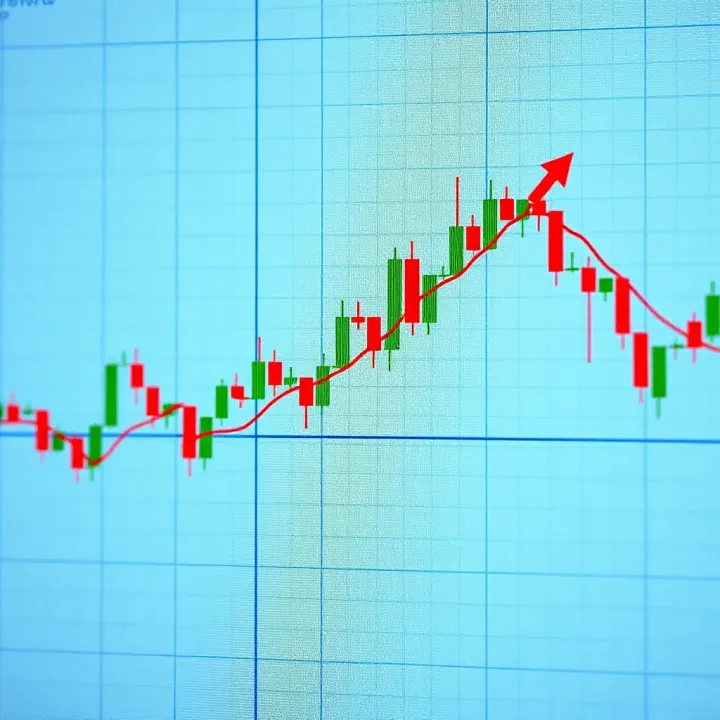
Explore key chart patterns 📈 that help traders spot profitable moves in stocks & markets. Learn how these form, why they matter, & trading tips for smarter entries and exits.
Based on 9 reviews