
Understanding Optimal Binary Search Trees
Learn how dynamic programming helps build optimal binary search trees efficiently 🌲. Explore cost calculations, construction methods, and practical use cases.
Edited By
Amelia Wright
Binary Search Trees (BSTs) form the backbone of many efficient algorithms in computer science, especially when dealing with sorted data. At their core, BSTs arrange values in a way that for any given node, values in the left subtree are smaller, and those in the right subtree are larger. This property makes searching, insertion, and deletion straightforward and faster than scanning whole lists.
However, not all BSTs are created equal. Simple BSTs can become unbalanced with skewed data, degrading performance to a linear search in the worst case. To avoid this, specialised variants use various balancing techniques to maintain optimal tree height and access speed.

Balanced BSTs keep operations fast by preventing the tree from leaning too much to one side, improving efficiency in data-intensive applications like trading platforms or financial data analysis.
For traders or analysts handling large volumes of data — like stock prices or market trends — choosing the right BST variant can impact milliseconds of delay. While a basic BST might suffice for small or mostly random inputs, self-balancing trees like AVL or Red-Black trees provide guaranteed performance and faster lookups under heavy loads.
Meanwhile, adaptive structures like Splay trees can be more efficient when access patterns are non-uniform, automatically adjusting to frequently accessed data. Such behaviour suits real-time systems where recent data requires quicker operations.
Basic BST: Simple and easy to implement, but can degrade to a linked list with sorted inputs.
AVL Trees: Maintain strict height balance, leading to quicker lookups but slightly more complex insertion and deletion.
Red-Black Trees: Provide a more relaxed balancing approach. They are widely used in libraries and systems for their balance between insert/delete speed and search efficiency.
Splay Trees: Self-adjusting, bringing recently accessed nodes to the root, good for access-heavy tasks.
Treaps: Combine BST property with heap property, introducing randomness to maintain balanced structure.
Understanding these BST types helps developers and analysts make informed choices tailored to their application demands. In trading and investment systems, where data is huge and time-sensitive, selecting the right tree can speed up queries, reduce lag, and improve reliability. This article will explore each type’s structure, characteristics, and practical use cases in detail.
Binary Search Trees (BSTs) are fundamental data structures in computer science, used extensively for organising and managing data with quick access requirements. Understanding BSTs helps traders and analysts appreciate how information such as stock tickers, order books, or historical trade data can be managed efficiently. This is key in software that supports market decisions, where timely data retrieval saves money and effort.
A Binary Search Tree is a specialised binary tree where each node has at most two children, and nodes are arranged to satisfy the BST property: the left child's value is always less than the parent node's, while the right child's value is greater. This sorted property allows for faster search operations compared to unsorted structures.
For example, consider a BST storing stock prices; locating a specific price is quicker as the tree divides the range into smaller subsets at each node. Unlike arrays or linked lists, BSTs provide logarithmic time complexity on average for searches.
An inorder traversal of a BST visits nodes in ascending order of their keys. This property makes BSTs great for scenarios where sorted data retrieval is necessary without additional sorting effort. For instance, brokers reviewing orders from smallest to largest value can utilise inorder traversal to prepare a sorted list directly from the BST.
This traversal visits the left subtree first, then the node itself, and finally the right subtree. Its predictable ordering supports efficient algorithms for ranking and searching within financial datasets.
BSTs find use in many computer science applications relevant to investors and students alike, such as database indexing, where quick lookups mean faster query responses. In trading platforms, BSTs can manage order books or symbol directories efficiently.
Moreover, BSTs enable dynamic data sets to be managed with frequent insertions and deletions—ideal for markets where stock prices and orders continuously change.
Despite their advantages, standard BSTs can degrade to linked lists in the worst case when the data is inserted in sorted order repeatedly, leading to slow search times equivalent to linear scans. Consider a scenario where daily stock prices are added in ascending order; the BST will grow skewed to one side, losing its efficiency.
Such unbalanced trees cause performance issues, which traders dealing with real-time updates cannot afford.
To overcome these flaws, variations of BSTs introduce balancing mechanisms that keep the tree's height in check, preserving fast operations. Self-balancing trees like AVL and Red-Black Trees automatically adjust node arrangement during insertions or deletions to maintain approximate balance.
Balancing ensures that search, insert, and delete operations consistently run in logarithmic time, an essential feature for high-frequency trading systems or big data analysis platforms where speed is critical.
Efficient tree balancing prevents bottlenecks in data access, keeping systems responsive and reliable even under heavy loads.
By appreciating these fundamentals, readers can better distinguish why multiple BST types exist and how they meet diverse software performance needs.
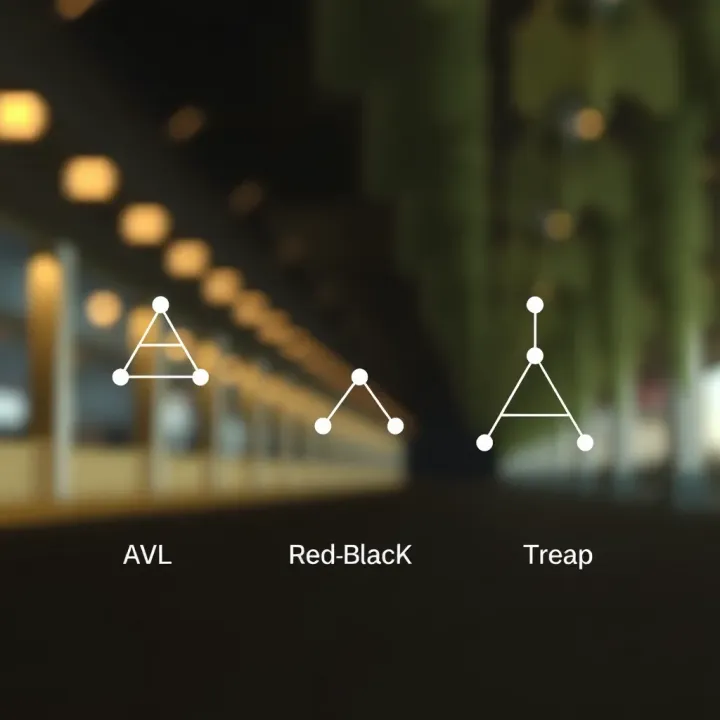
The standard binary search tree (BST) forms the foundation for understanding more advanced variants. It organizes data in a hierarchical structure where each node has at most two children: left and right. The key rule is simple but effective — all left subtree nodes hold values less than the parent node, and all right subtree nodes possess greater values. This property helps in efficient searching, insertion, and deletion, typically running in O(log n) time in a balanced tree.
Step-by-step insertion technique: To insert a new value into a BST, start from the root and compare the value with the current node. If the value is smaller, move to the left child; if larger, move to the right. Continue this until you reach a null position where the new node can be placed. This approach preserves the BST property and keeps the tree correctly ordered. For example, inserting 15 into a tree with root 20 and left child 10 will place 15 as the right child of 10.
Search mechanism in BST: Searching follows a similar pathway as insertion. Starting from the root, compare the target value against the current node. If it matches, the search ends successfully. If the target is smaller, move left; if larger, move right. This stepwise narrowing down means average search steps depend on the tree’s height, offering quicker lookups compared to linear structures like lists.
Deletion scenarios and handling: Deletion in BSTs has three common cases:
Node with no children (leaf): Simply remove the node.
Node with one child: Replace the node with its child.
Node with two children: Find either the in-order predecessor (maximum value in left subtree) or successor (minimum value in right subtree) to replace the deleted node's value, and then delete that predecessor or successor node.
Handling these cases properly maintains the BST properties and ensures consistent performance.
Unbalanced BST and worst-case performance: The BST's efficiency can take a hit when it becomes unbalanced, meaning one branch grows much longer than others. In the worst case, the BST may resemble a linked list, causing search, insertion, and deletion to degrade to O(n) time instead of O(log n). For traders and analysts handling large financial datasets, this slowdown is significant, impacting real-time analytics or decision-making tools.
Skewed trees and impact on operations: Skewed BSTs occur when nodes are inserted in sorted order. For example, inserting stock prices in ascending order without rebalancing will create a right-skewed tree where each node has only a right child. This structure leads to inefficient operations, as traversing takes longer and wastes both time and computational resources. In practice, this indicates the need for balanced variants or periodic tree restructuring when handling time-series financial data or trading logs.
A well-balanced BST not only speeds up data operations but also reduces memory overhead by avoiding unnecessary pointers and nodes in long chains.
By mastering the standard BST structure and its quirks, developers and analysts can better understand why alternative self-balancing trees exist and how they improve data handling in practical software applications.
Self-balancing binary search trees are critical for maintaining efficiency in operations like search, insertion, and deletion. Unlike standard BSTs, which can become skewed and degrade to linear time performance, these trees automatically keep their height in check. This balanced state helps ensure that operations perform close to O(log n) time consistently, which is vital when handling large datasets in trading algorithms, stock analysis tools, or investment portfolio management systems.
AVL trees maintain a strict balance by ensuring that the height difference between the left and right subtrees of any node — known as the balancing factor — stays within the range of -1 to 1. When this difference exceeds these limits, rotations are used to rebalance the tree. There are four rotation types: single right, single left, left-right, and right-left. These rotations adjust the tree structure locally without affecting the overall sorted order, which ensures the tree’s height remains logarithmic.
During insertion or deletion, the AVL tree updates the balancing factors from the point of change up to the root. If any node violates the balance condition, rotations fix it. For example, adding a new stock entry into an investment database could cause an imbalance. The tree will automatically perform rotations to restore balance, keeping search times quick. Similarly, when removing an asset from the portfolio, rotations after deletion maintain the balanced shape, preventing performance drops.
AVL trees shine where read-heavy applications require quick searches alongside moderate updates. For instance, in financial software managing live feeds of securities data, the fast lookup is crucial. Their strict balancing reduces search times noticeably compared to regular BSTs. However, the overhead of balancing makes them slightly slower than other variants like Red-Black trees in write-heavy scenarios.
Red-Black trees use an additional colour property (red or black) for each node, following strict rules to maintain a balanced structure. These rules include the root being black, red nodes cannot have red children, and every path from root to leaves has the same number of black nodes. This colour scheme indirectly controls the tree’s height, ensuring that the longest path is no more than twice the shortest.
When inserting or deleting nodes, these trees may temporarily violate their properties. To fix this, they perform recolouring followed by rotations where necessary. For example, if two consecutive red nodes appear, the tree recolours parent and uncle nodes and may rotate subtrees to restore balance. This combination is efficient and maintains acceptable performance with less strict balancing than AVL trees, which reduces the number of rotations.
Red-Black trees are preferred in many system-level applications due to their balance between efficient search and faster insertion/deletion. Their relaxed balancing criteria mean fewer rotations and quicker updates, making them ideal for dynamic datasets like order books in trading platforms or real-time data indexing in financial services. Additionally, many standard libraries in programming languages implement Red-Black trees behind the scenes, reflecting their practical importance.
Self-balancing BSTs like AVL and Red-Black trees play a pivotal role in maintaining quick data access and manipulation, particularly in complex, fast-moving financial applications where every millisecond counts.
Besides classic and self-balancing BSTs like AVL and Red-Black trees, other variants such as Splay trees and Treaps offer unique advantages in specific scenarios. These variants adapt differently to data patterns or balancing needs, providing practical benefits when typical balancing methods may not be ideal. Understanding these types can help you select the right BST depending on your application’s behaviour and performance priorities.
Splay trees work on the principle of self-adjustment, where recently accessed nodes are moved closer to the root. This approach benefits applications where certain elements are frequently accessed, as splaying reduces the time to reach these elements on subsequent operations. Unlike traditional BSTs that maintain strict structural rules, splay trees use this dynamic reorganisation to optimise search times without storing additional balancing information.
The core operation, called splaying, brings a target node to the root by performing rotations. This method not only speeds up repeated access to the same values but also helps in amortising the cost of operations, offering efficient average-case performance. In practice, this means if you're accessing a small set of data repeatedly, splay trees adapt to make those accesses faster over time.
Common applications include caches, where frequently used data needs quick access, and garbage collection algorithms in programming languages, where splaying improves the efficiency of memory allocation and deallocation. Since their structure is simple and maintenance doesn’t rely on explicit balancing factors, splay trees remain a practical choice when predictable balancing is less critical than adapting to access patterns.
Treaps combine binary search tree ordering with heap priorities to maintain balance probabilistically. Each node has a key, which respects the BST property, and a random priority, which follows heap rules. This hybrid structure ensures the tree remains balanced on average, without the need for complex restructuring.
The random priorities assigned to nodes ensure that the tree shape is unlikely to degenerate into a linear chain, unlike a plain BST. Balancing occurs naturally as nodes are arranged to satisfy both the BST key order and heap priority order. This randomisation often leads to good practical performance, especially when data cannot be predicted or when insertion order varies widely.
Pros of treaps include simplicity in implementation and average-case balanced behaviour, making them useful for applications requiring quick insertions and deletions without costly rotations. However, since balancing depends on randomness, worst-case operations may degrade to linear time, which could be a concern in real-time systems. Plus, randomness means performance can vary between runs, which suits some scenarios but not all.
Both Splay trees and Treaps show how different approaches to balancing and access optimisation can lead to diverse BST designs, each fitting particular application needs.
Selecting the appropriate binary search tree (BST) type is key to ensuring efficient data operations. The choice depends mainly on the expected usage pattern and performance needs. For instance, if your application demands quick search and insertion while maintaining balanced trees, self-balancing BSTs like AVL or Red-Black trees serve better than standard BSTs, which can degrade to linked lists with skewed data.
Different BST variants offer trade-offs between complexity, speed, and memory use. Understanding these trade-offs helps developers decide which tree suits their specific case, whether it’s for a busy database or a memory-conscious embedded system.
The efficiency of BST operations such as search, insertion, and deletion heavily depends on the tree's height. Standard BSTs can reach O(n) time in worst cases, especially if the data is sorted or nearly sorted, causing skewed trees. In contrast, balanced BSTs like AVL and Red-Black maintain heights around O(log n), ensuring operations remain logarithmic and predictable—even for large data sets.
Splay trees perform well on average by adapting to the access patterns but can have occasional costly operations. Treaps offer randomised balancing to guard against worst-case scenarios but introduce randomness which might affect consistency. Therefore, assessing expected input and operation patterns is crucial for selecting a BST with favourable time complexity.
Memory consumption varies among BST types due to additional data stored for balancing. AVL trees require storing height or balance factor for each node, while Red-Black trees store colour bits. Splay trees and standard BSTs have simpler node structures, hence lower memory overhead.
In memory-restricted environments like mobile apps or IoT devices, the slightly higher memory use of AVL or Red-Black trees might be a concern. However, the performance gains often justify the cost. Treaps add priority values to nodes, increasing memory slightly but can still be efficient for many applications.
Database systems rely on tree structures to index and retrieve data swiftly. Balanced BSTs, especially Red-Black trees, often underpin indexing due to their consistent search times and relatively simple implementation. For example, when a stock trading platform needs quick access to historical price data, balanced trees prevent performance dips during peak loads.
Applications such as image processing or data analytics may handle large volumes of data. Here, trees with lower memory overhead are preferred. While AVL trees provide faster searches, their extra storage might strain memory. Developers might opt for Red-Black trees or even standard BSTs with periodic rebalancing to save space without sacrificing too much speed.
Systems requiring real-time responses, like high-frequency trading software or embedded control units, demand predictable operation times. AVL trees, with stricter balancing, guarantee tighter bounds on operation time, making them suitable where delays cause issues. Splay trees might not fit well here, as their amortised time complexity can cause unexpected spikes in operation duration.
Choosing the right BST type is about balancing speed, memory, and predictability according to your application’s needs. No single BST fits all scenarios, so understanding these factors helps you pick wisely.
Learn how dynamic programming helps build optimal binary search trees efficiently 🌲. Explore cost calculations, construction methods, and practical use cases.
Explore how binary search trees store, manage, and find data efficiently with insertion, search, deletion, traversal, and balancing techniques 🌳💻

Explore how linear and binary search algorithms differ in method, efficiency, and use cases. Learn which algorithm suits your data search needs best 🔍📊

🔍 Discover how the optimal binary search technique speeds up data lookups, its key principles, comparisons, and handy coding tips for smoother searches.
Based on 12 reviews