

Understanding Binary Numbers in Computers
Explore how binary numbers power computers by representing data in zeros and ones, with insights on conversion methods and real-world tech uses 💻🔢.
Edited By
Elizabeth Turner
Binary digits, commonly called bits, form the backbone of all digital systems. Every complex piece of computing technology—from mobile phones to stock market trading platforms—relies on these simple units of information. At its core, a bit can exist in one of two states: 0 or 1. This dual-state property allows computers to represent and process data efficiently.

Computers use the binary number system because it aligns naturally with their hardware design. Electronic circuits easily distinguish between two voltage levels representing 0 and 1, reducing errors in data processing. Unlike the decimal system, which uses ten digits (0-9), binary operates only with two symbols. This simplicity ensures reliability in digital electronics.
Bits combine to form larger units, such as bytes (eight bits), which then represent characters, numbers, or instructions in a computer. For instance, the letter 'A' is represented in binary as 01000001. Traders using algorithmic trading systems might witness how these binary codes translate into commands executed in microseconds.
Data Storage: Hard drives and SSDs store information as sequences of bits. A ₹5 lakh transaction record, once digitised, is broken down into millions of bits.
Communication: When you use online trading apps, information packets travel as binary streams over networks.
Analytical Tools: Financial models on trading platforms rely on binary code to execute complex calculations swiftly.
Understanding how binary digits structure data provides a clear insight into how computers manage, manipulate, and transmit information. This knowledge is especially valuable for traders and investors who interact daily with digital tools.
In summary, grasping the concept of bits is fundamental to appreciating the foundation of modern computing. It explains everything from simple text files to sophisticated trading algorithms running behind the scenes.
Understanding the basics of binary digits reveals the foundation upon which modern computers operate. Binary digits, or bits, are the smallest unit of data in computers. They allow digital systems to represent and process complex information efficiently, forming the language that machines inherently speak.
A binary digit, commonly known as a bit, is simply a unit of data that can hold one of two values: 0 or 1. Think of it like a tiny switch that can be either off (0) or on (1). This simple dual-state system is the backbone of all digital computing, helping represent anything from numbers and text to images and sounds.
The practical relevance of bits lies in their reliability. Since devices can easily detect whether a switch is on or off, they minimise errors in data transmission and storage. For instance, when you save a photo on your smartphone, it is ultimately reduced to thousands or millions of bits representing the image's details.
Bits have only two states, making them straightforward to implement in electronic circuits. These states correspond to voltage levels — for example, 0 volts might indicate '0' while 5 volts signals '1'. This binary nature makes circuits less prone to confusion from electrical noise or fluctuations.
In practice, this means computers can operate at high speeds with low error rates. Even tiny variations in voltage won’t cause a computer to misinterpret data, because it’s checking for two clear states, not a spectrum of values.
Binary's simplicity suits digital electronics perfectly. Unlike decimal which has ten digits, binary requires only two states, which fits nicely with the physical realities of electronic systems. Components such as transistors can switch between on or off states very efficiently and quickly.
This efficiency has a direct impact on performance and cost. Digital chips built around binary logic consume less power and generate less heat, which is especially significant for mobile devices and large data centres alike.
Computers represent nearly all data using bits arranged in patterns. For example, an Indian rupee currency symbol, text messages in Hindi or English, stock prices, or your WhatsApp chat history — all convert into sequences of 0s and 1s before processing.
Each bit adds more detail, allowing precise expression of complex information. For illustration, a single character like 'A' might be stored using 8 bits (a byte), while a high-resolution image may require millions of bits to capture every pixel.
Processors use binary logic to perform operations. They execute instructions based on logic gates that process bits through AND, OR, NOT, and XOR operations. These simple operations combine in countless ways, powering everything from basic calculations to complex AI algorithms.
A practical case: when a trader's software checks if a stock's price exceeds a certain value, the processor uses these binary logic conditions in rapid sequence to arrive at an answer instantly.
Memory devices store data as binary patterns. Hard drives, solid-state drives, and RAM hold files, programmes, and system instructions in arrangements of bits stored in cells.
In an Indian context, consider mobile banking apps that rely heavily on this binary-based memory to keep transaction details secure and readily accessible. Efficient storage using binary allows these services to handle lakhs of users smoothly.
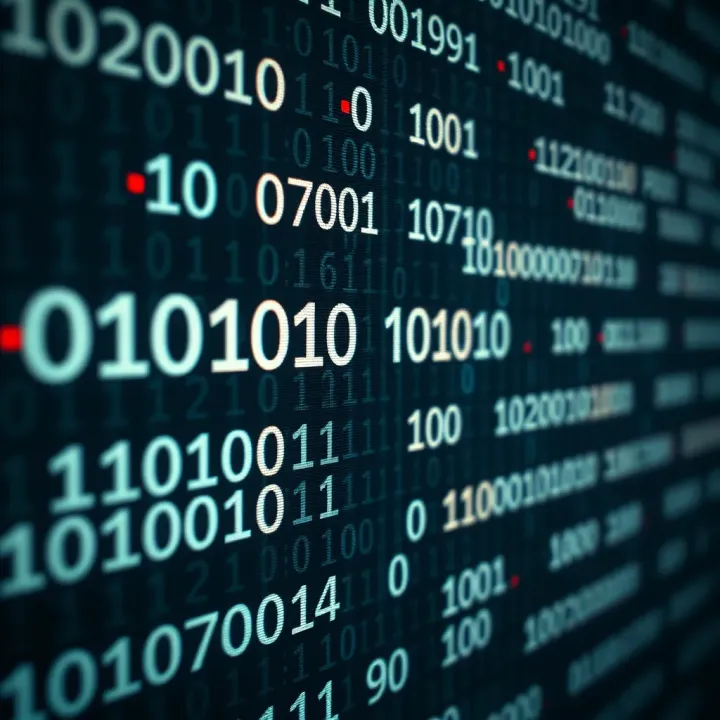
Binary digits underpin every digital system, making them an invisible yet vital part of computing — from trading platforms to video streaming and beyond.
Understanding these basics equips you to navigate the deeper workings of computers and the digital world we use every day.
Binary numbers form the backbone of digital computing, representing information using only 0s and 1s. Understanding their structure and representation is vital for grasping how computers process, store, and communicate data. This section explains fundamental aspects like place value in binary, converting between binary and decimal, and how binary digits group into bytes and words to represent complex data effectively.
Each digit in a binary number holds a place value based on powers of two. Starting from the rightmost digit (least significant bit), each position doubles in value: 1, 2, 4, 8, 16, and so on. For example, the binary number 1011 represents (1×8) + (0×4) + (1×2) + (1×1) = 11 in decimal. This place value system makes it possible for computers to handle large numbers efficiently using just two symbols.
Conversion between binary and decimal is key for humans to interpret machine-level data. To convert binary to decimal, sum the products of each bit’s value and its place value. Reverse conversion involves dividing a decimal number by 2 continually and noting the remainders, which form the binary number when read in reverse order. Traders and analysts often encounter binary conversions when dealing with low-level data representation or debugging financial software.
Binary numbers are used daily in computing tasks like addressing memory locations, managing processor instructions, and encoding data formats. For instance, IP addresses in networking are stored in binary, although usually displayed in decimal for readability. Recognising how binary numbers operate aids traders and investors in understanding data security and system reliability behind their platforms.
A byte consists of 8 binary digits, which is the standard unit of data storage. Each byte can represent 256 different values (2^8), covering characters, small numbers, or pixel colours. In Indian contexts, storage devices like pen drives or external hard disks quantify capacity in gigabytes (GB), where 1 GB equals approximately 1,000 million bytes.
Words are sets of bytes processed as single units by a computer’s CPU. Common word sizes include 16, 32, or 64 bits depending on the architecture. This grouping impacts how fast and efficiently a computer operates. For example, a 32-bit word can hold larger numbers or more complex instructions than a byte, improving performance in computing-heavy tasks.
Bytes combine to represent complex data like images, audio, or text files. An image stored as 24-bit colour depth uses three bytes per pixel—one each for red, green, and blue. Similarly, genome sequencing data or financial transaction logs are stored as multiple bytes, enabling detailed and precise processing. Understanding this helps traders and analysts appreciate underlying data size and transmission requirements in their applications.
The structure and grouping of binary digits enable the vast and varied digital landscape we rely on, from simple text messages to large-scale financial databases.
By mastering how binary numbers are structured and grouped, stakeholders in trading and investment can better grasp the technology shaping their digital tools and platforms.
Binary digits themselves are simply 0s and 1s, but for these to be useful, computers must translate them into data we can understand or use. This translation is essential for everything from displaying text on your screen to playing a song on your mobile. Without interpreting binary data correctly, digital systems would be just a meaningless river of bits.
ASCII and Unicode coding schemes help turn binary sequences into readable characters. ASCII, an older system, uses 7 or 8 bits to represent common English letters, digits, and symbols, suited mainly for basic Latin scripts. However, languages like Hindi or Telugu require many more characters, which is where Unicode comes in. Unicode assigns unique binary codes to thousands of characters used worldwide, enabling text in multiple Indian languages to be stored and displayed correctly across devices.
When you type a message on WhatsApp or draft an email, the text is stored internally as these coded binary values. Each letter or symbol is a specific sequence of bits that software translates back into human-readable form.
Binary for machine instructions converts 0s and 1s into commands the processor can execute. Instead of letters, these binary sequences represent operations like addition, data transfer, or comparisons. For instance, to add two numbers, the processor reads the corresponding machine instruction in binary, performs the calculation, and stores the result. This translation enables software—from a simple calculator app to complex trading algorithms—to function smoothly on hardware.
The binary form of machine instructions varies by processor type but always represents operations compactly. Mastering this understanding is key for those designing firmware or working close to the hardware level.
Examples from everyday digital text processing include text editors like Microsoft Word or Google Docs, which rely on binary codes to save and display documents. Your phone's keyboard converts keystrokes into binary, which apps use to predict text or suggest emojis. Even search engines index pages by interpreting their binary-coded content, making text translation fundamental to digital communication.
Binary representation of pixels in images means each image is composed of tiny dots called pixels, each encoded by binary numbers indicating colour and brightness. For example, a standard RGB image uses 24 bits per pixel—8 bits each for red, green, and blue levels. In a ₹1,200 smartphone camera, this binary data determines the photo’s colours, making devices store and display images accurately.
Encoding sound using binary digits involves sampling sound waves at intervals and representing each sample's amplitude with a binary number. Formats like MP3 or WAV convert your voice or music into these binary codes. This explains how smartphones and music players store thousands of songs in small storage without audio loss.
How multimedia data relies on binary extends beyond just images and sound. Videos combine sequences of binary-encoded images and audio, streaming seamlessly over platforms like YouTube or Hotstar. Without precise binary translation, buffering would be constant, and multimedia experiences would degrade. This reliance on binary is visible in live video trading alerts or mobile advertisements, where clarity and speed matter.
Understanding how binary digits transform into meaningful data underpins everything you do on a digital device—from reading news to investing through mobile apps. It's the unseen language that powers Indian digital growth today.
By recognising these translations, traders, investors, and analysts can appreciate the underlying tech enabling secure transactions, clear information displays, and reliable communication on their devices.
Binary digits form the backbone of computer architecture and communication systems. They allow digital devices to perform complex operations efficiently using just two states—0 and 1. This simplicity translates into reliable circuit designs, faster processing speeds, and effective data transmission over networks.
Logic gates are the fundamental building blocks of digital circuits, using binary inputs to produce binary outputs. Basic gates like AND, OR, and NOT decide how bits interact, enabling a computer to perform calculations and decision-making. For instance, an AND gate outputs 1 only if both inputs are 1, otherwise 0. This logic is crucial in arithmetic operations, control signals, and memory management.
Microprocessors rely on these gates arranged in complex architectures to execute instructions. Binary logic ensures the processor’s inner workings remain simple yet powerful, handling tasks from basic calculations to running entire operating systems. Without binary logic, designing these components would be far more complicated and less efficient.
Performance and efficiency largely depend on how well binary operations are implemented at the hardware level. Simple binary signals consume less power and produce fewer errors, which improves overall system stability. Many Indian tech firms focus on efficient binary circuit designs to enhance battery life and processing in mobiles and embedded devices, showcasing binary's impact beyond just theory.
Digital communication transmits data as binary signals—electrical pulses representing 0s and 1s—which simplify the detection and correction of errors caused by noise or interference. This binary method forms the basis of protocols used in wired and wireless networks, including popular Indian services like Airtel and Jio.
Error detection and correction techniques, such as parity bits and cyclic redundancy checks (CRC), help identify mistakes in transmitted data. These methods rely on binary patterns to offer reliable communication, especially important in India’s diverse network conditions. For example, streaming services like Hotstar or online banking transactions use these error-checking mechanisms to ensure data integrity.
Indian digital infrastructure demonstrates binary's role through initiatives like the Unified Payments Interface (UPI), which depend on robust, error-free digital exchanges. Similarly, BharatNet’s fibre network transmits vast amounts of binary data across rural areas, enabling digital inclusion. These examples highlight that binary isn’t just theory—it’s the foundation of everyday communication and commerce.
Binary digits, though simple, power the very core of modern digital life—from microprocessor calculations to reliable data transfer across India's vast digital networks.
The efficiency and reliability that binary brings to computing and communication make it indispensable. Understanding these basics helps traders, investors, analysts, and students grasp how digital systems maintain their performance and dependability in real-world scenarios.
Understanding practical examples helps connect the abstract idea of binary digits to everyday computing tasks. Binary forms the basis for storing, processing, and securing data in devices that millions use every day.
Binary digits are the building blocks for all files stored on computers, smartphones, or servers. Every file—whether a document, photo, audio track, or video—is saved as a series of bits, organised into bytes. For instance, the popular JPEG image format relies on binary data to represent pixels, colours, and compression schemes. By converting information into binary, computers efficiently manage vast amounts of data and enable quick retrieval.
The size of files in bytes directly relates to the number of bits they contain. When you download a movie or upload a PDF, your device counts these bits to determine file size and transfer speed. Understanding this helps users appreciate why larger files take longer to transfer or store.
Mobile apps depend heavily on binary processing for everything from interface rendering to background calculations. For example, when you click on an app icon or receive a notification, the device’s processor handles dozens of binary operations to execute these tasks. Even simple functions like tapping the screen or typing are translated into binary signals.
Many Indian users rely on apps for critical services like banking or e-commerce. These apps use binary code to handle user requests instantly and securely. The seamless experience of mobile apps hides the complex binary operations happening behind the scenes.
Binary digits are at the core of securing digital payments and protecting sensitive information. When you make an online transaction using UPI (Unified Payments Interface) or mobile wallets like PhonePe and Paytm, the payment data is encrypted into binary form. This encryption converts readable data into an unreadable code, protecting it from hackers.
Moreover, binary-based security protocols, such as SSL and TLS, ensure safe communication between your device and banks' servers. Digital signatures, generated via binary algorithms, verify the authenticity of transactions, preventing fraud effectively.
Practicing binary conversions sharpens understanding of how computers interpret data at the fundamental level. For example, converting decimal numbers like 5 or 13 into binary (101 and 1101 respectively) reveals the relationship between number systems.
These exercises aid students and professionals in grasping how binary arithmetic underpins computing logic and data representation. Simple drills help build intuition, which is useful when dealing with tasks like debugging code or analysing digital signals.
Several digital platforms offer interactive tools that make learning binary easier and engaging. Websites with binary calculators or simulators allow users to convert between decimal, binary, and hexadecimal seamlessly. Platforms like Codecademy or Khan Academy feature beginner-friendly lessons tailored for learners in India and beyond.
Accessing these resources helps develop practical skills applicable in programming, data analysis, and even stock market trading technology.
Indian educational portals such as NPTEL and SWAYAM provide structured courses covering computer fundamentals, including binary systems. These government-supported platforms offer lectures, assignments, and certifications, making high-quality education accessible.
NCERT textbooks also introduce binary basics in higher secondary computer science syllabi. Schools and colleges often integrate these resources, ensuring students develop a solid foundation to handle advanced computing topics confidently.
Practically applying the concept of binary digits enhances both everyday technology use and specialised knowledge essential for careers in tech-driven industries.
Explore how binary numbers power computers by representing data in zeros and ones, with insights on conversion methods and real-world tech uses 💻🔢.
Explore how the binary system with digits 0 and 1 forms the core of computer operations 🖥️. Learn conversions, arithmetic, and digital circuits' role in computing.
🔢 Understand binary digits (bits): their count, role in computing and electronics, plus how binary contrasts with decimal systems—key for tech enthusiasts! 💻
Learn binary equivalent clearly! Understand conversion from decimal, explore everyday tech use, and troubleshoot common issues easily in Indian context. 💻🔢
Based on 5 reviews