

Understanding the Binary Number System
Explore the binary number system 📊, its core concepts, digit operations, conversions, and critical role in digital tech powering everyday devices and computing.
Edited By
Thomas Walker
Computers use the binary number system, which relies solely on two digits: 0 and 1. Unlike the decimal system that we use daily, based on ten digits (0 to 9), binary simplifies data representation into just two states, making it ideal for digital electronics.
At its core, the binary system represents all information through sequences of these bits (binary digits). Each bit can be thought of as an on/off switch, corresponding to electrical signals being either high or low voltage inside a computer’s circuits. This approach underpins everything from simple calculations to complex data processing.
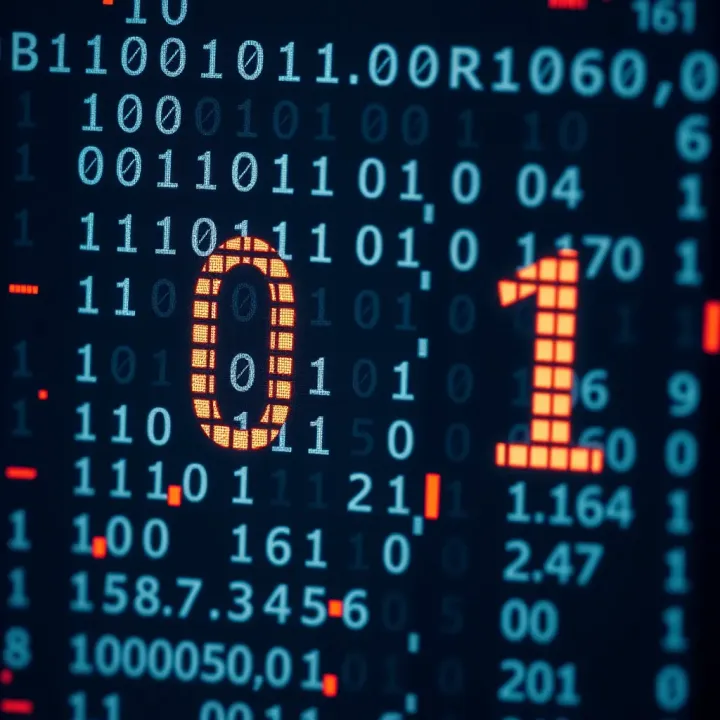
Why binary? One reason is reliability. Electronic devices easily distinguish between two voltage states, reducing errors caused by signal degradation or noise. For example, storing a '1' could mean the presence of a voltage, while '0' means absence, making it harder for devices to misinterpret data.
To make this concrete, consider the decimal number 13. In binary, it's 1101:
The rightmost bit represents 2^0 (1)
Next to the left is 2^1 (2)
Then 2^2 (4)
Finally, 2^3 (8)
Adding 8 + 4 + 0 + 1 gives 13. Computers use this positional system for all numeric data.
Binary is not just a number system. It forms the language computers use to communicate, manipulate data, and execute instructions.
Understanding this system helps investors and traders grasp how digital platforms and trading algorithms process massive quantities of data efficiently. Students and analysts can better appreciate how binary coding relates to software programming and hardware performance.
In the following sections, you will learn:
How to convert between binary and decimal numbers
Basic arithmetic operations in binary
Binary’s role in digital circuits and logic gates
Practical use cases in computing and investment technology
This knowledge not only clarifies the technical underpinnings but also adds value when dealing with technology-driven markets and tools that rely on such fundamentals.
The binary number system is the backbone of modern computing. At its core, it uses only two digits, 0 and 1, to represent all types of data. This simplicity is what makes it so crucial for electronic devices, as it aligns perfectly with the on-off nature of digital circuits. Understanding binary is essential for traders, analysts, and brokers who want a deeper grasp of how computer systems process and store information.
Unlike our everyday decimal system which uses ten digits from 0 to 9, the binary system relies solely on 0 and 1. Each digit is known as a bit (binary digit), and these bits combine to represent much larger numbers. For example, the binary number 101 represents the decimal number 5. This works because each position in a binary number corresponds to a power of two, starting from the rightmost digit.
This simplicity benefits electronics since a device only needs to recognize two states—on or off, high voltage or low voltage—making circuits more reliable and less prone to error. It’s quite like a room’s light switch; it’s either on (1) or off (0), no middle ground.
The decimal system is what we use daily, based on ten symbols, making it intuitive for counting and everyday calculations. However, this system is less suited for electronic representation. Binary, with only two digits, simplifies design for computers but can make numbers longer to write. For instance, decimal 15 translates to binary 1111.
Despite this, computers handle binary effortlessly, performing millions of operations per second. For professionals working closely with data, understanding this fundamental difference helps in grasping how digital systems operate behind user-friendly interfaces.
The binary method dates back centuries, with early references in Indian mathematics and later work by Gottfried Wilhelm Leibniz in the 17th century. Leibniz admired the philosophical simplicity of the binary system and demonstrated its use in calculations. He saw beauty in reducing the complex world to a simple combination of 0s and 1s.
This foundational idea paved the way for modern computing, showing that simple elements could build complex systems. It’s interesting how such ancient concepts still shape today's technology.
Early computers like the ENIAC initially used decimal systems, which complicated their design. It was the adoption of binary in machines such as the Manchester Mark I and later computers that streamlined processing. Binary logic enabled straightforward electronic switches, vastly improving speed and reliability.
Today, this legacy continues as all digital computers rely on binary internally. Traders and analysts who understand this can better appreciate the limits and possibilities of computational tools used in markets and financial modelling.
Binary's strength lies in its simplicity—representing complex data and calculations using just two digits, 0 and 1, which suits the electrical nature of computers perfectly.
Computers rely on the binary number system because it aligns naturally with how digital circuits function. Unlike decimal numbers, which have ten digits, the binary system uses only two — 0 and 1. This simplicity fits perfectly with electronic hardware that has two distinct states, such as on/off or high/low voltage. Using binary reduces hardware complexity and enhances efficiency.
Data in computers is represented using bits, the smallest unit of information, which can be either 0 or 1. Eight bits combine to form a byte, which is the standard block for storing data. For example, the letter 'A' in ASCII encoding is represented by the byte 01000001. This straightforward binary representation underpins everything stored and processed in computers, from text files to complex programs.
Images, text, and sound are all translated into binary for computers to process them. Text uses encoding standards like ASCII or Unicode, mapping characters to specific binary codes. Images break down into pixels, where each pixel’s colour is represented by a set sequence of bits specifying colour intensities in formats such as RGB. Similarly, sound is converted into binary by sampling audio waves at intervals and encoding these samples digitally. This universality allows computers to handle diverse data types uniformly.
Binary’s two-state logic makes hardware design simpler and more cost-effective. Circuits need to recognise only two voltage levels, which decreases the chance of errors and eases manufacturing. For example, a transistor-switch either conducts current or doesn’t, representing 1 or 0 easily. This simplicity leads to more reliable and energy-efficient components, allowing devices to be smaller and more powerful over time.
Binary signals are less vulnerable to noise and distortion than multi-level signals, improving the reliability of data transmission and processing. In real-life applications like mobile communications or data centres, this means information can travel longer distances without corruption. Error detection and correction methods also work well with binary signals, further ensuring the integrity of data handled by computers.
Using binary is like using a simple on/off switch instead of a complicated dial — it makes the machinery run smoothly with less room for mistakes.
By leveraging binary, computers maintain a stable and efficient platform to perform tasks ranging from simple calculations to running complex algorithms used in trading or analysis.
Understanding how to convert between binary and other number systems like decimal and hexadecimal is key to grasping how computers work and communicate with humans. Binary numbers are the foundation of computer language, but humans prefer decimal and programmers often use hexadecimal for simplicity. Conversion allows you to bridge this gap, making data readable and manageable.
To convert a binary number to decimal, multiply each bit by 2 raised to the power corresponding to its position, counting from right to left starting at zero. Then sum all these values. This method is practical because computers store data in binary, but users process figures better in decimal.
For instance, take the binary number 1011. Starting from the right:
1 × 2⁰ = 1
1 × 2¹ = 2
0 × 2² = 0
1 × 2³ = 8 Adding these gives 1 + 2 + 0 + 8 = 11 in decimal. This simple example shows how each bit contributes to the overall value.
Converting decimal to binary can be done by repeatedly dividing the decimal number by 2 and noting the remainders. These remainders form the binary digits when read in reverse order. This approach works well for manual conversions and helps understand how binary system builds up from decimal.
Consider the decimal number 13:
13 divided by 2 is 6 remainder 1
6 divided by 2 is 3 remainder 0
3 divided by 2 is 1 remainder 1
1 divided by 2 is 0 remainder 1 Reading remainders upwards gives 1101, which is the binary equivalent of 13.
Hexadecimal (base-16) numbers serve as a shorthand for binary because they are more compact and easier to interpret. Each hex digit corresponds to exactly four binary digits, making conversions straightforward. Programmers and hardware engineers prefer hex to keep data neat and reduce mistakes.
To convert binary to hexadecimal, split the binary number into groups of four bits starting from the right. Then convert each group directly to its hex equivalent. For example, binary 11010111 breaks into 1101 and 0111, which are D and 7 in hex, giving D7. This simple step saves time and simplifies debugging.
Mastery of these conversions not only aids in technical understanding but also assists traders, analysts, and students involved with computing and data processing by making the binary system accessible and practical.
Arithmetic operations in the binary system underpin most tasks computers perform daily. Since computers use only 0s and 1s, understanding how to add, subtract, multiply, and divide binary numbers is key to grasping how they process data and execute instructions. For traders, analysts, and investors working with digital systems, this knowledge helps demystify the workings of calculators, processors, and financial modelling software.
Rules for adding binary digits are straightforward but require attention to detail. Binary addition follows just four main rules:
0 + 0 = 0
0 + 1 = 1
1 + 0 = 1
1 + 1 = 10 (which means 0 is written, and 1 is carried to the next higher bit)
This simplicity mirrors decimal addition but needs care for carries. For example, adding 1101 (13 decimal) and 1011 (11 decimal) results in 11000 (24 decimal). Each bit is added from right to left, carrying over as necessary.
Handling borrows and carries is crucial for accurate binary subtraction and addition. When subtracting, if the upper bit is smaller than the lower bit, a borrow is taken from the left bit, just as in decimal subtraction but with binary's limited digits. For instance, to subtract 101 (5 decimal) from 1100 (12 decimal), borrowing occurs to proceed bitwise. Similarly, carries in addition must be tracked carefully to avoid errors, especially in long binary strings, as one missed carry can lead to incorrect computations.
Understanding how borrows and carries work in binary arithmetic enables more accurate digital calculations and optimises processor operations, which rely heavily on these basics.
Multiplication by shifts and additions simplifies computing tasks. Binary multiplication resembles decimal multiplication but with only 0s and 1s, making shifts the main tool. Multiplying by 2 in binary is just a shift left by one bit. For example, multiplying 101 (5 decimal) by 2 results in 1010 (10 decimal). Complex numbers multiply by shifting and adding partial results, much like long multiplication in decimal.
Division through subtraction methods involves repeatedly subtracting the divisor from the dividend until the remainder is less than the divisor. For example, dividing 1100 (12 decimal) by 10 (2 decimal) subtracts 2 repeatedly, counting how many times the operation succeeds. This method is slower but easy to implement so processors can convert it to faster approaches using shifts and subtraction.
Binary arithmetic isn't just an academic subject. It is the backbone of algorithms powering everything from stock trading tools to data analytics platforms. By mastering binary addition, subtraction, multiplication, and division, users can appreciate how their devices handle complex tasks with just digits 0 and 1.
Binary logic forms the backbone of every operation inside a computer. It governs how decisions are made using just two states, 0 and 1, reflecting the off and on positions in electronic circuits. This simplicity allows computers to perform complex tasks rapidly, as all commands translate into combinations of binary values controlled by logic.
AND, OR, NOT gates explained
Logic gates are the basic building blocks of binary decision-making in computers. An AND gate outputs 1 only when all its inputs are 1, acting like a strict checkpoint. For example, in a financial trading algorithm, an AND gate might ensure that both market conditions and risk limits are met before placing a trade. The OR gate outputs 1 if any input is 1, useful when triggering actions on multiple possible triggers, such as alerts if either volume spikes or price crosses a threshold. The NOT gate simply flips the input, converting 1 to 0 and vice versa, which helps implement conditions like "not active" or reversing signals.
How gates form circuits
These gates don't work alone; they combine to create circuits capable of much more complex decisions. By connecting multiple AND, OR, and NOT gates, computers can evaluate several conditions quickly and take appropriate actions. For instance, in stock market data analysis, circuits built from these gates evaluate trends, check for specific patterns, and decide when to buy or sell automatically.
Building blocks of processors
Processors rely heavily on binary logic circuits to function as the central brain of a computer. Each instruction a processor executes breaks down into binary operations processed through thousands or millions of logic gates working together. These gates form adders, multiplexers, and control units that handle arithmetic calculations, data routing, and instruction sequences—essentially translating binary inputs into meaningful outputs like executing a trade or updating your portfolio.
Data storage and retrieval
Binary logic also governs how data is stored and retrieved. Memory units use flip-flops and latches, which are combinations of logic gates, to store bits. When you open a trading app and check stock prices, the device retrieves this binary data from memory cells. These logical structures ensure data integrity and fast access, allowing smooth performance even under heavy workloads.
Binary logic might look simple on the surface, but its role is absolutely fundamental in enabling computers to perform everything from basic calculations to running complex algorithms that drive today's financial markets.
Understanding this logic helps you appreciate how binary moves beyond theory into practical actions powering your daily digital interactions and investment decisions.
Explore the binary number system 📊, its core concepts, digit operations, conversions, and critical role in digital tech powering everyday devices and computing.

🔢 Understand binary digits (bits): their count, role in computing and electronics, plus how binary contrasts with decimal systems—key for tech enthusiasts! 💻

Explore binary addition basics with stepwise guides 🧮, examples, and computing uses. Compare binary and decimal addition for clearer understanding 💻.

📊 Explore binary, octal, decimal & hexadecimal number systems, learn their conversions, uses in computing & maths, essentials every tech-savvy individual should know!
Based on 10 reviews