
Effective Candlestick and Chart Patterns for Trading
📊 Master key candlestick and chart patterns to spot market moves and reversals. Gain practical skills for smarter trading decisions and technical analysis!
Edited By
Emily Crawford
Candlestick charts provide a straightforward visual way to understand price movements in financial markets. They don't just show whether prices went up or down—they capture the battle between buyers and sellers during a specific time frame. For traders and investors in India, reading these charts effectively helps gauge market sentiment and identify potential entry or exit points.
Each candlestick consists of a body and wicks (or shadows). The body represents the open and close prices, while the wicks show the highest and lowest levels traded. A filled (or coloured) body usually means the price closed lower than it opened, signalling selling pressure. Conversely, a hollow or lighter body indicates buying strength.
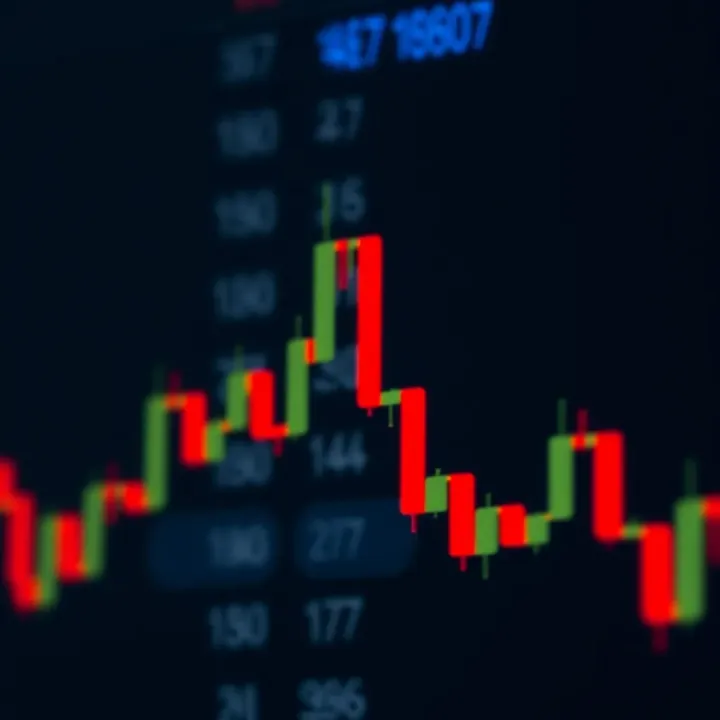
Understanding candlestick patterns involves recognising groups of one, two, or three candles that suggest a possible reversal or continuation in price trends. For instance, a single bullish hammer at the bottom of a downtrend may hint at a price bounce. Meanwhile, the double-candle pattern known as an "engulfing pattern" highlights a shift in control—buyers overpowering sellers or vice versa.
The power of candlestick charts lies in their ability to combine price action data into readable signals without needing complex indicators. This helps Indian traders, whether dealing in equities, commodities, or currencies, to react to market dynamics swiftly.
Learning to identify these patterns with clear images is key—it develops your market eye, enabling smarter decisions under pressure.
Key takeaway: Focus on the shape of the candle and its position within the trend. Look for strong bodies and clear wicks as clues. Patterns are more reliable when confirmed with volume and other technical tools.
In the following sections, we'll explore popular single, double, and triple candlestick patterns, showing images and explaining their specific implications in Indian market contexts. This practical approach will help you grasp how prices move and respond, guiding your trading strategy more effectively.
Understanding the basics of candlestick charts is vital for traders and investors to interpret price movements accurately. Candlestick charts visually represent how market prices change over a period, making it easier to spot trends or reversals. For instance, a trader watching Nifty 50 stocks can quickly grasp market sentiment by observing candlestick formations rather than sifting through raw price data.
A candlestick consists of a body and wicks (or shadows) extending above and below. The body represents the range between the opening and closing prices during the selected time frame. The wicks show the highest and lowest prices reached. This structure gives a snapshot of price action including volatility and momentum in that period.
Practically, for an intraday trader tracking Reliance Industries, a long lower wick with a small body could suggest a battle between buyers and sellers, indicating a potential price bounce. The shape helps traders understand the tug-of-war between bulls and bears within short intervals.
Candlesticks capture four key price points: Open, Close, High, and Low. The open price is where the trading starts and close is where it ends for the period. The high and low mark extremes during that time. Together, these four prices tell a story of control—whether buyers dominated or sellers held sway.
For example, if Tata Motors’ daily candle shows a close higher than the open, with a higher close than the previous day, it indicates buying pressure, which can be critical for momentum-based decisions or setting stop-losses.
Candlestick colours differentiate bullish and bearish sentiments. A bullish candle forms when the closing price is higher than the opening price, typically coloured green or white. It signals that buyers pushed the price up during the period.
On the other hand, a bearish candle appears when the close is lower than the open, signalling selling pressure. Red or black are common colours used for bearish candles. Recognising these colours quickly helps investors grasp if the market mood favours sellers or buyers.
In Indian trading platforms like Zerodha Kite or Upstox, green and red are widely used to reflect bullish and bearish candles respectively, making it intuitive even for novices. That said, some traders customise the colours for clearer visual comfort or to suit their charting style.
Recognising the candlestick’s body and colour allows traders to decode price action efficiently and aids in making trading decisions aligned with market behaviour.
By mastering these basic components of candlestick charts, you lay the groundwork for identifying more complex patterns that help predict future price moves in Indian equities, commodities, or currency markets.
Single candlestick patterns offer quick but powerful insights into market sentiment. Recognising these patterns helps traders and investors spot immediate changes in price action, making them essential in short-term analysis. Images of these patterns clarify their shapes and features, crucial for learning how they appear on real charts. In Indian markets, where volatility often spikes around macro announcements or quarterly results, understanding these patterns can give traders an edge.

The Doji candlestick represents a point of indecision between buyers and sellers and comes in three main types: the Standard, Dragonfly, and Gravestone. A Standard Doji has nearly equal open and close prices and small or absent bodies, while Dragonfly and Gravestone Dojis have long lower or upper shadows respectively, resembling the shape of their namesakes. Recognising these types helps traders gauge the battle between bulls and bears.
Doji patterns often indicate market hesitation or potential reversal zones but should not be used alone for decision-making. In an uptrend, a Dragonfly Doji might suggest buyers are testing support, while a Gravestone Doji during a downtrend shows selling pressure is rising. For example, if Reliance Industries sees a Dragonfly Doji after a dip, it could hint at buyers gathering strength.
Both Hammer and Hanging Man share a similar shape: a small real body near the top and a long shadow beneath. The Hammer appears during a downtrend and signals a potential bullish reversal; it suggests buyers pushed the price up after an initial sell-off. The Hanging Man, however, occurs in an uptrend and warns of a possible bearish reversal, meaning sellers tested the market but buyers managed to keep control for now.
These patterns become meaningful when backed by volume or confirmed with the next candles. For instance, a Hammer on the Nifty 50 index near a key support level can prompt traders to prepare for a bounce. Conversely, a Hanging Man after a strong rally in metals stocks could be a caution sign for profit-taking.
Spinning Top candles have small bodies with long upper and lower shadows, indicating uncertainty and a tug of war between buyers and sellers. Such hesitation often hints at a pause in trend or a possible reversal. For example, a Spinning Top after ICICI Bank’s price surge suggests the rally may slow or stall unless followed by confirming signals.
In contrast, Marubozu candles have no shadows, showing that prices opened and closed at extremes during the period. A Bullish Marubozu indicates strong buying momentum, while a Bearish Marubozu signals strong selling pressure. These patterns are often seen during breakouts or breakdowns, giving traders confidence about the market’s direction. For instance, a Bullish Marubozu on the Bank Nifty could signal the start of a fresh uptrend.
Single candlestick patterns provide fast, visual cues about market mood. Pairing them with chart images improves pattern recognition, helping traders avoid mistakes and act promptly in volatile Indian markets.
Double candlestick patterns offer valuable clues about potential market shifts by analysing the interaction between two consecutive candles. For traders and investors, recognising these patterns helps predict short-term trend changes with better accuracy. Unlike single candle signals, double patterns provide context through comparison, making them more reliable in confirming bullish or bearish turns.
Spotting an engulfing pattern requires identifying two candles where the second candle’s body completely covers or “engulfs” the previous candle’s real body. In a bullish engulfing pattern, a smaller bearish (usually red or black) candle is followed by a larger bullish (green or white) candle that wraps around it. This signals strong buying interest after selling pressure, suggesting a potential upward reversal. Conversely, a bearish engulfing shows a smaller bullish candle followed by a larger bearish one, indicating sellers are taking control.
In the Indian equity markets, engulfing patterns can pop up during volatile or corrective phases, often marking trend reversals in stocks like Reliance Industries or Tata Motors. Commodities such as gold and crude oil also react visibly to these patterns, especially during periods of economic uncertainty or global events. Traders can combine these patterns with volume spikes on NSE or BSE charts to strengthen the reversal signal.
These are classic reversal signals formed over two sessions. The piercing line pattern occurs when a bullish candle opens below the previous bearish candle’s close but closes above its midpoint, indicating buyers’ strong comeback. On the other hand, the dark cloud cover happens when a bearish candle opens above the prior bullish candle’s close but closes below its midpoint, showing sellers pushing prices down.
Practical examples on price charts of Indian stocks like Infosys and HDFC Bank demonstrate how these patterns often appear near support or resistance zones. One might notice a piercing line forming after a sharp fall, hinting at a bounce, or a dark cloud cover warning of a pullback after a rise. These patterns gain credibility when aligned with RSI levels or moving average crossovers.
Tweezer formations appear when two consecutive candlesticks have matching highs (tweezer tops) or lows (tweezer bottoms). Recognising these involves spotting similar or equal levels on two candles that suggest price rejection at those points. Tweezers indicate hesitation or tested support/resistance.
These patterns help confirm key levels where price may reverse or stall. For example, a tweezer top after an uptrend in a stock like SBI may signal traders to book profits as resistance holds firm. Conversely, a tweezer bottom near a significant support level might hint at a bounce. Using these alongside volume data or pivot point analysis can improve the precision of such signals.
Understanding double candlestick patterns enriches your toolkit for spotting reliable entry and exit points in Indian markets, complementing other technical indicators for well-rounded trading decisions.
Triple candlestick patterns provide stronger confirmation of market sentiment compared to single or double patterns. They help identify more reliable trend reversals and continuations, which is especially useful in the volatile Indian stock markets. Understanding these patterns enables traders and investors to time their entry and exit points with greater confidence.
The Morning Star and Evening Star are classic three-candle formations that signal significant market turning points. Visually, the Morning Star starts with a bearish candle, followed by a small-bodied candle (often a Doji or spinning top) showing market indecision, and then a strong bullish candle that closes well into the first candle’s body. The Evening Star behaves oppositely: a strong bullish candle, a small indecisive candle, and then a bearish candle closing below the first.
These patterns are valuable because they mark clear shifts in buying and selling pressure. The Morning Star suggests a bullish reversal after a downtrend, while the Evening Star indicates a bearish reversal following an uptrend. Traders often look for confirmation through volume spikes or other indicators before acting on these signals.
Three White Soldiers consist of three consecutive long bullish candles, each opening within the previous candle’s body and closing near its high. This pattern confirms a strong upward trend. Conversely, Three Black Crows are three consecutive long bearish candles arranged similarly, signalling a firm downtrend.
In Indian stock market scenarios, these patterns are commonly seen during indices’ rallies or corrections. For example, during a Sensex rally, three white soldiers can indicate sustained buying interest. Similarly, in commodity markets like crude oil or gold, three black crows warn traders of persistent selling. Recognising these patterns helps in riding strong trends or avoiding late entries.
These subtle reversal patterns require close attention. Three Inside Up appears after a downtrend, beginning with a large bearish candle, followed by a smaller bullish candle contained within the first, and finally a bullish candle closing above the first candle’s open. This signals a possible bullish reversal but is less dramatic than the Morning Star.
Three Inside Down is the bearish counterpart, appearing after an uptrend with a large bullish candle, then a smaller bearish candle engulfed by the first, and a third bearish candle closing below the first candle’s open. Their subtlety means they are often used with other indicators to confirm reversals, especially in sideways or choppy markets common in Indian midcaps.
Triple candlestick patterns offer more reliable trading signals by combining market psychology over three sessions, which is why Indian traders often closely watch these formations before making decisions.
Identifying these patterns requires clear visualisation, which most Indian trading platforms now support through charting tools with detailed candlestick images. Combining them with volume and momentum indicators improves their effectiveness in real-world trading.
Candlestick patterns alone do not guarantee success in trading, but they serve as powerful tools when used wisely with other analysis techniques. Indian traders especially benefit from combining candlesticks with indicators like the Relative Strength Index (RSI), moving averages, and volume data to make well-rounded decisions.
RSI measures how overbought or oversold an asset is, typically on a scale from 0 to 100. When candlestick patterns suggest a reversal, confirming with RSI—say when it crosses below 30 for oversold or above 70 for overbought—can increase confidence in the trade. Moving averages smooth out price trends; for example, a bullish engulfing pattern near the 50-day moving average may suggest a strong buy signal. Volume analysis is valuable because a candlestick pattern backed by rising volume often reflects genuine market sentiment, not just a momentary spike.
For Indian traders, using these indicators helps filter false signals common in volatile markets such as NSE or BSE stocks. Consider combining a hammer candlestick pattern with RSI dipping below 30 and increasing volume as a sign of a potential upward reversal in a stock like Reliance Industries.
Stick to a few trusted indicators rather than overwhelming your charts. Start with RSI, simple moving average (SMA), and volume because they are easy to interpret and widely available on popular Indian trading platforms like Zerodha Kite and Upstox. Avoid jumping into trades just because you spot a pattern; check broader market context such as the Sensex trend and relevant sector performance.
Keep an eye on earnings reports, government policies, or festive season impacts on demand—these frequently affect price patterns in Indian markets. Also, paper trade or use demo accounts to see how candlestick signals perform on large-cap and mid-cap stocks before using real money.
Relying solely on candlestick patterns without considering other market factors leads to poor decisions. Patterns sometimes form during random price fluctuations. For instance, a shooting star might appear during a strong uptrend but ignoring RSI or volume may result in missing the continuation of the rally.
Misreading market context is another trap. A pattern that works well in a sideways market might fail during high volatility or trending phases. Indian markets often react to global events, so it's essential to consider macroeconomic news—like RBI policy changes or global crude oil prices—which can quickly shift sentiment and invalidate pattern signals.
Several libraries and educational sites offer free and paid collections of candlestick pattern images to help traders recognise formations clearly. Using these visual aids improves pattern spotting skills over time. Indian trading educational portals often provide region-specific examples which relate better to local market behaviour.
Popular Indian trading platforms like Zerodha Kite, Upstox, and Angel Broking offer graphic charting tools integrated into their apps. These tools not only display candlestick patterns but also highlight signals along with volume and indicator overlays. Access to such graphic functionalities facilitates quick decisions while trading stocks, commodities, or currencies.
Combining candlestick patterns with technical indicators and market understanding helps Indian traders avoid costly mistakes and spot strong trading opportunities.
Incorporating these strategies in your trading routine will sharpen your ability to read charts effectively and manage risks better in the dynamic Indian financial markets.
📊 Master key candlestick and chart patterns to spot market moves and reversals. Gain practical skills for smarter trading decisions and technical analysis!

Learn how multi candlestick patterns in technical analysis reveal price moves to enhance your trading. Discover key patterns, tips ⚡, and avoid pitfalls!

📊 Master candlestick patterns with this practical guide! Learn key charts, pattern meaning, and boost trading skills in India & globally, plus handy PDF tools 📈

📊 Learn to read option chart patterns effectively with our practical guide! Access PDF resources to spot signals and improve your trading decisions today.
Based on 15 reviews