
Understanding Money in Forex Trading
💱 Learn money management in Forex trading—how markets work, calculating profits & losses, plus smart risk strategies for Indian traders. 📈💡
Edited By
Jack Mason
Forex trading, short for foreign exchange trading, is the act of buying and selling different currencies to make a profit from changes in their exchange rates. Unlike stock markets, forex operates 24 hours a day, five days a week, and has a daily trading volume that dwarfs most other markets—making it one of the largest financial markets worldwide.
Many new traders jump in without a firm grasp of what forex actually entails. This article aims to clear the fog by breaking down the essentials: what forex trading means, how the currency market functions, and what traders should keep in mind. From explaining currency pairs to understanding market players and the risks involved, this guide lays out everything you need to navigate the forex world confidently.
Whether you’re an investor looking to diversify, a student curious about financial markets, or a broker sharpening your understanding, getting a solid foundation is key. By the end of this piece, you’ll have a clearer picture of forex trading’s basic concepts and be better equipped to make sound decisions in this dynamic arena.
"Understanding the basics of forex is the first step before risking your hard-earned money in the market. Knowledge cuts risks and builds confidence."
This introduction sets the stage for exploring specific topics such as currency pairs, the role of market participants like banks and retail traders, popular trading strategies, and the risks—and opportunities—that come with trading currencies.
In the next section, we’ll unpack the nuts and bolts of how the forex market works and why currencies fluctuate the way they do.
To get started with forex trading, it's essential to grasp what exactly it means and why it's such a big deal globally. This section breaks down the foundation, helping you understand forex trading beyond just jargon, so you can see its practical benefits and how it fits into the bigger financial picture.
At its core, forex trading is simply exchanging one currency for another. Imagine you're traveling from India to Europe—you’d swap your Indian Rupees for Euros. In trading, this exchange happens continually but in much larger volumes and not just for travel. These currency exchanges allow businesses to operate across borders, tourists to explore new lands, and investors to make profits.
One key point to remember is that currencies are always traded in pairs. When you buy one, you automatically sell the other. Forex trading revolves around predicting how these exchange rates between currencies will shift.
The forex market is the heartbeat of global finance. It’s where countries' currencies are valued and compared, impacting everything from international trade to foreign investments. Take an Indian tech company exporting software to the US: the company's revenue depends heavily on USD/INR exchange rates. If the Rupee strengthens, the profit in Rupees goes down, so monitoring forex market trends becomes crucial for such businesses.
Forex trading also influences inflation, interest rates, and economic policies. Central banks like the Reserve Bank of India use it as a tool to maintain currency stability. Without the forex market, moving money across nations smoothly would be like trying to dodge raindrops in a storm.
Forex trading works on the simple idea that you purchase one currency and sell another at the same time. For example, if you think the US Dollar (USD) will strengthen against the Euro (EUR), you buy USD/EUR currency pair. Here, you’re buying dollars and selling euros simultaneously.
This dual action might sound tricky, but it’s just like swapping cards—when you get one, you let go of the other. Traders try to profit by buying at a lower rate and selling when the value of the currency they hold goes up.
Understanding currency pairs is crucial because they form the language of forex trading. Pairs like EUR/USD, USD/JPY, and GBP/USD are called "major pairs" because they involve the world's most traded currencies. Then there are "minor pairs" and "exotic pairs" like USD/TRY (Turkish Lira) which usually have higher volatility and lower liquidity.
Each pair has two parts:
Base currency: The first currency in the pair. For USD/INR, USD is the base.
Quote currency: The second currency, representing how much of it is needed to buy one unit of the base. In USD/INR, how many Indian Rupees you need for one US Dollar.
Grasping this lets traders read the market better and decide when to enter or exit trades depending on currency fluctuations.
Quick Tip: Keep an eye on major pairs like USD/INR and EUR/USD if you want to start trading with more stability and liquidity.
By nailing down what forex trading actually means, how it fits into global finance, and what goes on behind the scenes, you set yourself up with a solid base to move forward with confidence.
Understanding who is involved and how the foreign exchange market operates gives traders and investors a clear view of the overall ecosystem. The forex market isn’t just a simple place where currencies are swapped. It's a dynamic space bustling with distinct players, each influencing the market from their unique angles. Grasping these structural elements can equip you to make smarter trading decisions by recognizing the motivations behind currency moves.
The biggest fish in the forex pond are the banks and financial institutions. Think of giants like JPMorgan Chase, Deutsche Bank, and HSBC, who deal in massive sums daily. They aren't trading to make a quick buck but to facilitate smooth transactions for clients, hedge currency risk, or manage their currency inventories. For example, a multinational bank might buy euros and sell dollars to maintain the right amount of each currency, depending on its exposures. Their vast resources and high-speed trading systems often make them market movers, causing ripple effects that smaller traders need to be aware of.
Beyond banks, corporations form another crucial pillar. Major companies like Tata Motors or Reliance Industries engage in forex transactions to handle international trade payments or profits repatriation. Suppose a company in India imports electronics from Japan, it needs to pay in yen, even though its revenue is primarily in rupees. So, it buys yen in the forex market to settle its bills. These activities aren’t about speculation but managing day-to-day business risks tied to fluctuating exchange rates.
Retail traders and investors represent the smallest, yet most numerous, group of market participants. These are individuals trading forex through brokers such as Zerodha or IG Markets. While their trades might be modest compared to institutional players, collectively, they add liquidity and diversity to the market. Their tools usually include leveraged positions, which means small price shifts can make a big difference in profits or losses. For a newbie, understanding this group's behaviors and patterns can provide insights on market sentiment.
One standout feature of the forex market is its nonstop nature; it opens Sunday evening in Asia and only closes Friday evening in New York. This continuous cycle allows someone in Mumbai to react to overnight market moves from London or New York without waiting for markets to open. It’s especially handy during major economic announcements like the US jobs report when the market can spike anytime.
The global round-the-clock nature means forex traders can operate whenever they want, making it a flexible market for those balancing trading with other commitments.
Forex is the most liquid market on earth. With a daily turnover exceeding $6 trillion, you can enter or exit trades in seconds without worrying about prices suddenly jumping due to lack of buyers. High liquidity reduces the risk of slippage, which is when an order executes at a different price than expected. This smoothness especially benefits retail traders who need price stability to plan trades effectively.
Unlike stock markets with centralized exchanges like the NSE or BSE, forex trading happens over-the-counter (OTC), meaning no single exchange or geographic location holds all the trades. Instead, it operates through a global network connecting banks, brokers, and traders electronically. This decentralized setup ensures no single authority controls price setting, but it also means transparency is less straightforward, so traders often rely on trusted brokers for fair pricing.
By diving into the structure and painters of the forex market, you begin to see how diverse participants and unique characteristics shape price actions. Whether you’re a corporate treasury manager or a retail trader logging in from Bengaluru, knowing these fundamentals is key to navigating the market waters safely and smartly.
When diving into forex trading, understanding its key elements is like having a solid map for a tricky hike. These elements shape every trade, influence strategies, and dictate how well traders can react to market moves. In practical terms, grasping these components helps you make smarter moves—whether you're eyeing the faster returns of day trading or planning for longer-term positions.
Two fundamental areas to focus on are currency pairs and exchange rates, both of which hinge on deeper forces and figures behind what you see on trading screens.
Currency pairs are the bread and butter of forex. Every trade involves buying one currency and selling another at the same time. But not all pairs are created equal, so let’s break down a couple of key points.
Major pairs include currencies like USD/EUR, USD/JPY, or USD/GBP. They crop up in the lion's share of trades due to their liquidity and tighter spreads — think of them as the busy highways of forex. For example, the EUR/USD pair typically has a smaller spread and higher trade volume, making it an attractive choice for both beginners and seasoned traders.
Minor pairs, sometimes called cross pairs, exclude the US dollar but still link well-established currencies, like EUR/AUD or GBP/NZD. They’re like the country roads—less trafficked but still reliable.
Exotic pairs, such as USD/TRY (Turkish lira) or USD/THB (Thai baht), involve one major currency and one from an emerging or smaller economy. These pairs can see wider spreads and bigger swings, kind of like rough roads but with a chance for bigger thrills (and risks).
In any currency pair, the first currency is the base currency, and the second is the quote currency. When you see EUR/USD quoted as 1.1200, that means one euro (base) costs 1.1200 US dollars (quote). If you buy the pair, you're buying euros and selling dollars; if you sell, you’re selling euros and buying dollars.
This distinction is key because it signals exactly what you’re trading and sets the framework for calculating profits or losses. Knowing which one plays the lead role can clear up a lot of confusion, especially since some brokers may show prices differently.
Exchange rates don’t just pop up randomly; they respond to a web of forces that anyone serious about forex needs to track. Let's unpack three big influencers:
At its heart, forex trading is about supply and demand. When more traders want a currency, its price goes up; if fewer want it, the price drops. Imagine a sudden surge in demand for the Indian rupee because foreign investors are pouring money into Indian stock markets — this push can strengthen the rupee against other currencies like the USD.
Also consider central bank interventions. For instance, if the Reserve Bank of India decides to buy rupees to support its value, supply tightens, nudging the exchange rate in their favor.

Regular economic reports are like the pulse checks for currency values. Data on inflation, unemployment, GDP growth, and interest rates give clues about a country's economic health, shaping the outlook for its currency. For example, better-than-expected inflation numbers might hint that the central bank will raise interest rates, boosting that currency’s appeal.
Traders follow releases like the US Nonfarm Payrolls or India's Industrial Production both because of their market-moving potential and their ability to influence monetary policy decisions.
Politics and global affairs can shake exchange rates fast. Elections, trade disputes, or unexpected crises all matter. Think of the 2016 Brexit vote — it rattled the British pound enough to trigger sharp price swings, catching many off-guard.
For traders, keeping tabs on headlines and understanding how these events affect investor confidence and capital flows is crucial. Sometimes geopolitical turmoil leads to "safe-haven" buying (like the US dollar or Swiss franc), while in other times, it can create rapid sell-offs.
A quick tip for traders is to stay updated on the news calendar and use economic event filters on trading platforms to manage risks around these unpredictable moves.
Understanding these key elements equips traders and investors with a framework for interpreting what they see on their screens. This knowledge is more than academic; it’s the foundation for making informed trades, managing risks wisely, and spotting opportunities when other folks might only see noise.
Making decisions in forex trading is not just about gut feeling; it's a combination of analyzing data, interpreting market signals, and understanding broader economic and political conditions. Traders who get this right can spot opportunities to profit while steering clear of costly mistakes. This section dives into the two main approaches traders use: fundamental analysis and technical analysis, breaking down what they look at and why it matters.
Fundamental analysis revolves around looking at the big picture—the underlying factors that move markets. Let’s break down the main elements:
Economic releases like GDP numbers, employment reports, and inflation figures give clues about a country's financial health. For example, if India’s inflation rate unexpectedly drops, the Indian rupee might strengthen because lower inflation often means the central bank can keep interest rates steady or cut them. Traders watch reports from sources such as the Reserve Bank of India, or data published by government bodies, to anticipate these moves.
Knowing when major reports drop is key because they often trigger sharp market swings. For instance, US Non-Farm Payrolls usually cause volatility in pairs like USD/INR. Traders can prepare by setting stop-loss orders or taking positions ahead of time based on expectations.
Central banks shape currency values through interest rates and monetary policy. If the Reserve Bank of India increases interest rates, it usually boosts the rupee as higher rates attract foreign capital seeking better returns. Traders track announcements, minutes from meetings, and speeches by officials because these signal future policy direction.
Understanding central bank actions requires watching for hints in their language. Sometimes they don’t change rates but signal future hikes or cuts, sometimes the market reacts even more strongly than the actual decision. Traders who tune into these cues can position their trades accordingly.
Politics plays a big role in forex. Elections, policy changes, or international relations can rattle currency markets. For instance, if there are trade tensions between India and China, the rupee may weaken amid fears of economic fallout.
Political stability tends to attract investors, while unrest or uncertainty scares them away. An example is how unexpected government announcements during the demonetization phase in India caught many traders off guard. Staying informed about local and global political events helps traders avoid surprises.
Where fundamental analysis looks outward, technical analysis focuses on price movement itself. Traders using this method believe past price behavior can show what might happen next.
Charts are the bread and butter of technical analysis. Patterns like head and shoulders, double tops, or flags show potential reversals or continuations in price trends. For example, if the USD/INR pair forms a "double bottom," it might signal the rupee is about to strengthen after a period of decline.
Spotting trends—whether an uptrend, downtrend, or sideways movement—helps traders decide when to enter or exit trades. Trading with the trend reduces risks. If the rupee is steadily gaining against the dollar, going short (betting on a fall) might be risky.
Traders also use tools like moving averages, Relative Strength Index (RSI), and Bollinger Bands to get extra clues. For example, RSI helps identify if a currency is overbought or oversold, signaling a possible price correction.
Combinations of indicators often provide stronger signals. A common strategy is waiting for the RSI to dip below 30 (oversold) and prices to touch a support level before buying.
Looking at past price data helps traders understand how currencies reacted under similar circumstances before. This historical context reveals how likely certain moves are. For instance, if the rupee drops sharply after a specific economic statement, seeing how it bounced back or plunged further in past cases guides decision-making.
Historical highs and lows serve as key support and resistance points. Traders often place orders near these levels anticipating price to hesitate or reverse, improving their chances for profitable trades.
In short, combining fundamental and technical analysis equips forex traders with a toolbox to navigate markets better. By staying alert to economic signals and decoding price charts, traders can make more informed decisions rather than relying on pure guesswork.
This balanced understanding is essential, especially for traders dealing in volatile currency pairs or those affected by sudden global events. Using these approaches skillfully helps manage risks and spot trading chances, setting a firm foundation for consistent results.
Understanding common trading methods and strategies is vital for anyone stepping into the forex market. These methods shape how traders approach the market, manage risks, and aim for profits. Whether you prefer rapid-fire trades or more patient approaches, knowing these strategies helps fit trading to your style and goals.
Short-term trades focus on buying and selling currencies within a very brief window—often the same day or even minutes. The key here is speed and frequent activity. Traders look to capitalize on small price swings by entering and exiting trades quickly, reducing exposure to unexpected market shifts overnight. For example, someone might buy the EUR/USD pair at 1.1800 and sell it at 1.1810 within hours, making a tight but quick profit.
Quick profit targets are essential in day trading and scalping, where the objective isn't to wait for large movements but to collect several small gains that add up. It means setting tight stop-loss and take-profit points, sometimes aiming for just a few pips. This approach demands constant attention and sharp decision-making, perfectly suited for those who can dedicate time and focus without hesitation.
Holding trades from days to weeks defines swing trading. Here, traders look beyond the noise of intraday fluctuations, aiming to ride medium-term trends. For instance, if a trader spots a bullish sentiment on GBP/USD after a positive economic report, they might enter a trade holding it for several days, expecting the trend to continue. This strategy fits well for those who can't monitor the markets non-stop but still want to engage regularly.
Focusing on medium to long-term trends suits position traders who take a broader view—holding positions for weeks or even months. They rely heavily on fundamental analysis—like interest rate decisions or political developments—that drive exchange rates over time. For example, a position trader might buy USD/INR anticipating India’s economic growth pushing the rupee higher over months. This approach requires patience and strong risk management to withstand market fluctuations.
Both quick, short-term approaches and slower, trend-based strategies have their place. The key takeaway is to pick a trading style that fits your lifestyle, risk appetite, and market understanding. Remember, no strategy is one-size-fits-all.
Day trading and scalping suit active traders seeking fast returns.
Swing and position trading appeal to those favoring fewer trades but more substantial moves.
Knowing these common methods equips traders with a toolbox to tackle forex markets thoughtfully and effectively.
Trading currencies isn’t all sunshine and rainbows. Understanding the risks involved is just as important as knowing how the market works. Forex trading can quickly flip from profitable to loss-making because of several factors beyond a trader’s control. Being aware of these risks helps traders safeguard their capital and make smarter decisions.
One of the main hurdles in forex trading is market volatility. Currency prices don’t move in a neat, predictable manner. Instead, they swing up and down due to countless influences, creating opportunities but also uncertainty.
Price swings can happen within minutes or stretch over days. For instance, the GBP/USD pair might jump or drop by hundreds of pips in reaction to economic data or market sentiment shifts. Volatility means traders can make gains quickly, but losses happen just as fast. It’s essential to use tools like stop-loss orders to cap potential losses.
News events often trigger sudden and steep price changes. Imagine a surprise interest rate decision by the Reserve Bank of India or political unrest affecting a country’s currency. These unexpected occurrences can cause rapid price spikes, often resulting in slippage—where trades execute at worse rates than expected. Traders should keep an eye on economic calendars and avoid holding large positions during high-impact news.
Being alert to market volatility and having a plan in place can prevent small setbacks from turning into bigger financial hits.
Leverage is a double-edged sword in forex trading. It lets traders control positions bigger than their actual capital, magnifying both wins and losses.
Say you have $1,000 and use 50:1 leverage. You can open a trade worth $50,000. If the market moves in your favor by 1%, you gain $500—not small change compared to your initial capital. But if it moves against you by the same margin, you lose $500. This magnification can quickly erase your trading account if not handled with caution.
When losses pile up and your account equity falls below a broker’s required margin level, you’ll get a margin call. This means you must add more funds or close positions. If you ignore it, the broker may liquidate your trades automatically to cover losses, often at unfavorable prices. Margin calls highlight the importance of not overleveraging and maintaining a buffer in your account.
Careful use of leverage and understanding margin requirements can keep traders from being caught off guard when markets move unexpectedly.
In summary, the risks in forex trading — from volatile price changes to leverage dangers — show why risk management is the foundation of any trading approach. Knowing these hazards and preparing for them can keep losses manageable and trading more sustainable.
For anyone stepping into the world of forex trading, understanding how to get started is a key part of making the experience both safe and worthwhile. Forex trading isn’t just about guessing which way a currency will move; it requires careful preparation, the right tools, and knowing the right steps to take before you start buying and selling. Getting these basics right saves you from common pitfalls and sets a solid foundation for future success.
One cannot stress enough how important it is to pick the right broker and set up your trading account properly before diving in. These choices affect the costs, risks, and overall trading experience. Without this knowledge, even a great strategy can falter simply because of poor execution or unreliable platforms. Now, let’s break it down into two main parts: choosing a broker and setting up your trading account.
When it comes to forex trading, selecting a trustworthy broker is central. There are lots of options out there, but not every broker meets sound standards. The two aspects to focus on here are regulation and costs.
Make sure your broker is regulated by the relevant financial authority. For traders in India, looking for brokers regulated by international bodies like the UK's Financial Conduct Authority (FCA), the US Commodity Futures Trading Commission (CFTC), or Australia’s ASIC is a good start. A regulated broker must follow strict rules designed to protect your money and ensure fair treatment. For example, regulated brokers keep client funds in separate accounts to avoid misuse. On the other hand, dealing with unregulated brokers can be a risky gamble – there have been many cases of fraud or mismanagement, which you want to steer clear of.
Understanding how brokers charge is vital because trading costs directly affect your profits (or losses). Brokers earn money from spreads (the difference between buy and sell prices) and commissions. Some brokers offer "zero spread" but have higher commissions, while others might have wider spreads combined with no commission.
Consider a broker like ICICI Direct for those based in India; they offer competitive spreads but also charge small commissions on each trade. In contrast, an international broker like FXTM might offer no commission but with slightly wider spreads. It's good to run the numbers to see what fits your trading style—day traders might prefer tighter spreads, while swing traders might tolerate wider spreads if commissions are low.
With a broker chosen, the next step is signing up and choosing the right type of account. Brokers usually offer several options, each tailored to different needs and experience levels.
Most brokers provide at least two or three account types: standard, mini, and sometimes VIP or ECN accounts. For beginners, a mini or standard account is usually suitable. Mini accounts allow you to trade smaller lots, which lowers your risk while you’re still learning the ropes.
For example, Zerodha offers a "mini" forex account type where you can trade with low capital, helping traders avoid heavy losses early on. VIP or ECN accounts, on the other hand, are more suited for professionals due to lower spreads but often require a higher minimum deposit.
Never underestimate the value of a demo account. Nearly all reputable brokers offer demo accounts where you can practice trading with virtual money. This is the perfect test ground to try strategies, understand the platform, and get comfortable with how trades work—all without risking a rupee.
For instance, MetaTrader 4 and 5 platforms, offered by brokers like Admiral Markets or FXTM, come with demo accounts that mirror real market conditions. By using these demo accounts, you get to experiment and observe how market events affect your trades, which builds confidence before moving to real money trading.
Starting forex trading by carefully picking your broker, understanding the trading costs, and practicing extensively with demo accounts greatly increases your chances of trading successfully and avoiding unnecessary losses.
Getting these steps right early on is like laying a strong foundation for a building: it supports everything else you’ll build upon. Once you know how to pick a broker safely and set up a trading account that matches your needs, the rest of your forex journey becomes much clearer and less stressful.
Choosing the right tools and platforms is a game-changer in forex trading. They act like your cockpit controls, giving you direct access to market data, executing trades, and managing risks. Without a reliable platform and efficient tools, even the best strategies might fall flat because you can’t react quickly or accurately enough. A good platform integrates charting, analysis tools, and trade execution in one place, making the trading experience smoother and decisions better informed.
Trading platforms also determine which markets or currency pairs you get to trade and at what costs. Besides technical features, it's smart to look out for stability, user experience, and customer support. After all, your platform needs to work as hard as you do, day and night, since the forex market runs 24/5.
MetaTrader 4 (MT4) and MetaTrader 5 (MT5) are practically the bread and butter of forex traders worldwide. MT4 has long been favored for its simplicity, speed, and vast community backing. Traders appreciate its custom indicators and expert advisors (EAs), which let you automate strategies without needing to be a programmer.
MT5 builds on MT4 by adding features like more timeframes, a broader range of market types (stocks and futures), and improved charting capabilities. It also supports more order types and a better economic calendar. For someone just getting into forex or an experienced trader, these platforms offer robust tools that cover both manual and automated trading well.
For example, a swing trader might use MT5’s advanced charting to identify trend reversals while setting automated stop-loss levels to protect their position. The wide availability of plugins and indicators means you can tailor the platform to match your style exactly.
Web-based platforms are perfect when you want quick access without installing anything. Think of them as your online cockpit where you can check markets from any device with internet access. Brokers like IG and OANDA offer these platforms with clean interfaces and reliable execution.
The beauty lies in their convenience: no updates or compatibility issues with different OS. While sometimes lighter on features compared to desktop platforms, many web platforms now pack comprehensive charting and trade management tools. They’re especially handy for retail traders who prefer trading on the go or checking their positions from different locations.
Just keep in mind, internet speed and browser stability can affect your experience here. It’s wise to test how responsive the platform feels during high-volatility periods before fully committing to one.
Having access to real-time market data is non-negotiable for serious forex trading. Delays of even a few seconds can turn a promising trade into a lost opportunity. Real-time data means that the quotes, charts, and indicators you see are current, reflecting the actual trading conditions.
For instance, during major news releases like the US Nonfarm Payrolls, prices can jump wildly. Seeing these moves live lets you enter or exit trades with precision. Most quality platforms subscribe to live feeds from key liquidity providers, making sure traders are not stuck with outdated info.
If you rely on delayed data, you’re essentially flying blind, and that’s a quick path to losses.
Technical indicators are like your helpers on the trading floor, transforming raw price data into signals that highlight trends, momentum, or potential reversals. Common ones include the Relative Strength Index (RSI), Moving Averages (MA), and Bollinger Bands.
These tools help confirm what the price action is telling you or warn you when a move might be overdone. For example, an RSI reading above 70 might signal that a currency pair is overbought, hinting at a possible pullback.
Good platforms let you overlay multiple indicators on charts and customize them to fit your strategy. They can also alert you when indicators hit certain levels. This functionality reduces the chances of missing trades and helps manage risk more effectively.
Keep in mind, no single indicator is foolproof. Combining indicators and understanding the context is essential before making moves.
Reliable tools and well-chosen platforms ensure you're equipped to face the fast-moving forex world. Whether using MT4’s expert advisors or a web platform’s ease of access, the key is to pick a setup that suits your style and keeps you informed every step of the way.
Navigating the forex market without a solid set of rules is like sailing without a compass. This section lays down straightforward tips designed to improve your trading results by managing risks and sharpening your decision-making process. Success in forex trading hinges not just on understanding the market but on consistently applying practical strategies that protect your investments and enhance growth opportunities.
Risk management is your safety net in the volatile world of forex trading. It serves to shield your capital from unexpected market twists and enables sustained participation over the long haul.
Stop-loss orders are essential tools that automatically close your trade at a predetermined price, limiting potential losses. Picture you enter a trade buying the EUR/USD at 1.2100, but you set a stop-loss at 1.2050. If the market slips below this point, your position closes, blocking further loss. This method takes emotion out of trading decisions, as it enforces discipline even in times of market frenzy.
The key here is to place your stop-loss at a level that respects market volatility without being too tight to trigger premature exits. For instance, using the Average True Range (ATR) indicator helps pinpoint realistic stop levels based on recent price swings.
Another cornerstone is controlling your trade size — never put all your eggs in one basket. Managing how big or small each trade is in relation to your overall portfolio is crucial. Overcommitting on a single trade can wipe out gains earned from many successful trades.
A practical rule is the "1% rule": don't risk more than 1% of your total capital on a single trade. Say you have Rs.100,000 to trade; that means your maximum loss per trade should not exceed Rs.1,000. This keeps you in the game longer, effectively distributing risk and reducing the chances of blowing your account in a few moves.
The forex market is not static. What worked yesterday might not work tomorrow. Staying updated and learning from every trade is paramount to evolving as a better trader.
The forex market reacts swiftly to global news — from Central Bank statements to geopolitical tensions. Making it routine to check reliable news sources and economic calendars helps you anticipate market moves rather than just react to them. For example, the Reserve Bank of India's policy announcements can significantly sway the INR pairs. Having this info at your fingertips lets you avoid catching trades right before market-moving events.
Taking time to review your trades is like a performance review for your trading skills. It helps identify what worked and what didn’t, making you more aware of patterns in your decision-making. Keeping a detailed trading journal — noting reasons for entries, exit points, emotions felt, and outcomes — can drastically improve your future strategies. Consider it a personal audit that sharpens your instincts and keeps your trading objectives in check.
Remember, no trader becomes successful overnight. It’s the steady, disciplined approach — managing risks carefully and learning continuously — that separates winners from those who quit early.
By focusing on these tips, traders can build a resilient forex approach that stands up to market ebbs and flows. This isn’t about quick wins but about smart trading habits that pay off steadily over time.
💱 Learn money management in Forex trading—how markets work, calculating profits & losses, plus smart risk strategies for Indian traders. 📈💡
Discover how to start live forex trading in India 🇮🇳 with practical tips, effective strategies, risk management techniques, and essential trading tools 📈💡
📈 Intraday trading basics explained for Indian investors: strategies, risks, tools, and tips to trade confidently within the same day.💡
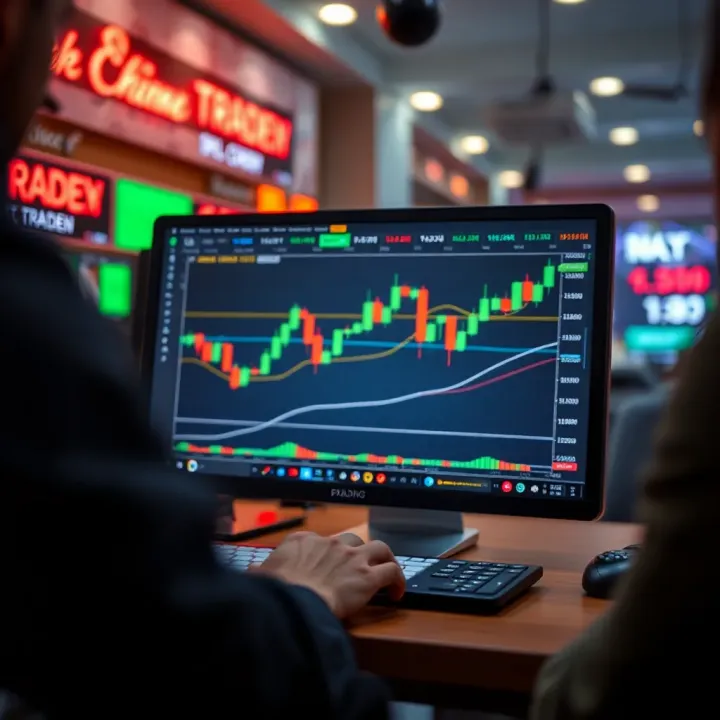
💹 Learn how to make money forex trading in India with practical tips on market analysis, broker selection, risk management, and controlling emotions for success.
Based on 11 reviews