
How to Make Money Forex Trading: A Practical Guide
💹 Learn how to make money forex trading in India with practical tips on market analysis, broker selection, risk management, and controlling emotions for success.
Edited By
Rebecca Hughes
Forex trading isn’t just about watching currency pairs move up and down; it’s about understanding how money flows within this massive global market. Many traders jump in without a solid grasp of the financial mechanics behind the scenes, leading to preventable losses. This guide aims to clear the fog by breaking down how money operates in forex trading—from the basics of market functions to the nitty-gritty of managing your funds effectively.
Currency markets can seem overwhelming, especially with all the jargon thrown around. But at its core, forex trading is about exchanging one currency for another, seeking to profit from fluctuations. Knowing how money moves and how to make sensible decisions with your capital is key to not just surviving, but thriving.
Whether you’re a novice Indian trader trying to get a foothold or an experienced broker looking to deepen your understanding, this article covers practical, real-world insights. We’ll tackle calculating profits and losses like a pro, dive into risk management methods that protect your hard-earned cash, and explore strategies tailored for forex traders focusing on Indian markets. Make no mistake—money management in forex is not a dry theory; it’s a hands-on skill you develop through knowledge and practice.
"In forex, understanding your money management isn’t just an advantage—it’s your lifeline. Without it, even the best strategies can fall apart."
By the end, you’ll have a practical toolkit to handle your trading finances with confidence and clarity. So, let’s get started and cut through the noise to get straight to the money matters.
Grasping the basics of forex trading and currency exchange is like learning the ropes before diving into the deep end of the trading pool. Without an understanding of these fundamentals, navigating the forex market can feel like shooting arrows blindfolded. This section lays down the groundwork by breaking down key elements such as what forex trading is, how currency pairs work, and the vital role money plays in transactions.
Developing a clear picture of these topics isn’t just academic—it directly impacts how effectively a trader can analyze market trends, execute trades, and manage risk. For example, knowing how currency pairs function helps traders anticipate price movements with more accuracy, while appreciating the role of money in forex transactions sharpens one’s understanding of liquidity and leverage.
Forex trading is essentially the buying and selling of one currency against another. Think of it as exchanging your Indian Rupees for US Dollars or Euros when travelling abroad, but on a much larger, profit-focused scale. This market operates 24 hours a day across the globe, driven by banks, corporations, governments, and retail traders all speculating on currency value changes.
Unlike stocks or commodities, forex trading doesn’t occur on a centralized exchange; instead, it’s decentralized and operates over-the-counter (OTC). This means transactions happen directly between parties, often facilitated by brokers or electronic trading platforms. The market’s sheer size—over $6 trillion traded daily—means liquidity is usually high, allowing trades to be executed quickly.
Let’s say you believe the US Dollar will strengthen against the Indian Rupee. In forex trading, you’d buy the USD/INR currency pair, hoping to sell it later at a higher price for a profit. Conversely, if you anticipated the Rupee strengthening, you’d sell USD/INR.
Currency pairs are the bread and butter of forex trading. Each pair consists of two currencies, a base currency and a quote currency. The price reflects how much one unit of the base currency costs in terms of the quote currency. For instance, if the USD/INR pair is quoted at 75, it means 1 US Dollar equals 75 Indian Rupees.
Pairs are broadly grouped into majors, minors, and exotics. Majors like EUR/USD and USD/JPY tend to have high liquidity and tighter spreads, making them popular among traders. Exotics, such as USD/TRY (Turkish Lira), can be more volatile and costly to trade, but occasionally offer big profit opportunities.
Understanding how these pairs move is crucial. Forex price changes are usually expressed in "pips," which is the smallest price move a given exchange rate can make. For example, if USD/INR moves from 75.00 to 75.10, it has moved 10 pips.
Money is the fuel that keeps forex trading running. In practical terms, your trading capital—whether it’s a few thousand rupees or lakhs—is what you use to open and maintain trading positions. But beyond just capital, money in forex has other important roles.
First, it determines your leverage and margin. Say you have ₹50,000 in your trading account and use a 1:50 leverage. You can control a position worth ₹2,500,000, but this also increases risk significantly.
Next, currency conversion matters because profits or losses are often in the currency pair traded, not your home currency. So if you trade EUR/USD but live in India, you need to convert gains back to Indian Rupees, factoring in exchange rate fluctuations.
Finally, managing money wisely in forex is the difference between sustainable trading and burning through your capital quickly. This includes everything from deciding how much to risk per trade to withdrawing profits regularly instead of gambling them back into the market.
Good money management in forex trading is less about catching the biggest wins and more about protecting your capital so you can stay in the game long enough to win consistently.
Knowing the basics described in this section prepares you to handle more advanced strategies and risk management techniques effectively, especially in volatile markets like those faced by Indian traders. As we move forward, these concepts will be the foundation for everything else.
Managing capital effectively is more than just a good practice—it's the backbone of staying afloat in the unpredictable seas of forex trading. Without proper capital management, even the most promising strategy can crumble in the face of losses. This section looks closely at how traders can handle their funds wisely, manage their exposure, and use leverage cautiously to safeguard their money and maximize potential returns.
Starting with the basics, funding your forex account isn’t just about tossing in money and hitting "trade". You need to consider which payment methods your broker accepts, how fast deposits clear, and the fees involved. Common options include bank transfers, credit/debit cards, and e-wallets like Skrill or Neteller. For example, if you’re in India, many brokers offer UPI as a quick and low-cost method, which can be a lifesaver for efficiently moving money.
Before funding your account, it’s smart to set a budget specifically for trading—never dip into money earmarked for daily expenses or emergencies. Imagine a trader named Raj who funded his trading account with 50,000 INR after consulting with a financial advisor. This sum was manageable for him, avoiding pressure to recover losses quickly, which often leads to poor decisions.
Position sizing is about how much money you commit to a single trade, and it acts as a guardrail for your overall capital. If you put all your money into one trade and it tanked, you’d likely wipe out your entire account. Instead, breaking down your capital into smaller positions helps spread risk.
Let’s say your overall capital is 1 lakh INR. A generally accepted rule is not to risk more than 1-2% of your capital on a single trade – that means 1,000 to 2,000 INR max at risk. Position size depends on this risk tolerance and the stop-loss distance. For example, if your stop-loss is 50 pips away and you’re risking 1,000 INR, your position size will be calculated to match that risk level.
Failing to adjust position sizes properly has tripped up countless traders—think of it as betting the farm on a single horse without checking the odds.
Leverage lets you control a bigger trade size with a smaller deposit, which sounds tempting but can inflate losses just as quickly as gains. For example, with 30:1 leverage, you can trade with 30 times your capital, so a 1% move against your position can wipe out your full deposit on the trade.
Indian brokers regulated by SEBI often limit leverage to protect traders; 20:1 or 30:1 is common. Using leverage responsibly means knowing your limits and never stretching yourself too thin. If you start trading with ₹10,000 and use 1:10 leverage, a 10% adverse move will eat the entire amount.
Remember, the goal is to stay in the game long-term. Using high leverage without experience can burn through capital quickly, so always start small and increase leverage cautiously as you gain confidence.
Managing capital isn’t glamorous, but it’s the groundwork that lets traders catch profits and avoid disasters. Keeping position sizes sensible, funding mindfully, and treating leverage like a double-edged sword can make the difference between success and wiping out your account.
Knowing how to calculate profits and losses in forex trading is a must for anyone serious about the market. Without this skill, it's like flying blind—you won’t know whether you’re making smart decisions or just gambling your money away. Understanding this helps traders keep a clear picture of their financial health and identify what’s working and what’s not.
This section breaks down the main pieces that make profit and loss calculations tick: pips, converting your gains or losses back to your home currency, and practical examples that shed light on real trading scenarios. By grasping these elements, you can manage your trades more confidently.
In forex trading, a pip is the smallest price change a currency pair can make. Think of it as the ruler for measuring market movement. Usually, it’s the fourth decimal place for most currency pairs, like in EUR/USD where a move from 1.1250 to 1.1251 is one pip.
Pip value matters because it tells you how much money you win or lose when the price shifts. For example, if you’re trading one standard lot (100,000 units) of EUR/USD, one pip is typically worth $10. But if you trade a mini lot (10,000 units), that same pip movement is worth just $1.
Knowing pip values helps you set realistic goals, stops, and understand your risk exposure on every trade.
Because forex trades involve two currencies, the profits or losses usually aren’t in your home currency right off the bat. If you’re an Indian trader working with USD/JPY, your gain might initially be in Japanese yen, but you'll want to convert that into Indian Rupees (INR) to know your actual profit.
This conversion depends on the current exchange rate between the currency of profit and your base currency. If you made 10,000 JPY and the USD to INR rate is 83, then to get INR from JPY, you may need to first convert JPY to USD, then USD to INR, or directly if the broker supports INR pairs.
Always check the current exchange rates because these can swing and affect the real value of your trading results.
Let’s look at a couple of scenarios so you see how these calculations come together:
Profit Scenario: Suppose you bought 1 lot of GBP/USD at 1.3200 and sold it at 1.3250. That’s a 50 pip gain. At $10 per pip, you made $500. If you want this in INR and the USD/INR rate is 75, your profit is 500 x 75 = ₹37,500.
Loss Scenario: You sell 0.5 lots of USD/INR at 74.50 expecting it to fall, but it rises to 75.00 instead. That’s a 50 pip loss. For 0.5 lots (50,000 units), each pip might be worth ₹5, so your loss totals ₹250.
These examples show the need to grasp pips, lot size, and exchange rates together to see how money flows in and out of your account.
By breaking down profits and losses in this way, traders get a better handle on their actual money at risk and can improve their money management practices effectively.
Managing your money wisely is what can keep you afloat in forex trading, especially when the market swings unpredictably. Risk management isn’t just about minimizing losses; it's about making sure those losses don't wipe out your entire trading account. This section covers practical ways to safeguard your funds through smart strategies.
Forex trading is risky by nature, but with proper precautions, you don’t have to throw caution to the wind. Small mistakes like ignoring stop-loss limits or putting all money in one pair can cost you big time. That’s why establishing strong risk controls isn’t optional — it's fundamental if you plan to trade beyond a few lucky wins.
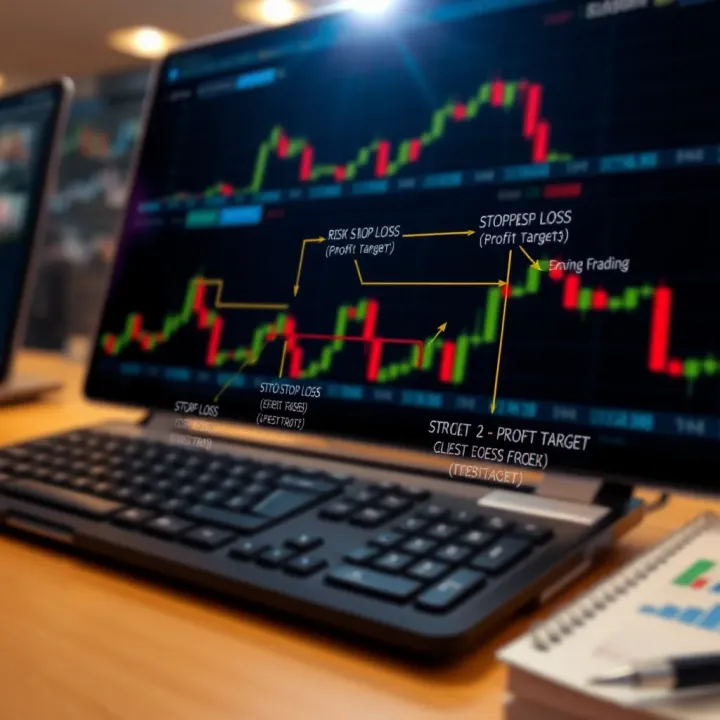
Stop-loss and take-profit orders act like guardrails on a winding road, making sure you don’t veer off-course and hit a financial wall. A stop-loss order automatically closes your position when the price hits a certain level, limiting your loss. On the flip side, a take-profit order locks in gains when the price reaches a target you've set.
For example, if you buy EUR/USD at 1.1000, you might set a stop-loss at 1.0950, capping the loss at 50 pips, and a take-profit at 1.1100, aiming to grab a 100-pip gain. This way, even if the market reverses quickly, you won't lose more than you can handle. Many traders overlook this step and end up holding positions too long, hoping the market turns, only to face heavier losses.
Using these orders also helps take emotions out of the game. It's easy to get greedy or scared, but pre-setting your exit points forces discipline, something even seasoned traders struggle with. Always make sure your stop-loss fits your overall risk strategy — if you’re risking 2% of your capital on one trade, set stops accordingly.
Putting all your eggs in one basket rarely ends well, and forex is no different. Diversifying the currencies you trade spreads risk across multiple pairs, so a sudden drop in one doesn’t tank your whole portfolio. For instance, if you only trade USD/INR, an unexpected RBI policy change can heavily impact your trades. But if you also hold positions in EUR/USD or GBP/USD, the effect might balance out.
Diversification not only reduces risk but also increases opportunities. Some currencies respond differently to global events. While USD may weaken due to a particular news event, other currencies might strengthen. This harmony can shield your overall capital and keep your growth steadier.
That said, don’t spread yourself too thin. Trading too many pairs can dilute your focus and analysis, leading to poor decisions. A good starting point is to select 3-5 currency pairs from different regions and observe how they perform and react to market news.
Many traders fall into traps that eat away at their money without realizing it. One frequent error is risking too much on a single trade, say 10% or more of their account balance. This might seem like a quick way to gain, but it exposes you to huge losses quickly.
Another mistake is chasing losses. If a trade turns against you, trying to recover by doubling down usually ends badly. Remember, forex isn’t a sprint—it’s a marathon. Sticking to your plan and not letting emotions dictate your trades is key.
Also, neglecting to keep a trading journal is a missed opportunity. Without tracking your trades, it’s hard to spot patterns or mistakes. Simply noting down your entry, exit, reason for the trade, and outcome can guide smarter moves going forward.
Successful trading isn't about never losing; it's about protecting your money well enough to stay in the game long term.
In short, protecting your money in forex relies heavily on setting clear boundaries with stop-losses, spreading risk by diversifying currency exposure, and steering clear of impulsive money mistakes. These steps provide a solid safety net, letting you focus on growing your forex account steadily rather than chasing quick wins that vanish just as fast.
Improving your trading efficiency isn't just about making faster trades; it's about making smarter decisions with the money you are putting on the line. Efficiency here means maximizing your returns while minimizing the time and effort wasted on unnecessary or poorly planned trades. For forex traders, especially in India where market conditions can get volatile and currency fluctuation is frequent, streamlining your process can save you both stress and funds. Let’s break down some practical ways to boost your trading efficiency without overcomplicating your approach.
One of the simplest yet most overlooked ways to get better at forex trading is to keep a detailed record of your trades. This means recording every trade’s entry and exit points, the reasons behind taking the trade, the amount risked, and the outcome. Over time, this log becomes a treasure trove of insight. For example, if you notice you consistently lose money on trades initiated right before major announcements, you might tweak your strategy to avoid those.
By regularly reviewing your performance, you can identify patterns about which strategies work best and which ones tend to fail. Think of it like keeping a diary but for your trades; it shows your progress and points out pitfalls. You can use simple tools like Excel or specialized trading journals such as Edgewonk, both of which allow you to analyze your data through graphs and charts which makes it easier to digest and act upon.
Economic calendars are an essential tool for anyone serious about managing risk in forex trading. These calendars list important upcoming economic events such as interest rate decisions, GDP releases, and employment reports that have a significant impact on currency prices. Indian traders, for example, should keep a keen eye on the RBI’s monetary policy announcements or US nonfarm payroll data, as these can cause sudden market swings.
Ignoring these events is like playing a game blindfolded, and it’s a big reason why traders sometimes get caught off guard. By knowing what’s on the horizon, you can choose to reduce your position size, set wider stop-loss orders, or even step out of the market temporarily. Using free economic calendars offered by sites like Investing.com or Forex Factory can be a game changer to plan your trades better and avoid unwanted surprises.
Money decisions in trading are heavily influenced by psychological factors, yet many traders don’t pay enough attention to this side of things. Fear and greed, for example, are notorious for pushing traders into hasty decisions—such as holding onto losing positions too long hoping they’ll bounce back or jumping into trades based on hype rather than analysis.
Understanding your emotional triggers is key to keeping your trading disciplined and your money safe. To help with this, develop a trading plan that explicitly states your entry and exit rules and stick to it like glue. It’s okay to try and flex your plan with experience, but rash, emotion-driven changes often lead to losses. Some traders even keep a brief note on their emotions during each trade to track how feelings influence their performance.
Remember, forex trading is not just a technical game; it’s a psychological test. Managing your emotions is just as crucial as managing your money.
By combining clear tracking methods, staying ahead of market-moving events, and mastering the mental game, traders can greatly improve their efficiency and, as a result, their profitability in forex markets.
💹 Learn how to make money forex trading in India with practical tips on market analysis, broker selection, risk management, and controlling emotions for success.

📈 Learn the basics of forex trading, from currency pairs to strategies and risks. A clear guide to understanding the global currency market.
Discover how to start live forex trading in India 🇮🇳 with practical tips, effective strategies, risk management techniques, and essential trading tools 📈💡
📈 Intraday trading basics explained for Indian investors: strategies, risks, tools, and tips to trade confidently within the same day.💡
Based on 14 reviews