
Choosing the Right Broker for Intraday Trading in India
Find the best broker for intraday trading in India 👨💻 Explore low brokerage, robust platforms, and key regulations to suit your trading style and budget wisely.
Edited By
Daniel Fletcher
Intraday trading involves buying and selling stocks within the same trading day, aiming to capitalise on short-term price movements. For traders in India, selecting the right broker can make a significant difference in both speed and profitability. Unlike long-term investing, intraday demands quick executions, low transaction costs, and reliable technology.
Choosing a broker isn’t just about the lowest brokerage fees. While cost is important, platform stability, ease of access, and responsive customer support also matter. For example, a broker with frequent downtime during peak trading hours could cause missed opportunities, costing more than savings on commission. Regulatory compliance is another factor that builds trust and safety for your funds.
A good broker for intraday should combine low charges, responsive technology, and solid support, enabling traders to make fast and confident decisions.
Consider these key points when scanning through brokers:
Brokerage Fees: Look for brokers offering competitive flat fees or low percentage charges. Many Indian traders prefer discount brokers offering ₹20 or less flat on intraday trades.
Trading Platforms: Check for platforms that give real-time data, swift order execution, and intuitive charts. Mobile apps matter too, with many intraday traders relying on smartphones.
Regulatory Compliance: Ensure the broker is registered with SEBI (Securities and Exchange Board of India) and has a good track record.
Customer Support: Fast, knowledgeable responses are a must. Problems during trading hours need quick resolution.
In the following sections, we will explore these aspects in detail, compare top intraday brokers in India, and help you evaluate which fits your trading style best.
Intraday trading means buying and selling stocks on the same day before the market closes. Traders aim to profit from small price changes within that day, without holding any overnight positions. This style requires a sharp focus, quick decisions, and reliable tools to capitalise on the market's short-term moves.
In India, intraday trading is especially popular because the NSE and BSE offer many liquid stocks suitable for quick trades. However, the razor-thin margin between gain and loss means that even slight delays or extra costs can affect profitability significantly. Hence, choosing the right broker is critical — it directly impacts the speed of executing orders, access to funds, and the quality of trading tools.
Intraday trading involves opening and closing positions within the same trading session, usually from 9:15 am to 3:30 pm IST. Unlike investing, which focuses on long-term gains, intraday traders rely on technical analysis, market trends, and news to make quick decisions. For example, a trader might buy shares of Reliance Industries in the morning and sell them by afternoon if the price moves favourably.
The brief window makes intraday trading fast-paced but risky. Market volatility can swing prices rapidly. A small misjudgement or delay in execution can lead to losses. Since trades must be squared off before market close, traders face pressure to act quickly, often with little room for error.
To illustrate, if a trader holds a position beyond the closing time, it might convert into a delivery trade, incurring additional charges or penalties.
The Securities and Exchange Board of India (SEBI) regulates intraday trading. Brokers must offer margins and adhere to a daily settlement cycle to ensure trades are settled on time. Intraday trades are subject to T+0 (trade date) settlement norms for valuation, though actual settlement occurs on T+2 (two days after). Traders must understand these rules to avoid unintentional penalties or margin shortfalls.
Quick execution is a must in intraday trading. Even a delay of a few seconds can change the price significantly. A broker with fast servers, low latency, and efficient order routing helps traders catch target prices and reduce slippage (the difference between expected and actual trade price).
Most intraday traders rely on margin from brokers to amplify their buying power. Brokers typically offer leverage ratios from 5x to 20x depending on the stock and segment, allowing traders to take larger positions with less capital. However, higher leverage increases risk as losses also multiply, so traders should pick brokers offering sensible margins with transparent terms.
Good brokers provide advanced charting tools, real-time market data, customizable alerts, and automated trading features. These tools help intraday traders analyse technical indicators like moving averages, RSI, and MACD swiftly. Platforms with API access also allow algorithmic trading, which can execute strategies automatically without emotional biases.
Selecting a broker that combines fast order execution, suitable margin offerings, and powerful trading tools creates a solid foundation for intraday trading success in India's stock markets.
Selecting the right broker for intraday trading hinges on several key factors that directly affect trading efficiency, profitability, and security. These criteria help you avoid pitfalls like unexpected costs or platform glitches, ensuring your trades execute swiftly. From fees to technology and regulatory compliance, knowing what to check before committing can save time and money.
Brokerage charges can be either fixed per trade or a percentage of the trade value. For instance, if you do multiple small-value intraday trades, a fixed fee broker might be costly as you pay for each transaction separately. Conversely, a percentage-based fee suits larger volumes but can eat into profits if trade sizes are small. Comparing these models based on your trading style is essential to keep costs manageable.
Apart from brokerage, watch out for other costs like Securities Transaction Tax (STT), Goods and Services Tax (GST), stamp duty, and exchange transaction fees. These can add up quickly, especially for frequent intraday traders. Some brokers also levy account maintenance or data access charges that don't surface upfront. Always ask brokers for a comprehensive fee breakup to avoid surprises affecting your bottom line.
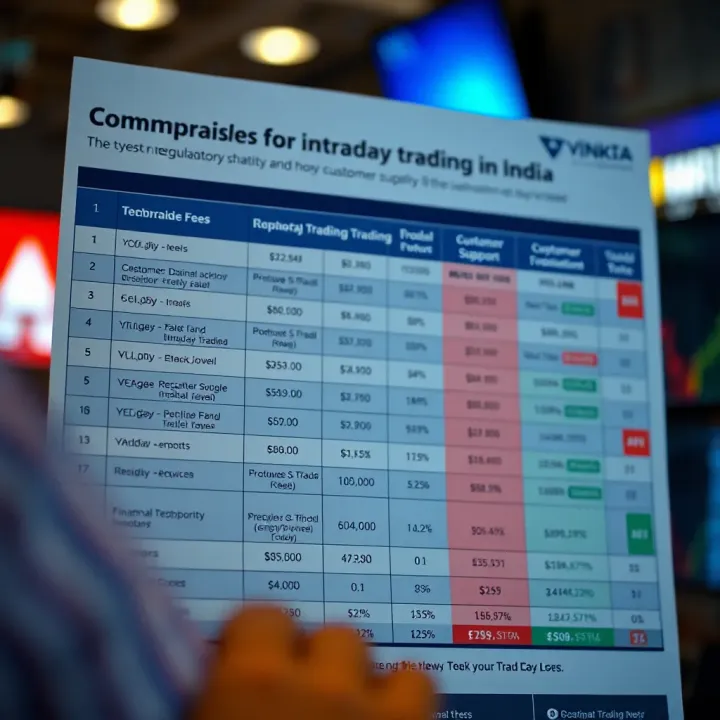
Intraday trading thrives on small price movements; even a slight increase in brokerage can turn a winner into a loss. For example, if your average profit per trade is ₹200, but you pay ₹50 in brokerage and ₹30 in other fees, your net gain shrinks significantly. Efficient brokers with transparent, low charges help maximise net returns, making fee structures a critical decision factor.
A clutter-free, intuitive trading platform speeds up order placement and reduces errors during fast-paced intraday sessions. Brokers like Zerodha offer simple dashboards that let traders quickly access watchlists, order books, and charts. A well-organised interface helps you react promptly to market movements without fumbling through menus.
Access to live price feeds and feature-rich charting software enables timely analysis and sharper decision-making. Tools offering multiple technical indicators such as RSI, moving averages, and Fibonacci retracements can give you an edge. Poor data refresh rates or laggy charts can cause missed opportunities or bad entries.
Intraday traders often need to execute trades on the go. Reliable, fast mobile apps with minimal downtime and instant push notifications are indispensable. For example, Upstox's mobile app has low latency and straightforward order entry, crucial when markets swing suddenly. An app crash or delay during high volatility can be costly.
Check that the broker is registered with the Securities and Exchange Board of India (SEBI) and holds the necessary certifications. This confirms legitimacy and adherence to regulatory norms, protecting you from fraud and malpractice. Using SEBI-registered brokers like ICICI Direct or Angel One ensures your investments remain safe.
Brokers handle sensitive client data and financial transactions. Look for those employing strong encryption protocols and secure servers to prevent data breaches. Platforms with two-factor authentication add an extra security layer, safeguarding accounts from unauthorised access.
Prompt resolution of complaints indicates a broker's commitment to customer trust and compliance. Confirm that the broker participates in investor protection schemes and has transparent processes for grievance redressal. This backing is comforting if you ever face transaction disputes or technical issues.
Intraday trading demands quick resolutions. Brokers offering round-the-clock or extended support hours reduce downtime caused by platform glitches or trade execution issues. Rapid response times minimise losses and trader frustration during critical moments.
Multiple communication channels help you access help conveniently. Phone support suits urgent queries, while chat can assist during active market hours. Email works for detailed issues needing documentation. A broker like HDFC Securities offering all three makes customer assistance seamless.
Besides general queries, support should cover complex technical glitches and trade-related challenges. For example, if an order fails or the platform crashes, immediate troubleshooting prevents missed trades. Brokers with specialised teams trained in resolving trading hurdles give you confidence to focus on markets.
Picking a broker involves balancing fees, technology, regulatory safeguards, and support quality. Paying attention to these criteria ensures your intraday trading is smooth, cost-effective, and trustworthy.
When choosing a broker for intraday trading, knowing the strengths and limitations of leading players helps you make an informed call. Each broker offers a mix of charges, trading platforms, and support services tailored for intraday traders. Understanding these specifics helps match your trading style and financial goals effectively.
Zerodha stands out with its flat fee per trade model, making it attractive for high-frequency intraday traders. Its Kite platform is user-friendly and equipped with advanced charting tools, helping traders analyse market trends swiftly. Zerodha also offers good margin leverage, vital for intraday exposures.
Upstox offers competitive brokerage fees and a sleek trading app featuring real-time charts and customised indicators. Intraday traders appreciate Upstox's low latency during order placement, which can make a difference when markets swing rapidly. It also provides margin benefits that allow trading with less upfront capital.
Angel One blends traditional brokerage with digital innovation. It caters well to intraday traders through its Angel Broking app that supports both fundamental and technical analysis. Angel One has a flexible fee structure and also gives personalised advisory, which can help traders new to intraday trading.
ICICI Direct, backed by one of India's largest banks, assures strong regulatory compliance and security. Its platform integrates banking and trading conveniently, making fund transfers seamless. Though the brokerage fees are higher, ICICI Direct’s robust research reports and customer support make it a preferred choice for conservative traders.
HDFC Securities combines reliable backing with technology-driven tools. It offers real-time market data and a variety of trading products, including intraday segments. Their trading platform is known for stability even during volatile market hours, a critical aspect for day traders handling quick trade executions.
The brokerage fee model is crucial. Some brokers, like Zerodha and Upstox, charge a fixed fee per trade, often ₹20 or less, regardless of trade size, benefiting high-volume intraday traders by cutting costs. Others like ICICI Direct operate on a percentage model, which scales with trade value and might eat into profits on large trades.
Platform usability impacts how fast you act on market moves. User-friendly interfaces with seamless navigation, like Zerodha’s Kite or Angel One's app, make placing orders quick and less error-prone. Robust real-time data and technical indicators are equally essential to stay ahead in intraday trading.
Suitability varies with trading experience. Beginners might lean towards Angel One or ICICI Direct for advisory support and easier navigation, while experienced traders often prefer Zerodha or Upstox for their low fees and advanced tools. Mobile app reliability also matters, especially for traders who keep an eye on markets on the go.
Choosing a broker isn’t just about low fees; it’s about aligning platform features, costs, and support with your individual trading style.
In intraday trading, seconds can make the difference between profit and loss. Advanced technology and efficient tools speed up decision-making and execution, giving traders an edge. Brokers offering reliable platforms with sophisticated features help traders react quickly to market changes and capitalise on opportunities effectively.
Technical analysis tools form the backbone of intraday trading. These include candlestick charts, moving averages, and volume indicators that reveal price trends and market sentiment instantly. For example, a trader spotting a sudden spike in volume alongside a breakout can act swiftly to enter or exit a position, often before others react.
Customisable indicators allow traders to tailor charts to their strategies. Indian brokers like Zerodha and Upstox provide options to add or modify indicators such as RSI (Relative Strength Index), Bollinger Bands, or MACD (Moving Average Convergence Divergence). This flexibility lets traders focus on patterns relevant to their style and avoid clutter, improving analysis speed.
Alerts and notifications provide real-time heads-up on critical price movements or technical signals. Rather than constantly monitoring screens, traders can set alerts for specific price levels or indicator thresholds, getting notified via app or SMS. This feature reduces missed opportunities and helps manage trades even while away from the desk.
Many brokers offer APIs (Application Programming Interfaces) to connect trading algorithms directly with their platform. This lets traders automate strategies, execute orders exactly when conditions meet predefined criteria. For intraday traders, this can cut down reaction time substantially, avoiding delays in manual order placing.
Algo trading brings speed and discipline, eliminating emotional decisions during fast markets. It helps in executing multiple trades simultaneously and maintaining consistency in strategy. However, it requires careful setup and testing to avoid losses from coding errors or unexpected market gaps.
Still, traders need to recognise risks and regulatory considerations. SEBI regulates algorithmic trading strictly, requiring brokers and traders to register and comply with certain norms to prevent market misuse. Automated systems can trigger significant losses if not monitored closely, especially in volatile Indian markets.
Modern intraday traders rely heavily on mobile apps from brokers like Angel One and ICICI Direct. These apps offer features such as live market feeds, order book monitoring, and one-tap order placement, making trading possible even during travel or outside office hours.
Trade execution speed on mobiles is critical; a lag of even a few seconds can mean missing profitable trades. Reliable brokers optimise their apps to handle high volumes and maintain quick responsiveness, ensuring trades execute smoothly and timely.
Reliability during high market volatility is another vital factor. Market surges cause traffic spikes on platforms, which may delay order processing or display incorrect data. Choices like HDFC Securities have improved backend infrastructure to manage Indian market volatility, keeping apps stable even during sharp price moves.
Effective use of technology and tools tailored to intraday needs can significantly enhance trading outcomes. The right broker offering these can be a game-changer for active traders in India.
Picking the right broker for intraday trading involves more than just comparing charges or platform looks. Practical evaluation helps you understand how well a broker fits your trading style and needs. This section walks you through effective steps to assess brokers before committing your money.
Demo accounts offer a risk-free environment to practise trading. By starting with virtual money, you can get comfortable with order placement, chart reading, and other platform features without worrying about losses. This practise is especially crucial if you’re new to intraday trading or switching to a new broker.
Look for demo accounts that closely mimic the live trading experience. Essential features to check include real-time market data, order execution speed, charting tools, and the availability of multiple order types. For instance, Zerodha’s Kite demo lets users test bracket orders and product types, helping traders understand how these tools impact quick decision-making.
Try demos from several brokers to compare usability and functionalities. Some platforms might shine on mobile but lag on web, or offer advanced analytics that others lack. Assessing multiple demos can reveal which platform suits your workflow, helping you avoid surprises when trading with real money.
Reliable reviews come from verified users or credible financial websites offering in-depth broker analyses. Forums like Traderji or Equitymaster have detailed user discussions highlighting real experiences, both good and bad. These sources provide practical insights beyond marketing claims.
Hearing from peers who trade regularly can be invaluable. They may share difficulties like delayed order execution during market peaks or hidden fees. For example, a colleague might warn about customer service delays during volatile sessions—a factor often missed in adverts.
Keep an eye out for red flags such as frequent regulatory fines, unexplained downtime, or withdrawal hassles. Consistent negative feedback on these points can indicate underlying issues. Being alert about such warning signs protects you from costly mistakes.
Don’t just glance at headline brokerage charges. Look out for extra levies like GST, stamp duty, or platform fees that add up. For example, ICICI Direct charges a fixed fee but adds brokerage on options trades—details easily missed in initial comparisons.
Brokerage cost impacts your intraday margins directly. Even a small difference in per-trade fees can eat into profits, especially when making multiple trades daily. Choosing a broker with transparent fee structures and low charges helps maintain profitability.
Understanding settlement cycles matters too. Most Indian brokers follow T+2 (trade date plus two days) for equity delivery but offer faster T+1 or even same-day settlements for intraday or F&O trades. Quick settlements free up funds sooner for reinvestment, boosting your trading agility.
Being thorough about platform features, user feedback, and costs before finalising your broker saves time, money, and frustration in the long run. A well-chosen broker supports your intraday trading success effectively.
Find the best broker for intraday trading in India 👨💻 Explore low brokerage, robust platforms, and key regulations to suit your trading style and budget wisely.
📈 Discover how to pick the best shares for intraday trading in India with smart strategies, market insights, risk tips, and popular stock choices to boost your trades.

Find the top sites for intraday trading in India with fast execution, precise data, and easy-to-use tools 📊. Get valuable tips for smart, secure same-day trading! 🚀

📈 Learn intraday trading in India with practical tips, key strategies, effective tools, and smart risk management to trade confidently within a day. 📉
Based on 9 reviews