

Maximum Height of a Binary Tree Explained
Explore how to calculate the max height of a binary tree 🌳, learn key algorithms & tips, and tackle common challenges in computer science programming.
Edited By
James Thornton
Understanding the height of a binary tree is essential for anyone working with data structures, especially programmers and students preparing for competitive exams like JEE or project interviews. The height of a binary tree refers to the longest path from the root node down to the furthest leaf node. Simply put, it's the number of edges on the longest downward path.
This concept is more than just a textbook definition; it directly influences the efficiency of many algorithms, such as search, insertions, or deletions in binary search trees. You might ask why it's relevant beyond academic exercises. For instance, in financial trading algorithms, trees sometimes serve to organise data hierarchically, and knowing their height helps optimise query time.
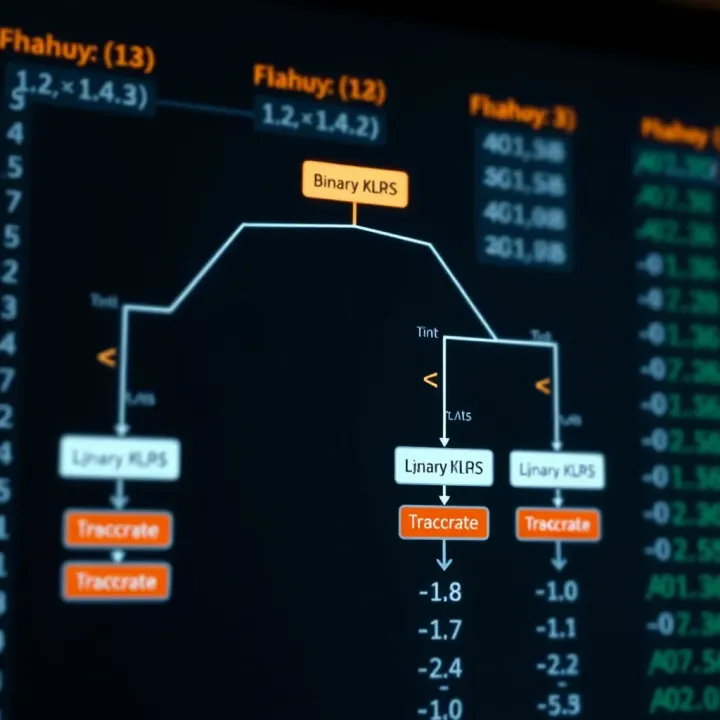
Commonly, the height can be calculated with two primary approaches: recursive and iterative methods. Recursive calculation utilises a function that calls itself on each child node until reaching a leaf, then rolls back with the highest count. Iterative methods, on the other hand, involve using data structures like queues to perform level-order traversals, counting levels as they go.
Knowing how to evaluate a binary tree’s height efficiently can save computing time, which matters a lot in high-frequency trading systems where every millisecond counts.
Besides calculation, understanding tree height is crucial in balancing trees. For example, AVL trees maintain their height to improve search times. Binary trees with poor height balance can degrade to list-like structures, with retrievals taking linear time.
In subsequent sections, this article will dive into detailed methods for calculating height, discuss optimisation techniques, and provide real-world use cases. By the end, you’ll have a solid grasp on tree height, enhancing both your coding skills and conceptual clarity.
Understanding the height of a binary tree is key to grasping many fundamental operations in data structures. In practical terms, the height influences how efficient searching, insertion, or deletion in the tree can be. For example, in investment algorithms used for decision trees, knowing the tree's height helps predict how deep the search could go, affecting computation time.
The height of a binary tree is the count of edges on the longest path from the root node down to the farthest leaf. For instance, if the longest route from the top node to a leaf passes through three edges, the tree's height is 3. This measure is useful when programming algorithms that traverse trees, since it determines the worst-case depth they might reach.
While height measures the longest path from a node to a leaf, depth counts the number of edges from the root to a specific node. In simple terms, depth increases as you go down the tree, whereas height tells you how far the tree extends downward. For example, in a stock market decision tree, the depth indicates how many decisions are considered before reaching a particular prospect, while height shows the maximum decision steps possible.
The height directly affects performance and balance in binary trees. A tree with minimal height means faster operations, as fewer nodes need to be checked. Conversely, a tall tree, like a skewed tree, can degrade performance to that of a linked list. Hence, tree height often dictates the efficiency of data retrieval and update processes.
A full binary tree is one where every node except leaves has exactly two children. The height of such a tree is tightly linked to the number of nodes and generally balanced, offering predictable performance. For example, in trading algorithms, full trees ensure equal paths for all outcomes, simplifying analysis.
Complete binary trees fill levels fully except possibly the last, leading to relatively low height for the number of nodes. Skewed trees, where nodes only have one child, can grow very tall, making operations inefficient. In financial modelling, using complete trees prevents long computation times associated with skewed structures.

Balanced binary trees maintain their height close to the minimum possible for the number of nodes. This balance ensures operations like search and insertion stay efficient. Techniques such as AVL or Red-Black trees maintain this balance, vital in applications like database indexing or portfolio optimisations where speed is critical.
Understanding height and the types of binary trees helps developers and analysts design data structures that keep operations efficient and predictable, essential for both academic and real-world applications.
Calculating the height of a binary tree is fundamental for understanding its structure and efficiency. The height determines the longest path from the root to any leaf, affecting operations like searching, insertion, and balancing. In this section, we focus on two main methods: recursive calculation and iterative level order traversal. Each offers distinct advantages and suits different scenarios, especially when working with vast data sets or performance-critical applications.
Recursion naturally fits binary trees since each node has two subtrees. The recursion dives into a node's left and right children, exploring each subtree down to the leaves. This approach reflects the problem’s recursive nature by breaking it down into smaller subproblems—calculating the height of each subtree separately.
The base case for recursion occurs when a node is null, meaning it has no children, so the height contributes zero. The recursive case then takes the maximum height from the left and right subtrees, adding one to account for the current node itself. This structure keeps the implementation simple and elegant.
Consider the algorithm: at each step, if the node is null, return zero; otherwise, find the height of the left subtree and the right subtree, then return the greater of the two plus one. This method clearly shows how recursion elegantly solves the height calculation without needing additional data structures.
The iterative approach uses a queue to traverse the binary tree level by level, known as level order traversal. The queue keeps track of nodes at the current level, allowing the program to process all nodes horizontally before moving to the next level. This method avoids recursion, which can be beneficial when stack overflow risks loom in deep trees.
By counting the number of levels traversed before the queue empties, the algorithm directly measures the height. Each time nodes of a complete level are dequeued and their children enqueued, it marks one level of the tree accounted for.
For example, starting with the root node in the queue, process it and enqueue its children. Once all nodes in the first level are processed, we increment the height count by one. This process continues until there are no more nodes left to traverse.
Using queues for level order traversal not only calculates height but also lays the groundwork for other tree operations like breadth-first search, demonstrating its practical utility.
Both recursive and iterative methods have their place. While recursion shines in simplicity and clarity, iteration helps manage memory better in large trees. Familiarity with both equips you to choose the best approach based on your specific needs.
Calculating the height of a binary tree is more than an academic exercise; it directly affects how efficiently various operations perform and has implications in real-world scenarios. Understanding the tree's height helps in optimising search times, managing data structures, and solving practical problems in computing and beyond.
The height of a binary tree impacts how quickly you can search or insert a node. In an ideal balanced tree, the height is kept to a minimum, roughly log₂(n) for n nodes, which means search and insertion operations take fewer steps. In a skewed tree with greater height, these operations may degrade to linear time, harming performance. For instance, searching for a stock symbol in a balanced decision tree is much faster than in an unbalanced one where irrelevant branches extend unnecessarily.
Balancing techniques aim to keep the tree's height as low as possible. They prevent degenerate structures where the tree behaves like a linked list, which slows operations significantly. This optimisation is critical in trading platforms where order books or price data are stored as trees. A balanced tree means faster access to order information, helping traders react quickly to market changes.
Self-balancing trees like AVL and Red-Black trees use height calculations actively to maintain balance after insertions or deletions. These trees monitor height differences between subtrees to decide if rotations are needed. Since these are commonly used in databases and financial software, their efficiency in height management ensures that lookups and updates remain swift, directly benefiting applications handling vast volumes of market data.
Operating systems use tree structures to represent file system hierarchies. Calculating the height gives insights into the deepest folder nesting and can highlight complexity or potential inefficiencies. For example, a deeply nested folder structure on a server storing stock market histories may slow down file retrieval, informing sysadmins to reorganise data for faster access.
In network routing, decision trees represent possible paths, and their height reflects the longest path data might travel. Calculating height helps in optimising routing algorithms to reduce latency. Similarly, in automated trading systems, decision trees evaluate market conditions; knowing the tree height shows how complex the decision-making process is, influencing system response times.
Game trees, used in AI for games like chess, rely heavily on height to determine how many moves ahead the system evaluates. The taller the tree, the deeper the analysis, but this increases computational time. Efficient height calculation helps programmers balance between depth of analysis and response time, which is crucial for developing AI that can compete in real-time market prediction simulations or strategy games.
Accurate calculation of tree height plays a key role in optimising algorithms and system designs, making it essential knowledge for students, developers, and analysts working with data structures in practical contexts.
Calculating the height of a binary tree might sound straightforward, but it presents several challenges, especially as the size and shape of the tree vary. Larger trees and certain structures can strain resources like memory and processing time. Understanding these challenges helps us choose or design better algorithms. Plus, optimising this process can significantly improve efficiency, which matters in applications like database indexing, network routing, or game AI.
Stack overflow risks in recursion: Recursive methods are popular for calculating tree height due to their elegant approach. However, with very deep trees — say, a skewed tree stretching thousands of nodes — recursion depth can become a problem. Each recursive call adds a layer to the call stack. If the tree height crosses the system’s stack limit, the program risks a stack overflow, crashing the application. For example, if a retail inventory tree in software handling millions of items is heavily unbalanced, recursive height calculation might cause failures unexpectedly.
Memory usage in iterative methods: To avoid recursion problems, programmers often turn to iterative methods using queues or stacks. While these limit stack overflow risks, they introduce their own memory challenges. For wide trees with many nodes at a single level, the queue size can balloon, consuming significant RAM. Think of a network routing tree representing numerous nodes—handling all siblings at once consumes considerable memory. This is crucial when running on devices with limited resources, like IoT sensors or mobile mobiles.
Handling skewed and unbalanced trees: Skewed trees (all nodes having either a left or right child only) behave like linked lists, so their height equals the total nodes. This amplifies calculation difficulty since it often hits worst-case performance. Unbalanced trees can also lead to inefficient traversals when calculating height repeatedly. For example, if an algorithm regularly updates the height of a binary search tree that becomes heavily skewed due to insertions, recalculating height inefficiently can slow down performance dramatically.
Tail recursion and memoisation: Tail recursion can help alleviate deep recursion's stack strain. Though not always supported natively in languages like Java, it's a valuable technique where available. Memoisation stores height results for subtrees, preventing repeated computations. In a scenario like a file system tree where subtrees rarely change, memoising each subtree’s height can save time significantly. This prevents revisiting the same subtree multiple times when calculating height.
Using height caching in nodes: Another practical optimisation involves storing the height with each node itself. When changes happen, only affected nodes update their cached height, vastly reducing redundant recalculations. AVL trees and Red-Black trees apply similar strategies to maintain balance efficiently. This approach is helpful in database index trees, where quick balance checks and height calculations make fetching records faster.
Iterative depth-first search variants: Instead of standard level order traversal, iterative depth-first search (DFS) variants can also calculate height without recursion. Using an explicit stack, DFS approaches can track current depth, updating maximum height accordingly. This reduces memory usage compared to breadth-first methods in particular cases. For instance, in an AI decision tree, iterative DFS calculates height efficiently without risk of stack overflow, balancing memory and speed needs.
Addressing these challenges and applying suitable optimisations ensures that height calculation remains reliable, fast, and resource-conscious even for large, complex binary trees.
By understanding and overcoming typical bottlenecks, you can select or develop methods best suited to your specific use case, whether in finance, software engineering, or data analysis.
Explore how to calculate the max height of a binary tree 🌳, learn key algorithms & tips, and tackle common challenges in computer science programming.
🌳 Learn how to find the maximum height of a binary tree, explore key algorithms, types, and practical uses for coding interviews and computer science students.

🌳 Understand the maximum height of a binary tree with clear definitions, calculation methods, key algorithms, time complexities, and coding tips in this detailed guide.

Explore binary tree traversal techniques — inorder, preorder, and postorder with practical examples and useful tips to enhance your data structure skills 📚🌳
Based on 12 reviews