

Understanding Chart Patterns for Traders and Investors
📈 Master chart patterns to read market moves with confidence. Learn to spot key types, apply strategies, and avoid pitfalls for smarter trading decisions.
Edited By
Victoria Shaw
Chart patterns form a key part of technical analysis used by traders, investors, analysts, and brokers to understand potential price movements. These patterns visualise historical price action, allowing market participants to anticipate continuation or reversal of trends. Unlike fundamental analysis, which focuses on financial statements or economic data, chart patterns rely on price and volume behaviour visible on price charts.
There are two main categories of chart patterns:

Continuation Patterns: These suggest the existing trend will likely persist. Examples include flags, pennants, and rectangles. Traders use these to time entries in an ongoing trend.
Reversal Patterns: These indicate a possible change in trend direction, such as head and shoulders, double tops, or double bottoms. Recognising these can help traders avoid catchin a falling knife or missing a turnaround.
Each pattern has distinct characteristics, such as shape and volume behaviour, which help validate its reliability. For example, a head and shoulders pattern is most significant when the volume peaks on the left shoulder and declines through the head and right shoulder.
Successful traders combine chart patterns with other techniques like support and resistance, moving averages, and oscillators to improve accuracy. No pattern works alone—it’s the context that makes it powerful.
Understanding these patterns gives you actionable insights:
Identify trade setups with defined entry and exit points.
Manage risks through stop-loss placement based on pattern structures.
Gauge market sentiment and momentum shifts effectively.
This guide will explore the major chart patterns in depth, explain how to interpret them, and provide practical tips to incorporate them in your trading strategies. You will also find references to PDFs and other resources for deeper study of these patterns.
Whether you trade intraday, swing, or invest long-term, mastering chart patterns adds a valuable layer to your market toolkit. Let us now move to specific patterns and their practical use.
Chart patterns form the backbone of technical analysis, helping traders make sense of price movements without relying solely on fundamental factors. These patterns emerge when price data forms distinctive shapes on a chart, reflecting the ongoing battle between buyers and sellers. Recognising patterns early can help traders anticipate potential price direction shifts, improving their chances of making profitable decisions.
Chart patterns are specific formations created by historical price data plotted over time. They signal potential trend reversals or continuations, depending on their nature. For example, a trader spotting a "Head and Shoulders" pattern may suspect a bullish trend weakening, signalling an opportunity to exit or short the stock. Conversely, a "Flag" pattern might indicate a brief pause in an ongoing uptrend, suggesting a continuation upon breakout.
These patterns matter because they simplify complex price action into easily interpretable signals. Instead of guessing, traders use these visual cues combined with other indicators to time entries and exits. This is particularly valuable in volatile markets where emotional decisions can lead to losses. Recognising price behaviour patterns early helps traders stay ahead, manage risk actively, and plan trades systematically.
Successful traders often say that pattern recognition is like reading market sentiment in a language only experienced traders understand.
Chart patterns broadly fall into two categories: reversal and continuation. Reversal patterns, like the double top or triple bottom, suggest a change in the current trend’s direction. For instance, a double top forming on a stock like Reliance Industries might warn traders that the upward momentum is fading, signalling a potential fall.
Continuation patterns, such as triangles, flags, and pennants, signal that the existing trend will most likely carry on after a brief pause. For example, during a strong uptrend in Infosys, an ascending triangle pattern may appear as traders take a breather before pushing prices higher.
Besides these, some specialised patterns, including cup and handle or rounding bottom, provide more nuanced signals for longer-term trend assessments.
Understanding these patterns and their roles allows traders to tailor strategies according to market conditions. In practice, combining patterns with volume data and technical indicators enhances reliability, making trading more objective and less guesswork-driven.
Mastering chart patterns offers traders a visual toolkit to navigate markets more confidently, spotting opportunities and risks well in advance.
Reversal patterns are vital tools for traders aiming to spot when a prevailing trend is likely to change direction. These patterns signal potential turning points in the market, helping traders avoid entering positions that run against the upcoming trend. Recognising key reversal formations allows for smarter entry and exit decisions, reducing risk and enhancing profitability.

The Head and Shoulders pattern is a classic reversal signal that often marks the end of an uptrend. It consists of three peaks: a higher central peak (the head) flanked by two lower peaks (shoulders). For example, if a stock like Tata Steel shows this shape on its daily chart, breaking below the 'neckline' (a support line at the base of the pattern) typically indicates a shift from an uptrend to a downtrend. This pattern is especially reliable when supported by higher trading volume during the first shoulder and head formation, followed by a volume drop and a surge on the neckline breakout.
Double tops and bottoms form when price tests a resistance or support level twice without breaking it convincingly. A double top signals a bearish reversal after an upward move, while a double bottom hints at a bullish reversal post a downtrend. Take the example of Reliance Industries trading at a resistance near ₹2,000 twice before falling; this could indicate a double top reversal. Such patterns are simple yet effective for spotting potential trend changes, especially when confirmed by volume patterns or oscillators like RSI.
Triple tops and bottoms extend the concept of double tops/bottoms by testing support or resistance three times. These patterns suggest strong market indecision and often precede a notable reversal. For instance, Infosys stock bouncing thrice off a support near ₹1,200 and then rallying clearly shows a triple bottom pattern. Volume analysis and wait for confirmation of the breakout or breakdown beyond the key level are essential before acting on these patterns.
Besides these familiar patterns, traders should watch for formations like the Inverse Head and Shoulders (a bullish reversal mirror of Head and Shoulders), and the Evening Star or Morning Star candlestick patterns that signal trend changes on shorter time frames. For example, a Morning Star pattern on the Nifty 50 daily chart during a downtrend could hint at a bullish turn, especially if the subsequent candle closes higher with good volume.
Recognising these reversal patterns and combining their signals with volume or technical indicators can greatly improve the accuracy of predicting market turns, helping traders protect their capital and seize opportunities efficiently.
Clear understanding and timely identification of these core reversal patterns equip you to read market sentiment confidently, offering a practical edge in trading decisions.
Continuation patterns help traders recognise pauses or consolidations within an ongoing trend before the price resumes its original direction. These patterns offer valuable clues that trends remain intact, enabling traders to plan entries or add to positions with higher confidence. Unlike reversal patterns, continuation patterns suggest the status quo will hold, making them a favoured tool for trend followers.
Triangles appear as converging trendlines that contain price action in a narrowing band. A symmetrical triangle shows lower highs and higher lows, indicating indecision before a breakout. For instance, in the Nifty 50 index, a symmetrical triangle forming during a bullish phase often precedes a fresh leg up once price breaks above the upper trendline. Ascending triangles tend to have flat resistance and rising support, implying buyers gain strength gradually. A breakout above resistance in this pattern signals a strong continuation of an uptrend. Descending triangles, with declining resistance and flat support, typically appear in downtrends, and a drop below the support line suggests further downside.
Flags and pennants are short-term continuation patterns occurring after a sharp price move (the flagpole). Flags resemble narrow parallelograms with parallel trendlines, sloping opposite to the prevailing trend—like a brief pause. For example, in the share price of Reliance Industries, flags during an uptrend often signal minor corrections before resuming upward momentum. Pennants differ slightly, forming small symmetrical triangles after the flagpole. Both patterns indicate a temporary consolidation phase with lower volumes and usually resolve in the direction of the previous trend. Recognising these helps traders set entry points near the breakout with tight stop-losses.
Rectangles, or trading ranges, occur when price moves sideways between horizontal support and resistance levels. This pattern marks equilibrium between buyers and sellers. For example, Tata Steel shares might trade within a rectangle zone during consolidation, signalling a pause before trend continuation. Breakouts above the rectangle resistance suggest renewed buying interest, while breakdowns below support warn of trend reversal or acceleration downwards. Rectangles are useful to identify clear entry or exit zones and help avoid premature trades within uncertain markets.
Understanding common continuation patterns equips you to better read market sentiment and maintain positions confidently during pauses. These patterns tend to have clearer breakout signals and are widely used by traders in India and beyond.
Incorporate triangles, flags, pennants, and rectangles in your charting routine to identify optimal trade entries during trending markets. Pay attention to volume trends and confirm breakouts to avoid false signals. Chart pattern mastery can significantly improve discipline and timing in your trading.
Specialised chart patterns provide traders with refined tools to predict market movements beyond classic formations. Such patterns often signal stronger trends or turning points, helping traders make more informed decisions. Understanding these patterns can highlight subtle shifts in buying or selling pressure that more common patterns might overlook.
The Cup and Handle pattern resembles a tea cup, with a rounded bottom (the cup) followed by a slight consolidation (the handle). This pattern usually forms after a bullish trend and predicts continuation. The cup itself reflects a period of consolidation where the market tests support, while the handle signals minor profit-taking before resuming upwards. For example, if a stock like Reliance Industries displays this pattern on its daily chart, breaking above the handle’s resistance typically triggers a strong bullish move. Traders should watch for volume rising on the breakout to confirm the pattern's validity.
Rounding bottoms indicate a slow reversal from a bearish to a bullish trend. The price forms a smooth, concave curve over weeks or months, showing that bears are gradually losing control. Unlike sharp reversals, the rounding bottom suggests a steady shift in market sentiment. Take Tata Steel’s stock as an illustration: a prolonged rounding bottom formation followed by a breakout impresses confidence that the price will climb further. Since these patterns take longer to develop, patience is vital, and confirmation by increased volumes near breakout adds reliability.
Wedge patterns show a narrowing range in price movement, appearing either as rising or falling wedges. A rising wedge slopes upwards but signals a possible bearish reversal because higher highs and higher lows happen at a decreasing pace—buying pressure is weakening. Conversely, a falling wedge slopes downwards and often hints at a bullish reversal, as selling pressure declines slowly. For example, if Infosys shares form a rising wedge near resistance, traders should prepare for a potential price drop. Successful trading with wedges depends on spotting the breakout direction—downwards for rising wedges, upwards for falling wedges—and confirming with volume.
Specialised patterns demand precise recognition and confirmation through indicators like volume or RSI to avoid false signals. They work best when integrated into a broader trading plan rather than used in isolation.
By mastering specialised chart patterns like the Cup and Handle, Rounding Bottoms, and Wedges, traders can better anticipate market behaviour and align their strategies accordingly.
Understanding chart patterns is one thing, but using them effectively in real trading makes all the difference. Chart patterns do not provide guarantees; they suggest probable price movements based on historical behaviour. The key is to combine pattern recognition with other tools and sound trading principles to improve decision making.
Volume confirms how strong a chart pattern is making a move. For example, in a Head and Shoulders pattern, rising volume during the formation of the left shoulder but declining volume on the right shoulder signals weakening momentum, validating the reversal signal. Besides volume, indicators such as the Relative Strength Index (RSI) or Moving Average Convergence Divergence (MACD) help confirm overbought or oversold conditions before the price moves strongly. Without these confirmations, patterns could be false signals leading to losses.
One common error is to act on patterns without waiting for a breakout confirmation. For instance, traders seeing a triangle pattern might jump in too soon, only to get trapped by a fake breakout. Another mistake is ignoring the broader market trend. A bullish pattern in a strong downtrend might fail often. Many traders also neglect setting proper stop-loss levels based on pattern breakout points, risking large drawdowns. Lastly, overcomplicating chart reading and trying to force ambiguous patterns can cause confusion rather than clarity.
Chart patterns work best when integrated within a broader strategy. Use patterns alongside fundamental analysis, news events, and risk management. Plan entries close to breakout points with stop-loss just beyond pattern boundaries. For example, if trading a double bottom, entering near the breakout above the resistance level and setting a stop under the pattern lows limits losses if it fails. Combining multiple signals—pattern recognition, volume spike, and confirmation from RSI—gives better trade confidence. Also, adapt your trade size according to the pattern’s expected price move and your risk appetite.
Using chart patterns effectively is less about spotting them alone and more about confirming, managing risk, and embedding them within a disciplined plan.
By paying attention to volumes and relevant indicators, avoiding premature entries, and weaving chart patterns into a structured strategy, traders can make chart reading a practical and rewarding part of their trading toolkit.
Chart pattern PDFs offer traders a compact, organised way to study technical analysis patterns. These resources are particularly useful because they bundle visual examples, explanations, and strategy tips in one place that you can refer to on the go. For traders and students alike, a well-curated PDF can serve as a handy checklist or quick refresher during real-time market analysis.
Reliable PDFs often come from well-known financial websites, respected trading education platforms, or official stock exchange portals. For instance, the National Stock Exchange (NSE) regularly publishes educational content useful for Indian traders. Many trading academies, like Zerodha Varsity or Upstox Learning, provide free downloadable PDFs that explain a wide range of chart patterns with Indian market examples. Avoid random uploads or uncertified sources as they might present outdated or inaccurate information, which can mislead your trading decisions.
Using PDF resources efficiently means more than just downloading and reading them once. Firstly, focus on PDFs that include clear illustrations of patterns with time-frames relevant to your trading style, whether day trading or swing trading. Secondly, highlight or make notes on key points such as pattern confirmation levels or typical volume activity, so you can quickly revisit.
Thirdly, combine these PDFs with live charting tools like TradingView or Kite. For example, after learning about a double top pattern via PDF, try to spot such patterns in real chart data. This practical application solidifies learning. Lastly, keep updating your library with fresh PDFs as market dynamics evolve, ensuring your knowledge stays current.
Consistent study supplemented by reliable PDF guides enhances pattern recognition skills, making your trades more informed and timely.
Using chart pattern PDFs smartly helps you build a deeper understanding of price action cues without the noise of overly complex texts. With trusted sources and active application, this approach tightens your analysis, reducing guesswork in market decisions.
📈 Master chart patterns to read market moves with confidence. Learn to spot key types, apply strategies, and avoid pitfalls for smarter trading decisions.
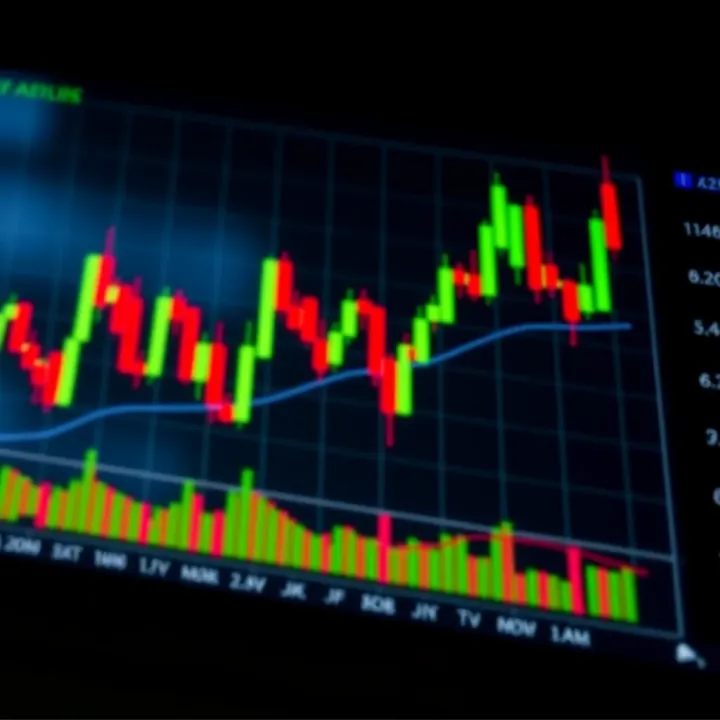
📈 Master candlestick patterns to spot market trends and boost your trading strategies. From basics to advanced, learn to read signals confidently! 🔍

Learn to spot key market chart patterns and predict price moves with our practical guide 📈. Includes handy PDF resources for traders in India 🇮🇳.

📈 Master key candlestick chart patterns with our practical PDF guide. Learn to read market trends and improve your trading skills with clear insights tailored for Indian traders.
Based on 15 reviews