

Best Trading Apps for Indian Investors: A Clear Guide
📈 Find the best trading app for Indian investors! Compare features, benefits, and top platforms to make smart, confident investment choices today. 🇮🇳
Edited By
James Harper
Paper trading offers a solid way for Indian investors to try stock market strategies without putting real money at risk. It mimics real trading using live market data, letting you buy or sell shares on a virtual platform. This helps you spot mistakes and refine your approach before entering the actual market.
With market volatility these days, practising with virtual funds can save beginners from costly errors—and even experienced traders benefit by testing fresh ideas safely. Indian platforms increasingly provide this feature, aligning well with the country's growing retail trading base.

Paper trading acts as a rehearsal space; mistakes here won’t hit your wallet but will sharpen your market instincts.
Key benefits include:
Learning market mechanisms and order types firsthand
Understanding how brokerages execute trades
Observing how various market conditions affect your portfolio
Testing risk management without financial pressure
However, virtual environments can't capture emotions tied to actual money, so transitioning to real trading requires additional mental preparation.
In this article, we'll review some of the best paper trading platforms accessible to Indian users. We’ll focus on their key features, usability, and how well they suit diverse trading goals—from intraday hoppers to long-term investors.
Before that, it’s useful to clarify what features to look for in a paper trading platform:
Real-time market data: Essential for a realistic experience
User-friendly interface: Easy navigation improves practice sessions
Portfolio tracking: Helps evaluate performance and decision making
Order variety: Support for market, limit, stop-loss orders etc.
Accessibility: Mobile and web options to practise anytime
Choosing the right platform depends on your trading style and comfort level. The following sections dig deeper into the leading choices catering to Indian investors' needs.
Paper trading is an essential step for anyone keen to enter the stock market without risking real money. It simulates real trading environments, allowing you to practise buying and selling securities using virtual funds. This hands-on experience helps you understand market movements and test strategies before investing actual capital.
Paper trading means practising stock market trades without using real money. Think of it as a stock market simulator where you mentally jot down your trades or use software that mimics live market conditions but with virtual currency. For example, if you bought 100 shares of Reliance Industries in a paper trading app, you wouldn’t need to pay anything. The goal is to learn how trading works and see the effects of your decisions without financial risk.
Risk-free learning: The stock market can be unpredictable, especially for beginners. Paper trading lets you learn the ropes without fear of losing money. If a trade goes south, you just analyse what went wrong, no financial harm done. This approach suits those trying to grasp basic concepts, such as understanding order types (like market or limit orders), or getting a feel for how news events affect stock prices.
Strategy testing: Not all trading strategies work in every market condition. Paper trading offers a practical ground to test these tactics, like swing trading or intraday trading, before putting real money on the line. For instance, you might want to test a strategy around derivatives like options trading, ensuring it performs well under volatile Indian markets, especially around earnings season or budget announcements.
Building trading confidence: Moving from theory to practice can feel intimidating. Paper trading builds your confidence by letting you manage trades, track results, and refine your decision-making process. Once you see consistent positive outcomes in your simulated trades, you feel more comfortable switching to actual market trading, knowing you have some experience to fall back on.
Paper trading suits a broad group: freshers still learning how markets function, students preparing for finance-related exams like CA or CFA, seasoned investors wanting to explore new strategies, or brokers guiding clients on trades. For example, a software engineer in Bengaluru interested in equity derivatives can use paper trading platforms to experiment with futures before making real trades. It also helps those impacted by market jitters to practice calmly and develop discipline.
Paper trading is a bridge between learning and doing—it lowers barriers for everyone to practice stock trading safely.
By understanding these benefits, you can make an informed choice about using paper trading effectively as a preparation tool for your real trading endeavours.
Selecting the right paper trading platform revolves heavily around its key features, which can significantly affect your learning experience and preparation for the real market. A good platform mimics live trading conditions closely enough to make your practice meaningful but remains user-friendly to suit beginners as well as experienced traders. Below, we break down crucial elements to consider when choosing a platform.
The user interface (UI) plays a major role in your daily trading practice. A cluttered or confusing UI can frustrate users and lead to mistakes even in simulated trades. For Indian users, platforms like Zerodha Kite showcase a clean, intuitive layout that reduces the learning curve. Clear charts, straightforward order placement, and quick access to watchlists make trading seamless. Moreover, mobile compatibility is essential since many traders use smartphones primarily for market watch and trade execution.
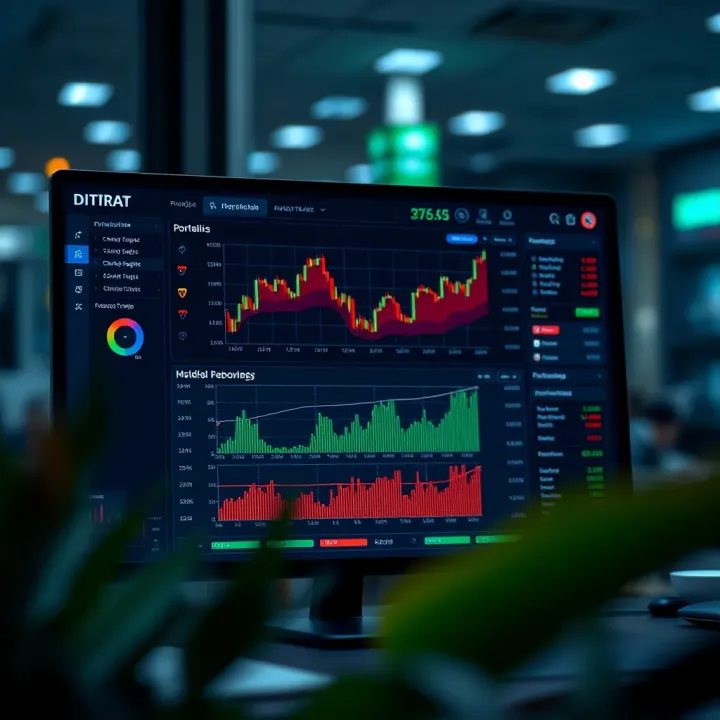
Trading success rests on timely and accurate market data. Paper trading platforms should offer real-time or near-real-time data to reflect current market conditions accurately. Platforms relying on delayed data might allow strategies to look profitable on paper but fall short in actual trading. For instance, NSE Paathshaala uses official exchange data, lending authenticity. Realism in order execution, such as considering slippages or partial fills, makes the simulation trustworthy, preparing you better for live trades.
For most Indian investors, equity trading is the bread and butter. A platform that includes a wide range of Indian stocks across sectors helps simulate diversified portfolios. Practising equity trading allows you to understand price volatility, liquidity, and sectoral trends specific to the Indian market. For example, paper trading Amazon India shares alone won't help if you are focusing on mid-cap or small-cap stocks listed on NSE or BSE.
Derivative trading, especially futures and options (F&O), demands a platform that can handle complex order types and margin calculations. Many Indian traders use F&O for hedging or speculative strategies; hence, paper trading these instruments builds aptitude without risking capital. Platforms that replicate the exchange margin system and allow testing of expiry-based strategies yield more practical insight.
Forex and commodity markets (like gold, crude oil) have grown fast in India, especially with retail traders exploring these avenues. Paper trading platforms featuring these instruments enable users to understand different market dynamics, such as leverage and global geopolitical impacts. For instance, practising trading in crude oil futures can provide insights into price movements influenced by OPEC decisions — knowledge vital before stepping into live trades.
Effective paper trading relies not only on paper orders but also on analysing market trends and managing risks. Look for platforms that offer a variety of technical indicators, drawing tools, and backtesting capabilities. TradingView, for example, gives extensive charting options and custom scripting for strategy testing. Such tools allow you to simulate different scenarios and refine your tactics based on historical data.
Since paper trading is about risk-free practice, many platforms provide it free or bundled with a trading account. However, some sophisticated platforms place restrictions on how long or how extensively you can access simulated trading. Indian traders should seek platforms that offer unrestricted paper trading without hidden costs. Accessibility across devices without complicated sign-ups also eases the process, especially for students or freshers learning the ropes.
Choosing a paper trading platform involves balancing realism, ease, and availability of relevant instruments to create a practical and effective learning environment.
Remember, the closer the paper trading resembles real market conditions, the better prepared you'll be when handling actual investments.
Choosing the right paper trading platform matters a lot for Indian investors. A good platform not only mimics real market conditions but also suits the local trading ecosystem. This ensures you get practical experience without risking real money. It is all the more crucial when Indian markets have specific trading hours, instruments, and regulations.
Zerodha Kite offers a clean, user-friendly interface that feels close to live trading. The dashboard is intuitive, with charts, order book, and watchlists that update in real time. This simplicity helps new and experienced traders focus on strategy without getting bogged down by complicated setups.
Being one of India’s top brokers, Zerodha provides seamless access to NSE, BSE, and MCX instruments. Its paper trading environment reflects actual Indian market prices and order flows, which makes practising strategies more realistic. Plus, it integrates well with its other platforms like Coin for mutual funds.
However, Kite’s paper trading platform lacks some advanced simulation features like margin calls and order types beyond the basic. Also, its virtual trading accounts don’t allow trading in futures and options, limiting the scope for derivatives practice.
Upstox Pro offers a solid paper trading module where you can experiment with stocks, commodities, and currency pairs. The simulator mimics real-time prices and order executions, helping users test timing and entry points precisely.
The platform delivers smooth navigation with quick order placement and real-time updates. It includes detailed charting tools, which appeal to active traders looking for technical analysis options during practice.
Beginners find Upstox Pro fairly accessible as it balances features without overwhelming complexity. Its tutorials and tooltips further simplify the learning curve for new investors.
TradingView stands out for its powerful and customisable charting tools accessible globally. Indian users can track NSE and BSE charts alongside major global markets, making it valuable for those interested in diversified portfolios.
Its paper trading facility offers realistic execution with order types like stop loss and take profit. Traders can replay past market moves and test strategies under varied conditions.
TradingView supports scripting with Pine Script, enabling users to build and test custom indicators. This flexibility attracts more advanced traders wanting to refine their techniques.
NSE Paathshaala and BSE Star are simulator platforms run by the exchanges themselves. They give Indian investors direct exposure to Indian market mechanisms without real money risk.
These platforms provide highly accurate market data and trading rules, making them reliable for learning. However, their interfaces are often less polished and more basic compared to commercial platforms.
Both NSE and BSE platforms bundle educational material with the simulator, offering structured lessons on trading and market dynamics. This makes them good starting points for students and freshers eager to understand market basics.
For Indian investors eager to start trading, practising on platforms integrated with local markets and regulatory conditions offers clear advantages. Choosing one that matches your skill level and goals is the key to making your paper trading time effective.
Making the best use of paper trading involves more than just executing mock trades. It requires a disciplined approach to learning, testing, and reflection. For Indian investors, it is a chance to understand market dynamics without the risk of losing real money. Successful paper trading can build trading skills, sharpen strategies, and boost confidence before stepping into live markets.
Begin paper trading with specific, measurable goals. For instance, an investor might decide to focus on intraday trading for technology stocks listed on the National Stock Exchange (NSE) or practise options strategies on Bank Nifty. Having clear objectives helps in tracking progress and staying motivated. Goals could be about improving the win rate, managing risks better, or testing a new technical indicator. Without defined aims, paper trading can become an aimless exercise that doesn’t translate into practical skills.
Paper trading offers a perfect environment to develop and test various trading strategies under different market conditions. For example, you could try momentum trading around quarterly earnings announcements or experiment with stop-loss levels in volatile sessions. Use the data from these trades to assess which strategies suit your risk appetite and trading style. The beauty of paper trading is that you can quickly discard ineffective methods and fine-tune the promising ones without financial pressure.
Consistent tracking of your paper trading results is key. Maintain a trading journal noting entry and exit points, position sizes, reasons for trades, and outcomes. This documentation helps identify recurring mistakes like premature exits or emotional decisions during market swings. Indian investors can greatly benefit by reviewing their trades weekly or monthly to identify patterns and areas for improvement. Honest reflection on failures is as important as celebrating gains.
Remember, paper trading is as useful as the effort you put into analysing and learning from it.
Moving to live trading can feel like a different ball game due to emotional factors and real money at risk. To ease this transition, start with small position sizes and limit exposure initially. For example, after months of successful paper trading, an investor might enter the real market with just 10-20% of their intended capital while sticking to tested strategies. This approach helps manage anxiety and adjust to the psychological demands of real trading. Also, keep refining your strategies and record keeping even after going live to sustain growth.
Using these practical steps, paper trading can be more than just practise — it becomes a stepping stone to smarter, confident investing in India’s dynamic stock markets.
📈 Find the best trading app for Indian investors! Compare features, benefits, and top platforms to make smart, confident investment choices today. 🇮🇳

Discover the best trading app for Indian investors 📱: compare features, costs, security, usability & customer support to match your trading style perfectly.
📈 Find the best trading app for Indian investors by exploring key features like security, fees, market access, ease of use, and customer support.
Discover the best forex trading platforms for beginners in India 🇮🇳. Learn to pick user-friendly, secure options with expert tips for smooth currency trading start 💹.
Based on 11 reviews