

Guide to Key Candlestick Patterns with Free PDF
Explore essential candlestick patterns in trading with insights on recognition & market impact. Download a handy PDF guide to boost your chart skills 📈📄
Edited By
Charlotte Lawson
Candlestick patterns have become a cornerstone of technical analysis for traders and investors alike, especially in Indian markets where quick decisions can make or break profits. These patterns visually represent price movements in a specific time frame, offering clues about potential market trends.
At its core, a candlestick consists of a 'body' representing the opening and closing prices and 'wicks' or shadows that show the high and low for the period. Recognising these patterns helps you anticipate price moves, prevent losses, and identify entry or exit points.

Understanding candlestick patterns is more than just memorising shapes; it involves interpreting market psychology reflected through price action. For example, a "Hammer" pattern during a downtrend might signal a bullish reversal, giving traders a chance to buy before prices rise.
This guide comes with clear images alongside explanations, which makes recognising these patterns in real trading charts easier. Additionally, we provide a downloadable PDF resource that you can refer back to whenever you analyse markets, making your study deeper and more efficient.
Successful trading relies on a combination of tools—candlestick patterns are one such indispensable tool that offers real-time insight into market sentiment.
Practical use of candlesticks involves:
Spotting reversal patterns like "Engulfing" and "Doji" to time your trades better.
Confirming trends through continuation patterns such as "Three White Soldiers".
Using volume and other indicators to validate candlestick signals.
For Indian traders, combining this understanding with local market nuances such as monsoon season effects or festival-driven volatility can enhance strategy effectiveness. This guide will help you develop that nuanced approach.
By the end, you should feel confident recognising major candlestick patterns and know how to apply them within your trading or investing strategy to gain an edge in the market.
Understanding candlestick patterns is essential for anyone involved in trading or investing. These patterns provide visual cues about price movements and market sentiment, helping traders make informed decisions quickly. This section lays the foundation by explaining what candlestick charts represent and why they are so widely used.
Candlestick charts display price data over a specific time frame, such as a minute, hour, or day. Each candle captures four key price points: the open, close, high, and low. For example, a daily chart candle will show you how the price moved within one trading day, revealing the range and direction of that day's price action. This snapshot aids traders in spotting potential reversals or continuations.
The body of a candlestick shows the open and close prices, while the wicks (or shadows) graph the highs and lows. The colour of the body indicates whether the price closed higher or lower than it opened—usually green or white means a rise, and red or black means a fall. For instance, a long green candle with little wick suggests strong buying interest. Knowing how to quickly interpret these shapes can help you react to market behaviour effectively.
Each of these price points tells a story: the open marks the starting price, the close shows where it ended, and the high and low reveal the extremes the price reached. For example, a candle with a small body but long wick on top might indicate that buyers tried pushing prices up but sellers gained control before close. Recognising these details helps refine entry and exit strategies, enhancing risk management.
Traders rely on candlestick patterns because they summarise complex price movements in an easy-to-understand format. Patterns such as doji, hammer, or engulfing can signal potential trend reversals or continuations. For example, a hammer forming after a downtrend may hint at a bullish rebound. This helps traders to time positions rather than guessing blindly.
Every pattern reflects psychology in the market—the struggle between buyers and sellers. A doji, where the opening and closing prices are almost equal, often highlights indecision or balance. In contrast, a series of bullish engulfing candles may signal increasing optimism. These emotional signals offer a glimpse into how participants feel about an asset’s future.
Compared to line or bar charts, candlestick charts provide richer detail by combining direction, range, and momentum in a single figure. This visual advantage speeds up analysis. For example, while a line chart might show rising price, candlesticks reveal whether buyers are truly aggressive or if there’s hesitation beneath the surface. For Indian traders dealing with volatile markets, this clarity is valuable.
Candlestick charts bridge the gap between raw data and actionable insight, making them a powerful tool for traders at all levels.
By grasping these basics and their practical uses, you set yourself up for better understanding the patterns covered in the rest of this guide.
Single candlestick patterns are the building blocks for many traders and analysts to understand immediate market sentiment. They offer quick insights into the balance between buyers and sellers during a particular trading period. Using clear visuals to study these patterns helps spot opportunities or warning signs faster, especially when combined with other technical tools.
Getting familiar with patterns like Doji, Spinning Top, Hammer, or Shooting Star allows you to read the market without waiting for multiple candles to form. This immediacy is crucial in fast-moving markets like those of Indian equities or commodities, where timing often means the difference between profit and loss.

A Doji candle forms when the opening and closing prices are almost the same, creating a very small or nonexistent body with shadows extending above and below. The Spinning Top looks similar but has a slightly larger body and longer upper and lower shadows. Both suggest indecision or balance between buyers and sellers.
These patterns show that the market's momentum is weakening. For example, if a Doji appears after a strong uptrend on the Nifty 50 chart, it signals that buyers may be losing strength, but it does not confirm a reversal by itself.
Doji and Spinning Top patterns typically warn of a potential pause or change in trend. However, interpretation depends on the preceding price action and volume. A Doji after a prolonged downtrend may hint at a coming bullish reversal, while after an uptrend, it could mean sellers are gaining ground.
Nevertheless, these patterns require confirmation with the next candles or supporting indicators. Traders often wait for a follow-up move before making decisions, avoiding jumping to conclusions based on a single, ambiguous signal.
The Hammer has a small body at the top with a long lower wick, resembling a hammer tool. It suggests that sellers pushed prices down sharply during the session, but buyers regained control by close. Conversely, the Hanging Man looks identical but occurs in an uptrend, often signalling weakness.
Both candles emphasize rejection of lower prices but appear in different contexts. For example, a Hammer after a drop in the Sensex can indicate a buying opportunity if confirmed by higher volume.
In a downtrend, the Hammer points to a possible bullish reversal because it signals buyer strength despite selling pressure. Traders see it as a cue to enter long positions cautiously.
On the flip side, the Hanging Man appears during an uptrend and might warn of selling pressure beginning to build. However, it needs confirmation such as a gap down or lower close to act as a reliable sell signal.
The Shooting Star has a small body near the low end with a long upper wick, showing buyers tried to push prices higher but sellers drove it down before close. The Inverted Hammer shares this shape but appears after a downtrend.
Both patterns tell of rejection at higher prices. Their shapes let you visualise market struggle between bulls and bears, which can guide entry or exit timing.
A Shooting Star in an uptrend often marks a bearish reversal point. For instance, on a Reliance stock chart, spotting a Shooting Star near resistance levels could signal a correction ahead.
The Inverted Hammer after a downtrend may mark the start of a recovery, but traders usually seek subsequent confirmation candles or volume signals before acting. Used wisely, these patterns improve timing and risk control in trading decisions.
Single candlestick patterns give fast clues into market psychology, but context and confirmation always matter.
Multiple candlestick patterns combine several candles to give a clearer signal about the market's next move. Unlike single candlestick patterns, these take context over multiple trading sessions, helping traders see stronger confirmations or reversals. This approach is particularly useful in volatile markets like Indian equity or commodity trading, where a lone candle may mislead.
Bullish engulfing explained: A bullish engulfing pattern appears when a small red (bearish) candle is completely swallowed by a larger green (bullish) candle the next day. It shows buyers stepping in strongly after a period of selling. For example, if a stock in the Nifty index forms this pattern near a support level, it signals a possible reversal upwards. Traders interpret this as a demand surge, suggesting entry points for long positions.
Bearish engulfing characteristics: Bearish engulfing is the opposite—after a small green candle, a larger red candle entirely covers it. This indicates sellers have taken charge, overpowering recent bullish sentiment. In markets like crude oil futures on MCX, this could forecast a downtrend, alerting traders to consider exit or shorting strategies.
Entry and exit strategies: For bullish engulfing, entering the trade just above the engulfing candle’s high with a stop-loss below is common. Exits can be planned at previous resistance levels or after observing weakening momentum. With bearish engulfing, traders often short below the engulfing candle’s low, keeping stops above. Proper position sizing and using volume confirmation improve success rates.
Pattern overview with images: The morning star pattern spans three candles—a large bearish candle, followed by a small indecisive candle (often a Doji), then a strong bullish candle. The evening star is its bearish counterpart: a big bullish candle, a small uncertain one, then a bearish candle. These patterns visually highlight a shift in momentum and often coincide with key support or resistance.
Signals for trend reversals: Morning stars signal a bullish reversal, especially after a downtrend, suggesting buyers regain control. Evening stars indicate bearish reversals after upward trends. For instance, during monsoon season, if a stock in the FMCG sector forms a morning star near a price bottom, it suggests a buying opportunity before the festive demand picks up.
Recognition and trading implications: Three white soldiers consist of three consecutive long green candles with progressively higher closes, marking strong buying pressure. Conversely, three black crows are three red candles closing lower each day, showing persistent selling. Spotting these in Indian stock markets during earnings season can offer clues on sustained trend moves.
Confirmation of trend strength: These patterns confirm trend strength beyond a simple uptick or dip. For example, after a bullish breakout of a stock like Reliance Industries, three white soldiers reinforce the uptrend, encouraging traders to hold or add. On the flip side, three black crows warning about a deeply bearish market can trigger timely exits.
Understanding these multiple candlestick patterns can refine your trading decisions by combining price action over sessions rather than isolated signals. They provide stronger evidence of market sentiment shifts, which is crucial in fast-moving Indian markets.
Using images alongside explanations helps in quick pattern recognition, essential when monitoring live charts or referring to your downloadable PDF guide.
A PDF guide on candlestick patterns offers an efficient way to carry key information wherever you go. This compact resource bundles pattern images, descriptions, and trading tips in one place. For traders and investors, having a handy file means you don't have to scramble through multiple websites or books each time you want to verify a pattern.
Easy access to pattern images and descriptions: A good PDF consolidates visual aids and brief explanations side by side. When you spot a particular candlestick formation on your trading platform, flipping through the PDF helps confirm if it matches a known pattern like a hammer or engulfing candle. This instant visual comparison sharpens your recognition skills.
Offline study and revision: Not every trading session benefits from a steady internet connection, especially in tier-2 or tier-3 cities. PDFs can be downloaded and stored on phones or laptops, allowing uninterrupted revision whenever you wish. Consider a software engineer in Pune reviewing the evening star pattern on the metro ride home—offline access makes this possible without the need for data.
Quick identification during live trading: Fast decisions matter in the market. Keeping a PDF open during trading sessions lets you double-check unfamiliar patterns immediately without switching tasks or losing focus. This can prevent costly mistakes, especially for beginners who are still mastering candlestick basics.
Trusted Indian trading sites and forums: Platforms like Zerodha Varsity or TradingQnA offer credible PDF resources tailored for Indian market conditions. These sites often update content based on current trends, adding more relevance for local traders.
Books and educational portals: Publishers like Wiley and educational portals such as Investopedia also provide downloadable PDFs authored by market experts. These are useful for in-depth study combined with theoretical insights.
Official PDFs from technical analysis experts: Analysts like Steve Nison or Thomas Bulkowski have reputable resources that can be found online. Although some are global, their principles apply neatly to Indian stock exchanges and commodity markets.
Practice pattern recognition regularly: Reading the PDF is not enough; applying it by spotting patterns in historical charts enhances understanding. Allocate time daily to identify formations before using them in real trades.
Combine with other technical tools: Candlestick patterns alone might not be reliable. Use the PDF alongside indicators like Relative Strength Index (RSI), Moving Averages, or Volume to confirm signals and make balanced decisions.
Avoid relying solely on one pattern: One pattern can give false signals. Successful traders look at multiple indicators and patterns together. The PDF should be a part of your toolkit, not the whole toolbox.
Keeping a reliable candlestick patterns PDF helps you make informed decisions faster and builds confidence by bridging theory with practice. Use it wisely as a steady companion in your trading journey.
Candlestick patterns offer valuable clues for traders, but many slip up by ignoring important aspects that affect their reliability. Understanding common mistakes helps improve accuracy and keeps losses in check. This section breaks down errors frequent among traders and how you can avoid them for better decision-making.
Importance of trend context: Candlestick patterns don't work in isolation; their meaning depends heavily on the larger trend. For instance, a bullish hammer in an uptrend confirms strength, but the same hammer in a downtrend might simply signal a pause without a reversal. Ignoring this context can lead to wrong trades. Practically, you should look at at least the previous five to ten candles to judge whether a pattern signals continuation or reversal.
Volume confirmation factors: Volume is the silent partner that confirms candlestick signals. A bullish engulfing pattern with weak volume might not lead to a sustained upward move, while the same with strong volume adds credibility. Traders often overlook this, risking false signals. Effective volume analysis means comparing current trade volumes to average volumes over recent sessions, adding confidence to the pattern’s indication.
Setting stop-loss with patterns: Relying on patterns without setting appropriate stop-loss orders invites unnecessary risk. For example, after spotting a shooting star pattern—a bearish reversal sign—placing a stop-loss slightly above the candle’s high prevents major loss if the trend turns against you. Without stop-losses, a single wrong signal can wipe out gains from multiple successful trades.
Position sizing with pattern signals: Patterns aren’t guarantees; even strong setups fail sometimes. Adjusting your position size based on confidence in the signal and risk tolerance protects your capital. For instance, taking smaller position sizes during uncertain market conditions or when the confirming volume is low helps manage losses smartly.
Need for comprehensive analysis: Candlestick patterns are just one tool in a trader’s kit. Relying solely on them without checking other technical indicators, like moving averages or RSI (Relative Strength Index), increases chances of error. Combining multiple tools reduces false positives and strengthens trade entries.
Risk of false signals: Market noise often creates misleading patterns. For example, in a highly volatile market, a doji might appear frequently without meaningful trend changes. Blindly acting on each pattern triggers overtrading, increasing transaction costs and emotional stress.
Knowing these common pitfalls transforms candlestick analysis from guesswork into a disciplined approach. Incorporate context, volume, risk management, and broader market signals to make your trades more consistent and profitable.
Explore essential candlestick patterns in trading with insights on recognition & market impact. Download a handy PDF guide to boost your chart skills 📈📄
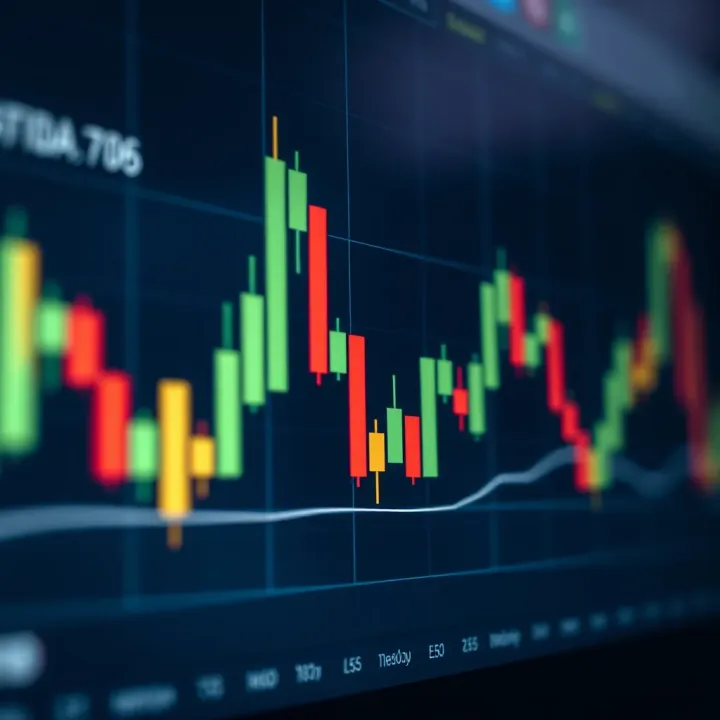
Master all candlestick patterns to boost your trading skills 📈. Get free PDFs with clear categorisation and practical tips tailored for Indian traders 🇮🇳.

📈 Learn how to spot momentum candlestick patterns to boost your trading skills with easy guides and handy PDFs. Understand trends & manage risks effectively!

Learn to spot key candlestick patterns 📈 with images for better trading decisions. Understand single, double & triple patterns to read market trends clearly.
Based on 8 reviews