

Charges for Intraday Trading in India
📈 Discover all costs in intraday trading in India: brokerage fees, transaction charges, taxes & hidden expenses. Master your profits with clear breakdowns & tips.
Edited By
Benjamin Clarke
Options trading in India involves more than just selecting the right strike price or expiry date. Traders need to understand the various charges that come with trading options to manage costs effectively and avoid surprises. These charges can impact overall profitability, especially for frequent traders or those operating on tight margins.
Costs in Indian options trading typically include brokerage fees, exchange transaction charges, and regulatory levies. Each plays a distinct role and is calculated differently depending on the broker, exchange, and trade value. Knowing how these charges add up helps investors plan their trades better and choose suitable brokers or trading strategies.

For example, brokerage fees may be a flat rate per trade or a percentage of the trade value. Exchange transaction charges are fixed by stock exchanges like NSE or BSE and vary based on the type of contract and turnover. Regulatory levies such as Securities Transaction Tax (STT), Goods and Services Tax (GST), and stamp duty are mandated by government authorities and are non-negotiable.
Understanding these charges upfront allows Indian traders to compare costs across platforms and plan trades that align with their investment goals and risk appetite.
In the sections that follow, we break down each charge category, explain how they apply to options trading in India, and highlight practical tips for keeping costs manageable. This insight is vital for traders aiming for consistent returns while keeping expenses under control.
Options trading involves several costs beyond just the price of the option itself. Understanding the various charges helps traders plan effectively and avoid surprises that eat into profits. For instance, ignoring brokerage fees or regulatory levies can turn a potentially profitable trade into a loss.
Brokerage fees are the commissions charged by brokers to execute your trades. In India, this can range from fixed charges per trade to percentage-based fees on the contract value. For example, a trader buying 1 lot of Nifty options might face a brokerage of ₹20 per trade with a discount broker or up to ₹0.05% of the trade value with a full-service broker. Choosing the right brokerage structure can significantly impact your overall trading costs, especially for frequent traders.
Exchange transaction charges are fees imposed by stock exchanges like the National Stock Exchange (NSE) and Bombay Stock Exchange (BSE). These charges vary per option contract and are generally small, such as ₹100 per crore of turnover, but they add up over time. For example, trading options on NSE involves paying a transaction fee that directly adds to the cost of every buy or sell order.
Regulatory levies include fees charged by regulatory bodies like the Securities and Exchange Board of India (SEBI). These charges help maintain market integrity but contribute to overall trading expenses. Although typically minor, regulatory charges on options can vary, and it is essential to factor them in while calculating total costs.
STT (Securities Transaction Tax) and GST (Goods and Services Tax) implications also affect options trading costs. STT is levied on the sale of options contracts and varies depending on whether the option is exercised, expired, or sold. GST, usually at 18%, applies to brokerage and transaction charges, making the effective cost higher than the base fees alone. For example, if your brokerage is ₹100, GST would add ₹18 more, which traders often overlook.
Impact on profitability: Every charge, no matter how small, reduces your net returns. For instance, a profit of ₹1,000 on an options trade can be reduced to ₹700 after accounting for brokerage, STT, and GST. Traders must include these costs in their profit and loss calculations to avoid overestimating earnings.
Influence on trading frequency and strategy: High transaction costs discourage frequent trading. If charges eat too much into profits, traders may limit their trades or switch to strategies with fewer transactions, such as longer-term options or spreads. Understanding these charges helps in selecting trading styles that balance costs and returns effectively.
Even a small reduction in trading costs can improve overall profitability significantly, especially for active options traders.
By keeping an eye on these charges, traders in India can manage expenses better and plan their options strategies with a clear picture of the costs involved.
Brokerage and commission structures form the backbone of trading expenses in options trading. Understanding these charges is vital because they directly impact your net returns, especially for active traders who manage multiple positions. Different brokers offer varied models suited to different trading styles, so knowing the structure helps you pick the right broker and manage your costs efficiently.
Some brokers charge a flat fee per transaction regardless of the trade size. For example, a fixed brokerage of ₹20 per trade means whether you buy one option contract or ten, you pay ₹20 each time. This model benefits traders who prefer larger transaction volumes because the cost doesn’t increase with trade size. However, for very small trades, fixed fees can seem high relative to the trade value.
Here, brokerage is a percentage of the trade value, typically ranging from 0.03% to 0.05%. For instance, if you execute a buy order worth ₹50,000 and your broker charges 0.04%, you pay ₹20 in brokerage. This model makes more sense for traders with smaller trades as the fee scales with trade size. However, high-value trades can get costly since brokerage rises with the transaction amount.
With the rise of discount brokers like Zerodha and Upstox, flat-fee structures have become popular. These brokers often charge a fixed amount per lot — typically ₹20 to ₹30 — for options trading, regardless of turnover. For example, Zerodha levies ₹20 per executed order irrespective of the number of lots. This setup suits active traders aiming to keep brokerage predictable. However, offerings may exclude some premium services provided by full-service brokers.
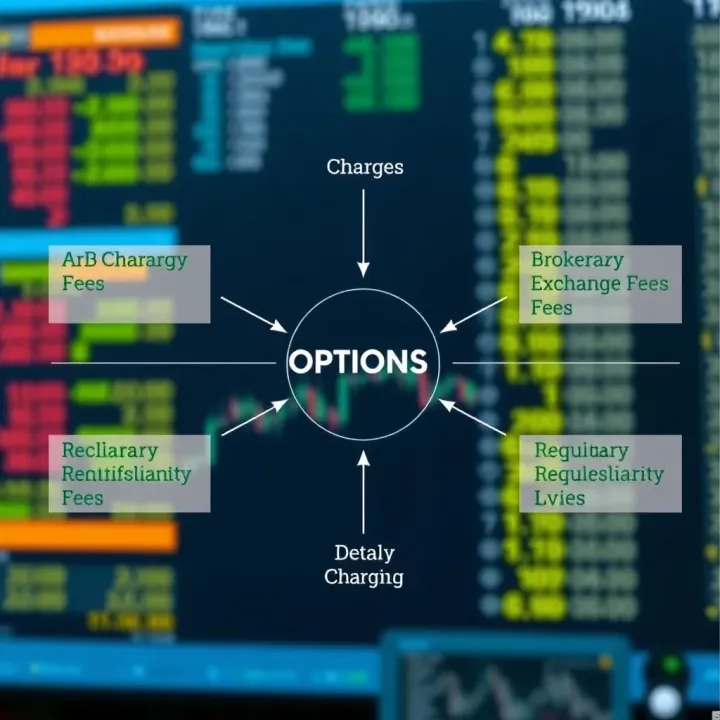
In options trading, brokerage is often charged per lot, which is a standard number of contracts. If a broker charges ₹20 per lot and you trade 3 lots, total brokerage becomes ₹60. Traders handling multiple positions or adjusting trades frequently can see brokerage add up quickly. Hence, factoring brokerage cost relative to the potential profit is key for strategy decisions.
Usually, brokers distinguish charges between intraday (same-day) trades and delivery (overnight) trades. Intraday trading may attract lower fees since positions close within the day, reducing risk and processing overhead. Delivery trades can have higher brokerage given the longer exposure and additional compliance. Traders should check this differentiation with their brokers, especially if their strategy involves holding options beyond the same day.
Choosing the right brokerage model helps balance your trading costs and gains. For example, frequent options traders might prefer discount brokers with flat fees, while occasional traders could benefit from percentage-based models to avoid paying large fixed charges.
Understanding these brokerage structures allows you to plan your trading approach better and keep transaction costs from eating into your profits unnecessarily.
Exchange and clearing charges form a significant part of the overall cost of options trading in India. These fees are imposed by stock exchanges and the clearing corporations responsible for settling trades. Understanding these charges helps traders accurately calculate their expenses and plan strategies accordingly.
National Stock Exchange (NSE) charges fees on every options contract traded. Typically, this charge is calculated as a small percentage of the contract's notional value. For example, NSE levies transaction charges around ₹95 per crore on the turnover for options trading. Although this rate appears minimal for a single trade, frequent traders or those dealing in large volumes accumulate noticeable costs over time. Knowing how these charges work assists traders in selecting suitable contract sizes and trade frequencies that align with their goals.
Bombay Stock Exchange (BSE) also imposes transaction charges on options trading, generally similar to or slightly different from NSE rates. BSE's transaction fees depend on the type of contract and traded value, with differential rates for equity options versus index options. For instance, BSE usually charges transaction fees of about ₹100 per crore of turnover. Traders executing options contracts on BSE should factor these charges into their cost calculations, especially when arbitrage between exchanges or trading on multiple platforms.
Clearing corporations act as intermediaries ensuring that trades execute smoothly and settle securely. In India, organisations like NSE Clearing Limited or Indian Clearing Corporation Limited handle the clearing and settlement processes. They guarantee both sides of a trade honour their obligations by acting as the counterparty. This reduces default risk, creating trust in the market. However, this service comes at a cost, reflected in clearing and settlement fees borne by traders.
Clearing charges are generally levied as a percentage of the contract value or a fixed fee per trade. For options trading, fees usually range from ₹15 to ₹30 per lakh (₹100,000) worth of traded value, depending on the exchange and contract type. These fees cover risk management, trade confirmation, and fund transfer tasks undertaken by clearing corporations. Although relatively small compared to brokerage, these charges add up in active trading. Traders should include these while estimating total expenses, especially if they focus on short-term strategies involving multiple contracts.
Exchange and clearing charges may seem minor individually but become crucial in shaping your net returns when trading options regularly. Always factor them into your cost analysis to trade smarter.
Understanding these charges will help traders optimise their trading style and broker choice to keep costs manageable without compromising execution quality.
When trading options in India, regulatory and statutory costs shape the final expenses a trader faces. These charges ensure the market operates transparently and securely but also impact overall profitability. Understanding these costs—such as Securities Transaction Tax (STT), Goods and Services Tax (GST), stamp duty, and other fees—helps traders plan better and avoid surprises.
The Securities Transaction Tax (STT) applies to the sale and purchase of options contracts traded on recognised stock exchanges in India. For option contracts, STT is levied only on the sell side, not on the buy side. The current STT rate is 0.05% on the premium value of the option sold. For example, if a trader sells options worth ₹2 lakh as premium, they will pay an STT of ₹100.
This tax is a significant statutory cost since it directly reduces trading gains. Due to this, traders often consider the STT while calculating break-even prices for their options trades.
STT applies only on the seller of the options contract, whether it is a writer or someone closing a previous position. Buyers of options do not pay STT, which is important to note because it affects the cost structure asymmetrically.
For example, if you write 10 option contracts and collect premium, you must pay STT on that sale. But when you purchase options, no STT is charged. This difference influences strategy: some traders prefer buying options to avoid immediate STT charges, especially for short-term plays.
Goods and Services Tax (GST) is levied on brokerage fees charged by brokers. The applicable rate for brokerage services is 18%, reflecting India’s standard GST slab for financial services.
So, if your broker charges ₹50 as brokerage per options trade, GST adds ₹9 (18% of ₹50), making the total brokerage cost ₹59. This increases the overall cost even if brokerage fees appear low initially.
GST on brokerage is unavoidable and adds significantly to trading expenses, especially for active option traders. While you might focus first on brokerage percentages, ignoring GST can underestimate costs by nearly a fifth.
For instance, if you pay ₹500 in brokerage over a month, ₹90 more goes as GST. This cumulative burden can shrink profit margins on frequent trades, making it worthwhile to negotiate brokerage packages that offer lower base fees.
Stamp duty is a state-level tax applied on legal documents, including equity transaction contracts like options. Its rate varies by state but is generally minimal, around ₹100–₹200 per crore turnover.
Though small per trade, stamp duty accumulates over many trades. Traders operating across states or through brokers with different registered offices may see small variations in this cost.
Demat Participant (DP) charges cover the cost of maintaining your demat account, where traded options and other securities are held electronically. Most brokers deduct DP charges as a fixed fee monthly or yearly, typically ₹20 to ₹50 per month.
Miscellaneous fees can include call and trade charges, option exercise/cancellation fees, or system usage charges. While these are generally small, frequent traders should account for them in total cost calculations to keep expenses transparent and manageable.
Understanding these statutory and regulatory costs ensures better decision-making in options trading and helps safeguard your profits over time.
Managing and optimising trading charges is key for anyone serious about options trading in India. These charges, while often small individually, can pile up quickly and eat into your profits. By keeping a close eye on costs and adopting smart strategies, traders can significantly improve their net returns and trading efficiency. It is not just about cutting costs; it's about choosing the right mix of services and fees that match your trading style and goals.
When comparing brokerage plans, focusing only on the fee structure isn't enough. You should also consider the trading platform's usability, order execution speed, and availability of tools like charts and analysis reports. For example, a broker charging slightly higher fees but offering faster order execution and advanced option analytics may save you money in the long run by preventing slippage and helping you spot better trades.
Also, look at how a broker charges for additional services like SMS alerts, margin funding, or API access, which might be included free or cost extra. The clarity and transparency of fee disclosures matter too — avoid brokers who surprise you with hidden charges.
Reputation plays a crucial role when picking a broker. A well-established broker with good client reviews and solid regulatory compliance generally offers better service reliability, smoother settlements, and effective customer support. For example, brokers like Zerodha and ICICI Direct are well-known for their robust platforms and prompt support, which can save you time and stress during volatile market days.
In options trading, timely help during complex transactions or technical glitches can prevent financial loss. Plus, brokers with educational resources and advisory services add value, especially for newer traders who want to understand nuances of charges and trading strategies.
Select a broker whose fee structure fits your trading volume and style. For instance, if you trade frequently with small ticket sizes, flat-fee brokers like Upstox or Groww can be more cost-effective than percentage-based brokerage models. Conversely, occasional high-volume traders may benefit from brokers offering lower percentage fees.
Don’t ignore brokerage plans that offer bundled services or loyalty discounts. Some brokers reduce charges if you maintain a certain portfolio value or trade specific segments. Always review these offers in the context of your trading habits.
The choice of expiry dates and strike prices affects your trading costs indirectly. Longer expiry options usually cost more premium, resulting in higher upfront cost but potentially fewer rollovers, saving on repeated brokerage and transaction charges.
Similarly, selecting strike prices closer to the money may involve more premium outlay but often trades in higher volumes, leading to better liquidity and less price slippage. This reduces hidden costs. On the other hand, out-of-the-money options might be cheaper but less liquid, increasing execution costs.
Keeping trading charges low while maintaining strategy efficiency requires balancing multiple factors, including brokerage choice and option selection. This approach helps protect profits and enhances trading discipline.
📈 Discover all costs in intraday trading in India: brokerage fees, transaction charges, taxes & hidden expenses. Master your profits with clear breakdowns & tips.

Discover the best apps for options trading in India 📱 Compare features, charges, and security to find your perfect platform with easy payment options and RBI compliance.

Learn options trading in India 📈: understand basics, strategies, risks & practical tips to manage your investments smartly in the stock market. Start wisely today!

Explore a detailed look at forex trading brokerage charges in India 🇮🇳. Learn fee structures, platform comparisons, regulations, and tips to reduce costs wisely.
Based on 14 reviews