
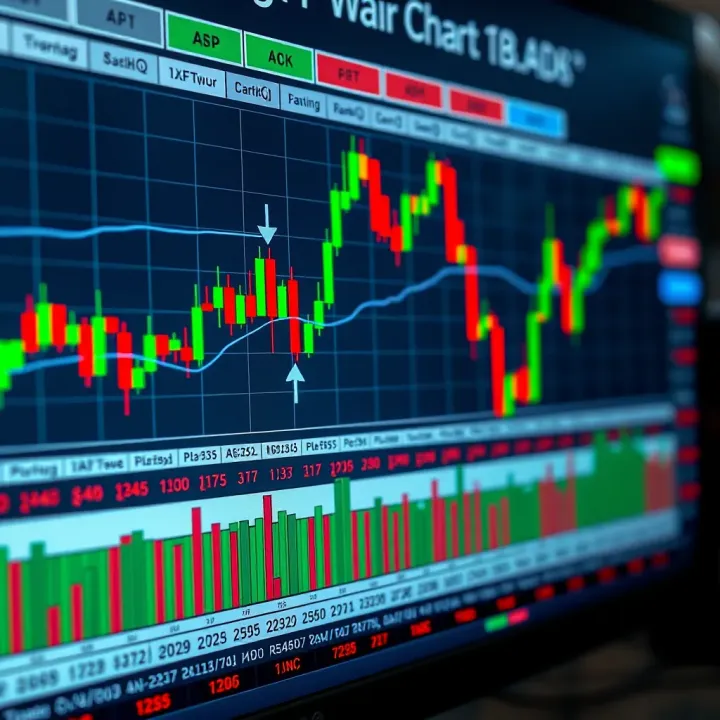
All Candlestick Patterns in One Chart Guide
📊 Explore all major candlestick patterns in one chart! Learn to identify bullish & bearish signals, understand their trading importance, and improve decision-making skills.
Edited By
Amelia Wright
Chart patterns form the backbone of technical analysis for traders and investors, particularly in markets like NSE and BSE where price movements can be swift and volatile. They offer a visual representation of market behaviours, helping you predict future price directions based on historical data.
These patterns can be broadly categorised into two types: reversal and continuation patterns. Reversal patterns, such as Head and Shoulders or Double Top/Bottom, signal a change in market trend. Continuation patterns like Flags, Pennants, and Triangles indicate that the existing trend is likely to persist.
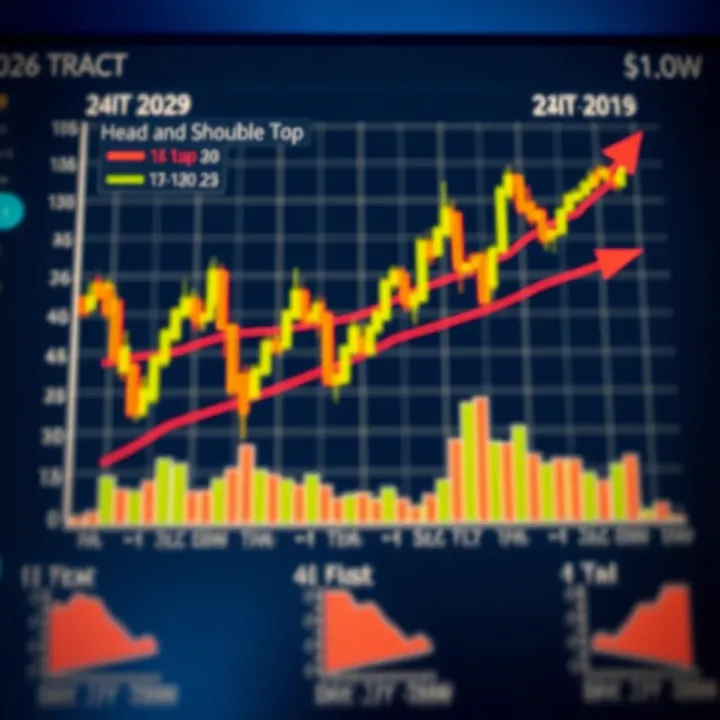
Understanding these patterns is essential for devising entry and exit strategies. For instance, recognising a Bullish Flag during an uptrend might prompt you to hold your position or add more, while spotting a Bearish Head and Shoulders could be a cue to sell or tighten your stop loss.
Practical application: If you observe a Cup and Handle pattern forming on the chart of a stock like Reliance Industries, it often signals a bullish breakout opportunity. Monitoring the volume during this pattern adds confirmation to the trade setup.
Chart patterns are not just theoretical constructs but tools you can apply directly during live trading sessions. They work best when combined with other indicators like moving averages, Relative Strength Index (RSI), or volume analysis. This multi-layered approach reduces false signals and improves your chances of success.
That said, accessing reliable chart pattern resources is crucial. Platforms like TradingView, Zerodha Kite, or investing apps such as Groww offer downloadable pattern templates and real-time charting tools. These resources help you practice recognising patterns and backtest them effectively.
To sum up, a strong grasp of chart patterns empowers you to anticipate market moves with better precision. Alongside learning the patterns themselves, knowing where and how to source quality downloadable resources adds practical value.
Next, we will explore core chart patterns, their identification, and strategies for using downloadable tools to sharpen your trading approach in the Indian stock market.
Chart patterns play a vital role in trading as they reveal shifts in market behaviour and point towards possible price movements. Recognising these patterns helps traders and investors make smarter decisions, whether it is identifying when to enter or exit a trade or anticipating trend reversals. For instance, spotting a Head and Shoulders pattern early may warn you about a potential downtrend, allowing timely action to protect your capital.
Chart patterns are specific formations created by price movements on a trading chart. They form predictable shapes which traders use to analyse past market data and forecast future price trends. In technical analysis, these patterns act as visual signals, helping traders read the market mood beyond just raw numbers. For example, a Double Top signals resistance and bearish sentiment, providing a hint of upcoming decline.
These patterns are more than shapes; they capture collective trader psychology. Every pattern reflects the tug of war between buyers and sellers, indicating who has the upper hand. When a triangle forms, it shows uncertainty followed by a probable breakout as traders decide direction. Therefore, understanding market psychology through patterns aids in better timing and managing trades effectively.
Reversal Patterns such as Head and Shoulders signal a change in the prevailing trend. The Head and Shoulders pattern, for example, typically appears after an uptrend and hints at a bearish reversal. It looks like three peaks, where the middle peak (head) is highest, flanked by two smaller peaks (shoulders). Traders observe the ‘neckline’ break as a key entry point to exit longs or take short positions.
Continuation Patterns like Flags and Pennants suggest the current trend will likely continue after a brief pause. Flags appear as small rectangular consolidations that slope against the prevailing trend, while pennants are small symmetrical triangles. These patterns indicate consolidation due to profit booking or short-term indecision but typically resolve by resuming the earlier move. Traders often use these to add positions with favourable risk-reward ratios.
Other Significant Patterns: Triangles, Double Tops and Bottoms have distinct implications. Triangles—ascending, descending, or symmetrical—represent consolidation before the price breaks out either way. Double Tops and Bottoms mark strong resistance or support zones formed by two peaks or troughs at similar levels. For example, a Double Bottom in the Nifty 50 index around 12,500 points could signal a strong buying opportunity, reflecting a shift from bearish pressure to bullish momentum.
Understanding these chart patterns sharpens your market vision, making your trades more data-driven and less speculative. Each pattern carries clues about future price movements if interpreted correctly with volume and price action.
This foundation prepares you to find reliable chart pattern resources next and use them effectively in your trading strategy.
Chart patterns are a practical tool that helps traders and investors read market behaviour and make better decisions. Understanding how to apply these patterns can improve timing for entering and exiting trades, managing risks, and even forming long-term investment plans.
Chart patterns often signal when a price shift might occur, giving clues about the best moments to buy or sell. For instance, a breakout from a triangle pattern might suggest an upward price move, indicating a good entry point. Conversely, spotting a head and shoulders pattern could warn about a trend reversal, signalling a time to exit the position to avoid losses.
Indian traders can benefit by combining chart pattern signals with price levels and volume data. When a pattern confirms rising volume on a breakout, it strengthens confidence in entering a trade. Similarly, patterns can reveal exit points to book profits or tighten stop-loss orders, helping preserve capital.
Relying on chart patterns alone can be risky; therefore, confirming a pattern with supporting signals is vital. For example, after noticing a double bottom pattern, a trader might wait for a volume increase or a supporting indicator like Relative Strength Index (RSI) crossing a threshold before acting.
This confirmation limits false signals and controls potential losses. In Indian markets, where volatility can spike during earnings or political events, confirming chart patterns becomes even more crucial to avoid unnecessary risks.

While chart patterns give useful perspectives on market trends, they are not foolproof. False breakouts or patterns that fail to play out can mislead traders into wrong moves. Recognising that no pattern guarantees success helps set realistic expectations.
Traders should avoid overreliance on a single pattern without considering broader market context or other technical indicators. This cautious approach reduces the chance of falling into traps like fake breakouts, which are common during volatile sessions in India’s stock exchanges.
Swing traders use chart patterns to capture short- to medium-term price swings lasting days or weeks. For example, they may spot a bullish pennant forming during an uptrend in Reliance Industries and enter after a confirmed breakout, aiming to benefit from the next price leg.
This approach suits traders looking for clear entry and exit signals without monitoring markets constantly, making it popular among busy professionals in Indian metro cities.
Intraday traders rely heavily on quick pattern recognition to capitalise on price moves within a single trading day. Patterns like flags, pennants, or triangles appearing on 5-minute or 15-minute charts help identify momentum or reversals.
A trader on the NSE might spot a flag pattern in HDFC Bank’s stock intraday and take a position immediately after confirming volume surge, aiming for profits before market close. Such quick decision-making hinges on timely detection of chart patterns.
Even long-term investors use chart patterns to gauge favourable entry points or confirm investment thesis. For example, a rising triangle over several months in a stock like Infosys could validate strong upward momentum and justify a buy-and-hold approach.
Patterns also help investors avoid buying at market tops or catch early warning signs of downturns. Combining this with fundamental analysis creates a balanced strategy suited to Indian markets where fundamentals and technicals often interact closely.
Effective use of chart patterns involves blending technical signals with market context and other tools, helping traders and investors across different horizons make informed decisions.
Having reliable sources for chart patterns is essential for traders and investors to base their decisions on solid information. Accessing trustworthy images and data helps you spot market trends accurately and plan trades with confidence. Plus, the variety of formats and tools available means you can pick what fits your style and platform best.
Trusted websites for technical analysis charts play a crucial role in providing quality chart patterns. Websites like TradingView or Investing.com offer extensive libraries of up-to-date technical charts with annotated patterns. These platforms allow you to view different timeframes and markets, making it easy to study patterns relevant to your trading preferences.
Beyond global platforms, Indian market websites such as NSE India or BSE India also feature technical charts, though they might be simpler. These official sites provide real-time or delayed data straight from the source, which adds reliability. Having access to such websites can help you cross-check patterns you see elsewhere and confirm their validity.
Many stock market platforms offer downloadable charts directly to their users. For example, brokerage services like Zerodha Kite or Upstox Pro offer downloadable chart images and data exports. This feature is handy when you want to maintain a personal archive of patterns or run offline analyses. You can easily save these files in formats suitable for your workflow, like JPEG or CSV.
By downloading charts from these platforms, you also get the advantage of platform-specific technical indicators bundled with the visuals, helping you interpret the patterns better. This practical approach saves time and keeps your analysis consistent across your trades.
Mobile apps have grown popular among Indian traders due to their on-the-go convenience. Apps like Angel Broking, Groww, or Sharekhan provide built-in charting tools with downloadable features. These apps often allow quick downloads of charts and pattern alerts, which can be particularly useful for intraday traders or investors watching multiple stocks.
Using mobile apps to download chart patterns means you can stay updated even while commuting or away from your desk. Some apps also support sharing downloaded charts via WhatsApp or email, which comes handy for discussions with peers or mentors.
When downloading chart patterns, choosing the right image formats like JPEG, PNG, or SVG matters. JPEG and PNG images are easy to view on almost all devices and are suitable for reference or presentations. SVG, being vector-based, allows zooming without losing clarity, which is great for detailed pattern analysis.
Storing chart patterns as images is helpful if you want quick visual references, but they lack raw data for deeper study. Hence, combining images with data files is often preferred to cover all bases.
Downloadable spreadsheets and data files offer another layer of insight. Platforms may provide CSV or Excel files with price, volume, and indicator data. Such files help you perform your own calculations or apply custom filters to find patterns more precisely.
For example, downloading historical data of a stock in spreadsheet form allows you to backtest how a given pattern has played out before. This directly supports better risk management and strategy refinement.
Charting software with built-in pattern recognition brings automation into play. Tools like MetaTrader, Amibroker, or TrendSpider scan markets continuously to flag potential chart patterns, reducing manual effort.
In Indian markets, these software packages often integrate with domestic data providers, ensuring pattern detection matches local trading behaviour. Using this software can speed up decision-making and improve accuracy, especially for traders handling multiple assets or fast-paced trades.
Downloading chart patterns is not one-size-fits-all; knowing where to find, how to save, and which tools to use helps you turn data into actionable trades with less guesswork.
Using downloaded chart patterns effectively can sharpen your trading strategy and help you interpret market movements more confidently. These patterns serve as valuable references, providing visual cues to market psychology and potential price action. However, downloading alone is not enough—you need to integrate them thoughtfully into your trading plan and use reliable tools to analyse their relevance.
Customising pattern downloads for market analysis means adapting the downloaded chart patterns to fit your specific trading style and market conditions. For instance, if you mostly trade in the Indian equity market through NSE or BSE, focus on patterns relevant to sectoral trends or stocks you follow regularly. Tailor the timeframes and pattern types you download—say, concentrating on weekly charts for long-term investments or 15-minute charts for intraday trading.
Tracking and updating pattern performance helps you understand how often specific patterns lead to expected outcomes in your trading universe. Maintain a personal log or spreadsheet where you note the pattern, stock, entry and exit points, and the eventual price movement. This tracking enables you to spot which patterns work best in current market conditions, especially with volatile sectors like banking or IT in India. Regular updates also prevent outdated assumptions from influencing your decisions.
Combining patterns with other technical indicators strengthens your entry and exit strategies. For example, a Head and Shoulders pattern confirmed with Relative Strength Index (RSI) signalling overbought conditions or a Moving Average Convergence Divergence (MACD) crossover increases the trade's reliability. In Indian markets, where liquidity and volumes can vary widely, using volume-based indicators alongside patterns helps filter false signals.
Charting software features for pattern validation offer automated recognition of patterns and assist in confirming their validity. Platforms like TradingView, Zerodha’s Kite, and Upstox PRO provide tools that highlight pattern formations and suggest potential breakout points. These features reduce manual errors and save time, especially when analysing multiple stocks simultaneously.
Online platforms with backtesting options allow you to test how a particular pattern would have performed historically under different market scenarios. Using backtesting, you can simulate trading decisions on Indian indices or individual stocks to assess profitability and risk. This hands-on approach fine-tunes your confidence and strategy before committing real funds.
Using India-specific market data for accuracy is key since patterns can behave differently across various markets. Downloaded patterns combined with data from NSE or BSE ensure you base your analysis on real-time, accurate information reflecting Indian market trends. This approach also helps avoid mismatches caused by using international data sets that might not capture India’s unique trading hours, holidays, or regulatory changes.
Effective use of downloaded chart patterns requires not only access to good resources but also disciplined integration into your trading framework and reliance on precise tools adapted for Indian markets.
Integrate your learnings steadily, use tools wisely, and keep updating your knowledge with fresh data to maximise the benefits of chart patterns in your trading.
Understanding best practices and common pitfalls while using chart patterns helps traders and investors avoid costly mistakes. Chart patterns are only useful if interpreted carefully, which means verifying their signals and recognising when these patterns may mislead. This section dives into how to ensure accuracy and stay sharp in fast-changing market conditions.
Confirming patterns with volume and price action is critical because chart patterns alone don’t paint the whole picture. Volume adds weight to a pattern's validity; for example, a breakout from a triangle pattern accompanied by rising volume is more reliable than one on low volume. Price action confirms direction — a genuine head and shoulders reversal usually shows weakening momentum on the right shoulder before the breakdown.
Without checking volume, traders might take false signals at face value. For instance, a double top formation that forms but does not see a spike in volume during the breakout could indicate a possible fake move, leading to losses if acted upon without caution.
Avoiding overreliance on any single pattern is another key practice. Market behaviour is complex, and no single chart pattern guarantees profit. Relying solely on patterns like the cup and handle or flag without cross-checking other indicators — such as moving averages or RSI (relative strength index) — can be risky. Many traders lose money because they treat chart patterns as standalone trading signals without considering broader market contexts.
A balanced strategy includes a mix of patterns, confirmation tools, and fundamental analysis, especially when dealing with volatile Indian stocks or indices like Nifty and Sensex.
Recognising false breakouts and traps saves traders from losing capital on misleading moves. A false breakout happens when price briefly moves beyond support or resistance but quickly reverses. For example, a pennant pattern breakout might pull traders in only to trap them when price drops back inside the pattern boundaries.
This is why quick reaction and stop-loss settings are crucial. Watching volume behaviour and price momentum during breakouts can help identify these traps early. Seasonal effects, such as index movements around RBI policy announcements, often cause such whipsaws.
Regularly reviewing downloaded resources is essential to ensure you base decisions on the latest insights. Markets evolve, and patterns that worked well in one phase might lose efficacy as volatility and trader sentiment shift. Revisiting saved charts, pattern data, and backtested results every few weeks helps you catch any strategy decay.
For example, a triangle breakout strategy that worked well during steady market conditions may need tweaking during turbulent sessions like monsoon-linked commodity spikes or GST policy changes.
Adjusting strategies with recent market trends is about flexibility. If markets turn choppy or trendless, continuation patterns might become less useful, prompting traders to focus on momentum or mean-reversion techniques instead.
Indian markets have shown how global cues (like US Fed rate decisions) can disrupt local patterns temporarily. Being reactive—modifying your approach to accommodate such shifts—helps protect capital and improve returns.
Staying disciplined with these practices and being aware of pitfalls helps you use chart patterns not just as theoretical guides but practical tools for trading success. Always combine patterns with broader market knowledge and fresh data reviews to avoid common traps.
This approach works well for traders and investors aiming to sharpen their edge without falling prey to misleading chart signals.
📊 Explore all major candlestick patterns in one chart! Learn to identify bullish & bearish signals, understand their trading importance, and improve decision-making skills.

Learn to spot key market chart patterns and predict price moves with our practical guide 📈. Includes handy PDF resources for traders in India 🇮🇳.

📊 Discover key chart patterns for traders to spot price trends and reversals. Learn practical tips and access PDFs for deeper technical analysis study.

📈 Master key candlestick chart patterns with our practical PDF guide. Learn to read market trends and improve your trading skills with clear insights tailored for Indian traders.
Based on 15 reviews