

Candlestick Chart Patterns: A Practical PDF Guide
📈 Master key candlestick chart patterns with our practical PDF guide. Learn to read market trends and improve your trading skills with clear insights tailored for Indian traders.
Edited By
Alexander Grant
Candlestick charts are a fundamental tool for traders and investors seeking to understand market behaviour at a glance. Each candlestick represents price movement over a specified period, showing the opening, closing, high, and low prices. This compact visual format helps detect shifts in market sentiment much faster than traditional line charts.
Grasping the variety of candlestick patterns equips you to identify potential reversals, continuations, and indecision in price trends. Patterns like the Hammer, Engulfing, and Doji serve as signals that traders often use to time entries, exits, or stop-loss placements effectively.

Understanding these patterns enhances your ability to read market psychology, providing clues about whether buyers or sellers are gaining control.
This guide compiles all major candlestick patterns into one easily accessible chart. Whether you are analysing stocks on the NSE or commodity prices, recognising these formations can boost your decision-making accuracy. The guide also covers the limitations of candlestick analysis, reminding you to use it alongside other tools such as volume analysis and indicators for better reliability.
In the next sections, we'll unpack bullish and bearish formations with clear examples, so you can quickly apply this knowledge in your trading or investing activities.
Candlestick charts are fundamental tools for traders and investors seeking to understand market behaviour at a glance. Knowing how to read each part of a candlestick gives you direct insight into price movements within a specific period, making it easier to spot trends or reversals. This section focuses on breaking down these components clearly so you can apply this knowledge confidently in your trading decisions.
The most visible parts of a candlestick are the body, wick, and shadows. The body represents the price range between the opening and closing levels of a trading period. For example, if a stock opens at ₹1,000 and closes at ₹1,050 in one day, the body shows this exact movement. The wicks, also called shadows, are thin lines extending above and below the body, indicating the highest and lowest prices that traded during the period. These small details may seem simple, but they reveal whether buyers or sellers controlled the market session.
Understanding these elements helps you identify price action nuances. For instance, a long upper wick with a short body might suggest selling pressure is pushing prices down after a rally, hinting at a potential reversal. In contrast, a long body with tiny wicks might show strong momentum in one direction, signalling a continued trend.
The open, close, high, and low prices are the numerical foundations behind each candlestick. The open price is where the trading period started, while the close is where it ended. The high and low prices mark the extremes within that time frame. These values are crucial because they set the boundaries of the day's trading range and help form various candlestick patterns.
For example, a day with a close significantly higher than the open indicates buying strength, especially if the day’s high wasn't far above the close. This might inspire a trader to consider a long position. Conversely, if the close is near the day’s low despite a high opening, it may imply selling pressure. So, these numeric points guide tactical moves, whether on intraday charts or longer time frames.
One of the first things you notice about candlestick charts is the colour of the candles. Typically, bullish candles, signalling price rises, are shown in green or white, while bearish candles, indicating price falls, appear in red or black. This colour distinction offers instant visual clues about market sentiment.
For instance, during a festive season sale, if a stock’s green candle continues climbing over several sessions, buyers are in control and confidence is high. On the other hand, a series of red candles might warn that sellers are taking over, prompting traders to reconsider long positions or tighten stop-losses.
Variations in colour schemes exist depending on charting platforms and personal preferences. Some traders prefer hollow versus filled candles rather than colours, where filled candles indicate falling prices and hollow ones rising prices. The key is consistency; pick a style that helps you quickly distinguish bullish from bearish activity without confusion.
Understanding these colour signals reduces guesswork and helps spot entry or exit points faster, crucial in volatile markets like those common in India.
In summary, mastering the basic elements and colour significance of candlesticks forms the bedrock of effective pattern recognition and trading analysis. With this solid foundation, you can confidently interpret the comprehensive chart patterns discussed in the following sections.
Understanding major bullish candlestick patterns on a single chart provides a quick and clear insight into potential market reversals and trend continuations. Traders and investors use these patterns to spot buying opportunities and make informed decisions. By having these patterns visually organised in one place, you can swiftly compare their characteristics and reliability.
These patterns carry practical benefits, such as signalling when a downtrend might be ending or when bullish momentum is gathering. However, it is essential to consider context—volume, previous trend strength, and nearby support levels—to avoid false positives.
A hammer candlestick forms when the price opens, falls significantly during the session, but then rallies to close near the opening price. It features a small body and a long lower wick, resembling a hammer’s shape. This pattern often appears after a downtrend, indicating potential reversal as sellers lost control and buyers stepped in.
In practical trading, spotting a hammer near a key support level or after prolonged decline may hint at a buying opportunity. For instance, on the Nifty 50, a hammer after a steep fall might suggest a bounce soon, but confirming with volume spikes adds confidence.
The inverted hammer has a small body with a long upper wick and a short lower wick, signalling buyers tried to push prices higher but sellers brought it back. Although it looks bearish at first glance, its appearance at the bottom of a downtrend suggests sellers are weakening.
Traders often watch for an inverted hammer to signal a shift in sentiment. Pairing this pattern with follow-up bullish candles and volume rise can improve its reliability. For example, an inverted hammer on a stock like Tata Steel during a dip might alert traders to a possible upward move.
A bullish marubozu is a single candlestick with no shadows or very small wicks, opening at the session low and closing near the high. It shows strong buying pressure throughout the trading period.
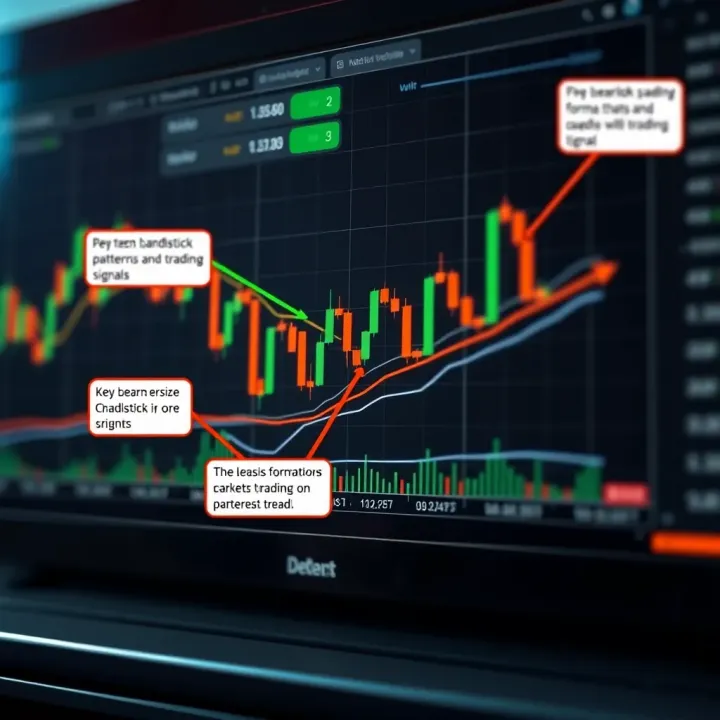
This pattern indicates clear bullish sentiment and often precedes further upward movement. In India’s equity markets, when a stock like Reliance Industries forms a bullish marubozu during consolidation, traders may expect the uptrend to resume.
This pattern consists of a small bearish candle followed by a larger bullish candle that completely engulfs the prior candle’s body. It reflects a sharp shift from sellers to buyers.
Bullish engulfing near support areas or after downtrends signals strong buying interest. Traders can watch for confirmation, such as a higher close next day, before entering positions. For example, a bullish engulfing pattern in State Bank of India during a correction could signal a reversal.
The piercing line pattern appears when the first candle is bearish, and the following candle opens lower but closes above the midpoint of the first candle’s body. This suggests buyers are gaining control after initial selling.
This two-candle pattern could mark a trend change when combined with rising volumes. On NSE charts, piercings found near demand zones often result in short-term rallies.
The morning star is a three-candle pattern: a long bearish candle followed by a small-bodied candle (could be bullish or bearish), then a strong bullish candle closing well into the first candle’s body. It indicates a clear bottom reversal.
Investors use this pattern to time entries after significant falls, especially when confirmed by other indicators like RSI divergence. For example, during market downturns, morning stars on Nifty stocks signal growing bullish momentum.
Three white soldiers are three consecutive long bullish candles with small wicks, each opening within the previous candle’s body and closing near session highs. This pattern shows sustained buying over multiple sessions.
This formation is strong evidence of a robust uptrend. Traders who spot this on stock charts such as Infosys or HDFC Bank often consider initiating or adding to long positions, expecting momentum to continue.
Recognising these major bullish candlestick patterns together helps spot reliable buying signals. However, always confirm patterns using volume, trend context, and other technical factors before trading decisions.
Bearish candlestick patterns offer crucial signals about potential price declines or trend reversals in the market. Grouping these key patterns together helps traders and analysts spot warning signs efficiently before a dip intensifies. Spotting these formations in real time can save investors from steep losses and aid in timely exits or hedging strategies.
Understanding how single- and multiple-candle bearish patterns operate side by side gives a clearer picture of market sentiment shifting from bullish to bearish. For instance, traders often look for confirmation from more than one formation to avoid false alarms. Together, these patterns paint a story of sellers gaining control over buyers.
A shooting star stands out with a small body, little or no lower wick, and a long upper wick. This pattern usually appears after an uptrend, signalling that buyers pushed prices higher during the session but sellers took charge before the close. The long wick above shows rejection of higher prices, often leading to a downward correction.
In practical terms, if you spot a shooting star near resistance levels, it acts as a red flag that the rally is losing steam. Traders might consider placing stop-loss orders or preparing for short positions once the next candle confirms the reversal.
The hanging man looks similar to the shooting star but occurs after an uptrend and often has a small body with a long lower wick. This pattern indicates increasing selling pressure; even though the price closed near its opening, the session saw strong bears pushing prices down before buyers stepped in.
Spotting a hanging man near key support or resistance zones should urge traders to be cautious as it warns about a potential trend change. Like the shooting star, waiting for confirmation before acting helps avoid premature decisions.
A bearish marubozu is a strong single-candle pattern featuring a long body without upper or lower wicks. This means the price opened at or near its high and closed at or near its low, showing persistent selling pressure throughout the session.
This pattern signals decisive bearish control and can mark the start of a downtrend or continuation of an existing one. Traders often see this as a solid entry point for short trades or exit signal for long positions.
The bearish engulfing pattern consists of two candles where a small bullish candle is followed by a larger bearish candle that completely covers the previous candle's body. This shows that sellers overwhelmed buyers, reversing the prior bullish momentum.
For example, after a steady rally, this pattern near resistance levels suggests a stronger chance for price decline. Traders use this as confirmation to exit longs or enter short positions.
The evening star involves three candles: a long bullish candle, a small-bodied candle (which can be bullish or bearish), and then a long bearish candle closing well into the first candle’s body. This sequence indicates a fading uptrend and strengthening bears.
This formation near an uptrend’s peak is especially reliable for signalling a reversal. It encourages traders to tighten stops or consider short trades.
Dark cloud cover appears when a bearish candle opens above the previous bullish candle’s close but closes below its midpoint, effectively "covering" much of the prior gains. This pattern reflects sudden selling strength.
Encountered near resistance or after gains, it warns traders of a weakening uptrend, prompting cautious trading or profit booking.
This pattern features three consecutive long bearish candles with each close progressively lower. It illustrates sustained selling pressure and usually follows a market top.
Its appearance signals a strong bearish trend reversal. Traders see this as a clear sign to exit long trades or prepare for further declines.
Combining knowledge of these key bearish candlestick patterns helps you recognise critical market turning points and make more informed trading decisions. Always consider volume, trend context, and confirmation before acting on these signals to reduce risks.
Candlestick patterns alone cannot guarantee trading success. Their true value comes when interpreted within the broader market context and combined with other tools. Knowing how to read these patterns effectively helps traders spot real opportunities and avoid false signals. This section focuses on making sense of patterns through trend analysis, volume, and key price levels, followed by practical tips on applying them to trading decisions.
Trend confirmation is essential to avoid jumping the gun on a pattern. For example, a bullish reversal candle forming during an established downtrend may signal the start of a shift, but confirmation with subsequent higher closes or rising indicators improves reliability. Ignoring the prevailing trend often leads to misreads, like mistaking a temporary pullback for reversal.
Volume adds another layer of insight. When a pattern appears with high trading volume, it suggests genuine interest and conviction behind the move. Take a morning star formation coupled with above-average volume—it strengthens the chance of an uptrend taking hold. Conversely, low volume might indicate weak participation, making the pattern less trustworthy.
Support and resistance levels shape how candlestick patterns behave. Imagine a bullish engulfing pattern that forms at a long-term support level—it carries more weight since buyers step in en masse near this zone. Similarly, bearish patterns near resistance levels serve as potential exit points or warnings for price reversals. Recognising these price zones alongside patterns helps in gauging the pattern’s significance.
Accurate pattern reading aids in pinpointing entry and exit points. For instance, after spotting a piercing line pattern during a downphase, a trader might consider entering long once the next candle confirms the upward move. Exits could be planned using nearby resistance levels or trailing stops based on the candle lows, minimising losses and locking in profits systematically.
Managing risk is crucial, and candlestick patterns contribute here too. Setting stop-loss orders just beyond the candle's low (for bullish setups) or high (for bearish setups) protects capital if the market moves against expectations. This approach protects from wild swings, especially in volatile segments like commodity or mid-cap stock trading common in Indian markets.
Combining candlestick patterns with other technical tools further improves decision-making. Indicators like RSI (Relative Strength Index) or MACD (Moving Average Convergence Divergence) can confirm momentum, while moving averages provide dynamic support or resistance cues. For example, spotting a bullish engulfing near the 50-day moving average supported by a rising RSI gives a stronger buy signal. This blend of tools reduces reliance on any single indicator, enhancing confidence.
Remember, no pattern guarantees success, but understanding how to read and apply candlestick signals alongside market context and other tools puts you ahead in trading.
These methods make candlestick analysis practical and effective for traders in India’s dynamic markets, helping them make informed choices rather than relying on guesswork.
Candlestick patterns provide valuable insights into market sentiment, but they are not foolproof indicators. Understanding their limitations and common pitfalls is key to making sound trading decisions. Without this awareness, traders might fall prey to false signals or misinterpret patterns, leading to avoidable losses.
False signals often occur when candlestick patterns suggest a trend reversal or continuation, but the price moves differently. For example, a bullish engulfing pattern might appear promising, yet the market continues to decline. This happens because candlestick patterns alone cannot predict the next move with certainty—they reflect past price action, not future events. Traders should be cautious and avoid acting solely on a single pattern without other supporting indicators or volume confirmation.
Ignoring market context is another frequent error. A pattern's reliability depends heavily on where it appears in the overall trend or price structure. For instance, a hammer candlestick forming during a strong downtrend could signal a reversal, but the same pattern within a sideways market may not hold much weight. Overlooking support and resistance levels or recent price volatility can lead to misjudging the pattern’s significance. Context, therefore, is crucial for interpreting candlestick signals correctly.
Traders should recognise the need for confirmation before making decisions based on candlestick patterns. This means waiting for further price action or other technical indicators, like moving averages or Relative Strength Index (RSI), to back the initial signal. For example, a morning star pattern indicating a bullish reversal becomes more reliable if supported by increased buying volume. Confirmation helps reduce false positives and increases the chances of entering profitable trades.
The role of fundamental analysis also cannot be neglected when relying on candlestick patterns. Market-moving events such as RBI policy announcements, quarterly earnings, or geopolitical developments can overshadow technical patterns. Ignoring these factors may lead traders to misinterpret price movements as purely technical signals. Combining fundamental insights with candlestick analysis offers a more rounded view and helps in timing trades more effectively, especially in volatile Indian markets.
Candlestick patterns serve as one piece of the puzzle. Combining them with market context, confirmations, and fundamental insights is essential for more reliable trading outcomes.
📈 Master key candlestick chart patterns with our practical PDF guide. Learn to read market trends and improve your trading skills with clear insights tailored for Indian traders.

📊 Learn how to read candlestick and chart patterns for smarter investments in India. Get practical tips and handy PDF resources for easy reference and analysis.

📊 Learn key candlestick chart patterns with clear images to spot trends and improve trading skills. Perfect for Indian investors aiming to make wise market decisions.

Learn to spot key candlestick patterns 📈 with images for better trading decisions. Understand single, double & triple patterns to read market trends clearly.
Based on 5 reviews