

Understanding Candlestick Chart Patterns in Hindi
📈 Learn to identify key candlestick chart patterns in Hindi to enhance your stock and forex trading skills. Understand pattern types and apply them confidently! 🔍
Edited By
James Cartwright
Chart patterns form the backbone of technical analysis in stock trading. They offer traders a visual way to interpret price movements and predict future market trends. Understanding chart patterns in Hindi not only demystifies these concepts but also makes technical analysis more accessible to a wider audience.
Stock charts depict the price action of stocks over time. By examining the shapes and formations on these charts, traders identify recurring patterns that signal potential price directions. For instance, a Head and Shoulders pattern often suggests a trend reversal, while a Triangle formation might indicate price consolidation before a breakout.

Recognising chart patterns helps in making informed decisions rather than relying on guesswork or tips.
Some common chart patterns include:
Continuation Patterns: Suggest that the current trend will likely continue. Examples are Flags and Pennants.
Reversal Patterns: Indicate a possible change in trend direction, such as Double Tops or Cups with Handles.
Bilateral Patterns: These can signal either continuation or reversal, depending on market context. Triangles often fall here.
When you study these patterns in Hindi, certain terms gain clarity. For example, "ऊपरी छोर" means the resistance point, and "निचला छोर" refers to support. Such language helps traders interpret charts comfortably in their native tongue.
Practical use of chart patterns involves looking for confirmation signals like volume spikes or changes in Relative Strength Index (RSI). This approach reduces false signals and improves the accuracy of market predictions.
With rising retail participation in Indian markets, mastering chart patterns in Hindi has become quite relevant. It empowers new traders and investors to grasp technical analysis basics without language barriers.
Getting familiar with these fundamentals opens the door to deeper study and practical application in real trading scenarios. Next sections will explore specific chart patterns, their identification, and how to act on them effectively.
Chart patterns play a significant role in technical analysis, helping traders and investors understand market behaviour. They are visual shapes formed by price movements on charts, reflecting the battle between buyers and sellers over time. Recognising these patterns offers a practical way to anticipate potential price shifts without relying solely on fundamentals.
Understanding chart patterns is essential because they capture the natural ebb and flow of markets. For instance, a "head and shoulders" pattern often signals a reversal, alerting traders to exit or enter positions wisely. Such insights help make trading decisions more objective and less influenced by emotions.
Chart patterns are specific shapes or formations seen in price charts that indicate probable future movements. They emerge naturally as traders buy and sell, causing price to swing within certain ranges. Analysts study these recurring patterns to predict trends or turning points. For example, a "triangle" pattern showing compressing price movement may precede a breakout, guiding traders to prepare for increased volatility.
In practice, chart patterns simplify the complex data of price action into understandable signals. They act as frameworks that help traders spot potential opportunities without needing to analyse every tick. This makes them an efficient tool, particularly in fast-moving markets like equity or currency trading.
Patterns on charts reflect collective trader behaviour and psychology. They capture moments where market sentiment shifts—fear replacing greed or vice versa. For example, a "double bottom" pattern indicates that after selling pressure, buyers have stepped in twice, suggesting a likely rebound.
These formations reveal the tug-of-war between bulls and bears, showing when confidence is weakening or strengthening. Knowing this helps traders align their strategies with the market mood rather than acting blindly. It's like reading the crowd's mood in a busy market before making a decision.
Traders use chart patterns because they offer a practical way to forecast price direction based on historical behaviour. While no method guarantees accuracy, patterns provide a probabilistic edge. For example, identifying a "flag" pattern during an uptrend suggests the trend will continue, helping traders position themselves early.
Such predictions help manage risks by anticipating possible price targets or reversal points. Instead of guessing, traders can make choices rooted in observed market tendencies, increasing the chances of profitable trades.
Chart patterns help pinpoint when to enter or exit trades effectively. For example, a breakout above a "resistance" level formed by a rectangle pattern can signal a buying opportunity. Conversely, a breakdown below support might suggest exiting a position to limit losses.
These signals reduce guesswork and emotional decision-making, crucial in volatile markets. By combining pattern recognition with volume and indicators, traders can refine their timing, enhancing trade success rates.
Mastering chart patterns equips traders with a clearer picture of price dynamics, helping navigate the complexities of the stock market more confidently and systematically.
Chart patterns are key tools in technical analysis, helping traders predict whether current price trends will continue or reverse. Understanding the basic types equips you to make better trading decisions and identify entry or exit points based on price behaviour. These patterns reflect market psychology, showing whether buyers or sellers are gaining control. Below, we break down the main categories of chart patterns in Hindi with practical examples.
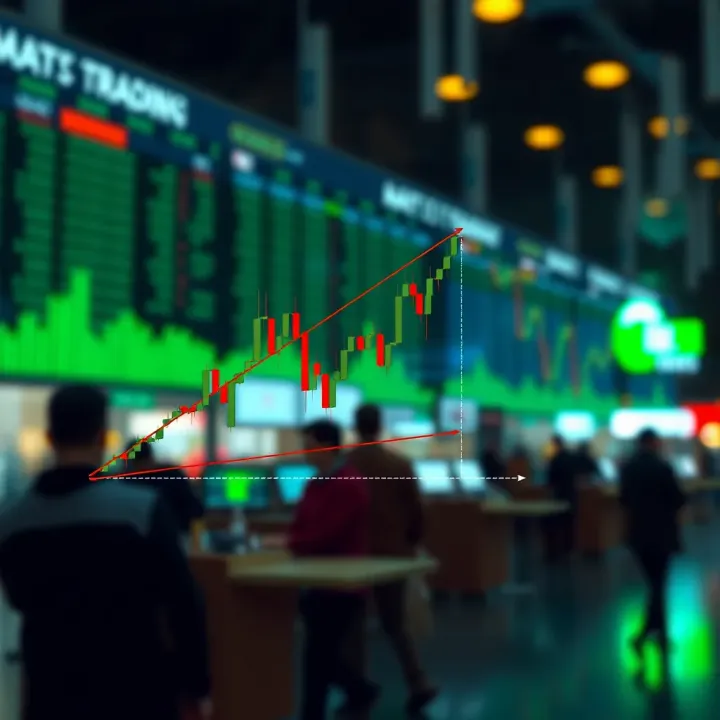
Triangles form when price movements tighten between converging trendlines, signalling a pause before continuing in the original direction. An ascending triangle has a flat upper resistance line and rising lower support, suggesting buyers are gaining strength. Conversely, a descending triangle shows falling resistance with flat support, indicating sellers might prevail. Symmetrical triangles show both sides converging, meaning the breakout's direction is uncertain.
For example, in Nifty 50 charts, an ascending triangle often precedes a bullish breakout, offering a good call option entry. Recognising these triangles early allows traders to anticipate the next move, setting stop-loss and target prices accordingly.
Flags appear as small rectangular consolidations following a sharp price move, resembling a flag on a pole. They signal short-term pauses before the trend resumes. Pennants look like small symmetrical triangles forming after a strong price shift. Both patterns often continue the prior trend, whether upwards or downwards.
In practice, if the Sensex surges and then forms a flag pattern, traders expect the rally to continue once the pattern breaks out. These patterns are especially useful in intraday and swing trading to gauge brief consolidations.
This classic reversal pattern indicates a trend change, commonly from bullish to bearish. It features three peaks: a higher ‘head’ between two lower ‘shoulders’. When price breaks below the neckline connecting the shoulders, it signals selling pressure rising.
For instance, if Reliance Industries' stock shows a head and shoulders pattern, traders may sell or short-sell after the neckline breaks to avoid losses.
Double tops signal a potential bearish reversal after the price hits a resistance level twice without breaking it. Double bottoms suggest a bullish reversal after price touches support twice.
These patterns help traders spot when a previous trend is losing strength. For example, A demonstated double bottom in Tata Motors’ chart could indicate upward momentum to jump in.
Wedges are slanting price formations indicating potential trend reversals or continuations depending on direction. A rising wedge slopes upward but signals bearish reversal as buying momentum slows. A falling wedge slopes downward and points to bullish reversal as selling weakens.
Traders watching Infosys charts might use wedge patterns to spot times to exit or enter, especially during volatile markets.
This pattern forms when price moves sideways between parallel support and resistance lines, showing consolidation. A breakout above or below the rectangle suggests the trend's next direction.
Identifying rectangle patterns helps traders avoid false starts and pick moments when price is likely to accelerate, such as during the consolidation phase in Bharti Airtel stocks.
Understanding these basic chart patterns in Hindi not only simplifies technical analysis but also empowers traders to spot market turns and continuations clearly in Indian market contexts. Experience shows that applying these patterns along with volume confirmation improves prediction accuracy.
Each pattern demands careful observation, practice, and proper risk management to use effectively in real trading situations.
Chart patterns become truly useful when you can spot them correctly on your trading platform. Most modern platforms used by Indian traders and investors — like Zerodha Kite, Upstox Pro, or Angel One — offer interactive price charts that let you identify these patterns without much hassle. Understanding how to read these charts is key to using chart patterns effectively in your trading strategy.
Candlestick charts form the backbone of pattern recognition for most traders. Each candlestick shows four price points: opening, closing, highest, and lowest for a given time period. A green (or hollow) candle means the closing price was higher than the opening price, signalling buying pressure, while a red (or filled) candle indicates selling pressure. Observing how these candlesticks arrange over time helps identify patterns like hammer, shooting star, or engulfing — each hinting at possible price direction.
For example, spotting a "Doji" candlestick, where opening and closing prices are nearly equal, can indicate indecision in the market and possible reversal ahead. Learning these candlestick shapes is like understanding the vocabulary of market sentiment.
Volume refers to the number of shares or contracts traded during a specific period. It confirms the strength behind price movements. A price breakout accompanied by high volume usually signals genuine interest, whereas one on low volume might be a false signal.
Consider the Indian markets: during a breakout from a triangle pattern in Nifty 50, if volume surges, traders gain confidence that the breakout will hold. Conversely, if volume is low, the breakout may not sustain, and the price could fall back. Therefore, volume acts as a support check for patterns and improves the reliability of your analysis.
Moving averages smooth out price data to highlight trends. They are essentially averages of past prices over a fixed time, such as the 50-day or 200-day moving average. These averages act as dynamic support or resistance levels.
In practice, if a chart pattern like a head and shoulders forms near a moving average, traders watch how the price reacts around it. A break below a 200-day moving average during a head and shoulders pattern adds to the bearish signal. Moving averages thus complement pattern recognition, helping confirm potential price moves.
RSI measures the speed and change of price movements on a scale from zero to 100. Typically, an RSI above 70 suggests an overbought condition, while below 30 indicates oversold.
In India’s stock markets, combining RSI with chart patterns sharpens entry and exit timing. For instance, a double bottom chart pattern accompanied by an RSI rising from below 30 could indicate a strong buy opportunity. Conversely, if the RSI is high when a reversal pattern appears, it might warn of an impending correction.
Combining pattern recognition with volume and indicators like moving averages and RSI increases your chances of making informed trading decisions. Without these tools, you might misread signals or enter trades prematurely.
Understanding how to identify and confirm chart patterns on trading platforms is essential for practical technical analysis in India’s dynamic markets. It bridges textbook theory with market reality, helping you trade smarter and more confidently.
Chart patterns play a significant role in the Indian stock market, particularly for traders who rely on technical analysis. Using these patterns can provide insights into future price movements in popular indices like Sensex and Nifty, helping investors make informed decisions. Understanding their practical application means recognising how these patterns appear in real market scenarios and adjusting strategies accordingly.
Case studies from Sensex and Nifty reveal how chart patterns work in practice. For instance, a head and shoulders pattern appearing on the Nifty 50 daily chart may signal a trend reversal, alerting traders to prepare for a possible market decline. Similarly, a bullish flag pattern identified during an upward rally in Sensex often suggests continuation, providing an entry opportunity for swing traders. These examples show the usefulness of chart patterns in timing trades based on clear signals from market behaviour.
That said, it's essential to stay cautious. Chart patterns don't guarantee outcomes but indicate probabilities that should be combined with other analysis tools. Watching real market moves against pattern signals helps build better intuition for their reliability.
Limitations and risks should be carefully considered. Patterns sometimes produce false signals, known as false breakouts, leading to losses if relied on blindly. Market volatility, news events, and external factors can also cause patterns to fail. Moreover, overdependence on a single pattern without considering broader market context or fundamentals can mislead traders into poor decisions. Hence, using chart patterns alongside volume data, trend indicators, and macroeconomic understanding improves risk awareness.
Timing trades intelligently is crucial for both swing and intraday trading. Chart patterns help traders spot moments when price momentum is likely to shift. In intraday trading, spotting a breakout from a triangle pattern early allows quick entry before the main move. Swing traders might wait for confirmation of a double bottom in Nifty before committing, thus balancing risk and reward. Being patient and waiting for pattern confirmation often improves trade success rates.
Risk management strategies complement good timing. Setting stop-loss orders just below support levels or pattern boundaries limits potential losses if the market goes against you. Position sizing based on risk appetite and overall portfolio size also protects capital. For example, if a trader spots a flag pattern in Sensex but volatility is high, reducing trade volume avoids heavy impact from sudden reversals. Using chart patterns as one part of a wider risk framework keeps trading sustainable.
Using chart patterns in the Indian market requires blending pattern signals with other tools and disciplined risk management. This approach helps traders navigate fluctuations with more confidence.
Clear examples from Sensex and Nifty, combined with timing and risk control, allow you to make better use of chart patterns in daily trading and swing strategies.
Understanding common mistakes in reading chart patterns is essential for traders and analysts. Recognising these pitfalls helps improve decision-making and avoid unnecessary losses. This section focuses on frequent errors such as misinterpreting patterns and ignoring the broader market context.
False breakouts occur when a stock price appears to move beyond a support or resistance level but quickly reverses back. This can mislead traders into thinking a new trend has started, leading them to enter or exit positions too soon. For example, in the Nifty 50, a false breakout above a resistance level might lure traders into buying, only to see prices drop the next day. Recognising volume spikes and confirming breakouts through other indicators like moving averages can reduce this risk.
Overreliance on single patterns is another common mistake. Traders sometimes act on a lone pattern without considering additional signals or market behaviour. For instance, spotting a double-top pattern does not guarantee a trend reversal. It is vital to combine pattern analysis with other tools, such as the Relative Strength Index (RSI) or fundamental factors, to confirm trade decisions. This reduces chances of being trapped by misleading setups.
Fundamentals vs technicals is a key aspect that many overlook. While chart patterns provide insights into price action, fundamental factors like earnings reports, RBI policies, or GST changes strongly influence market trends. A technical pattern suggesting a bullish move may fail if the company posts poor quarterly results. Traders should always keep an eye on fundamental updates alongside technical analysis for better judgement.
External events impact also plays a significant role. Political developments, global economic shifts, or unexpected news such as interest rate changes can disrupt expected chart patterns. For example, during monsoon disruptions or geopolitical tensions, even well-formed patterns on Sensex charts might not behave as anticipated. Staying updated with news and being ready to adjust trades quickly helps to safeguard against such surprises.
Ignoring these common mistakes causes many traders to lose valuable opportunities or take avoidable risks. Combining pattern recognition with market awareness and cautious validation leads to smarter trading.
By understanding these common pitfalls, you can build more resilient trading strategies that suit Indian market dynamics and avoid costly errors.
📈 Learn to identify key candlestick chart patterns in Hindi to enhance your stock and forex trading skills. Understand pattern types and apply them confidently! 🔍
📈 Learn to spot basic trading chart patterns that signal price moves in stocks, commodities, and currencies. Enhance your strategy with real examples for the Indian market.
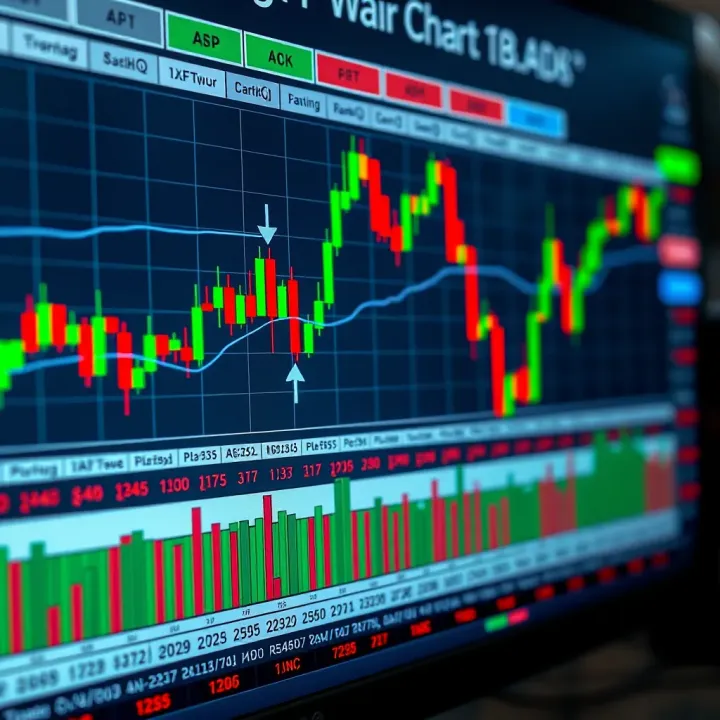
📊 Explore all major candlestick patterns in one chart! Learn to identify bullish & bearish signals, understand their trading importance, and improve decision-making skills.

📊 Learn key candlestick chart patterns with clear images to spot trends and improve trading skills. Perfect for Indian investors aiming to make wise market decisions.
Based on 8 reviews